


Global Warming: Definition, Causes, Effects, Solutions, Facts, Topics
Global warming is the gradual rise in Earth’s average temperature due to increased concentrations of greenhouse gases like carbon dioxide and methane. It is primarily driven by human activities such as burning fossil fuels, deforestation, and industrialisation. Global warming leads to climate change, melting glaciers, sea-level rise, extreme weather events, and serious ecological and societal impacts.
This Story also Contains
- What Is Global Warming?
- History of Global Warming Concept
- Causes of Global Warming
- Effects of Global Warming
- Adaptation Strategies for Global Warming
- Role of Individuals in Combating Global Warming
- Global Warming NEET MCQs (With Answers & Explanations)
- Recommended Video for Global Warming
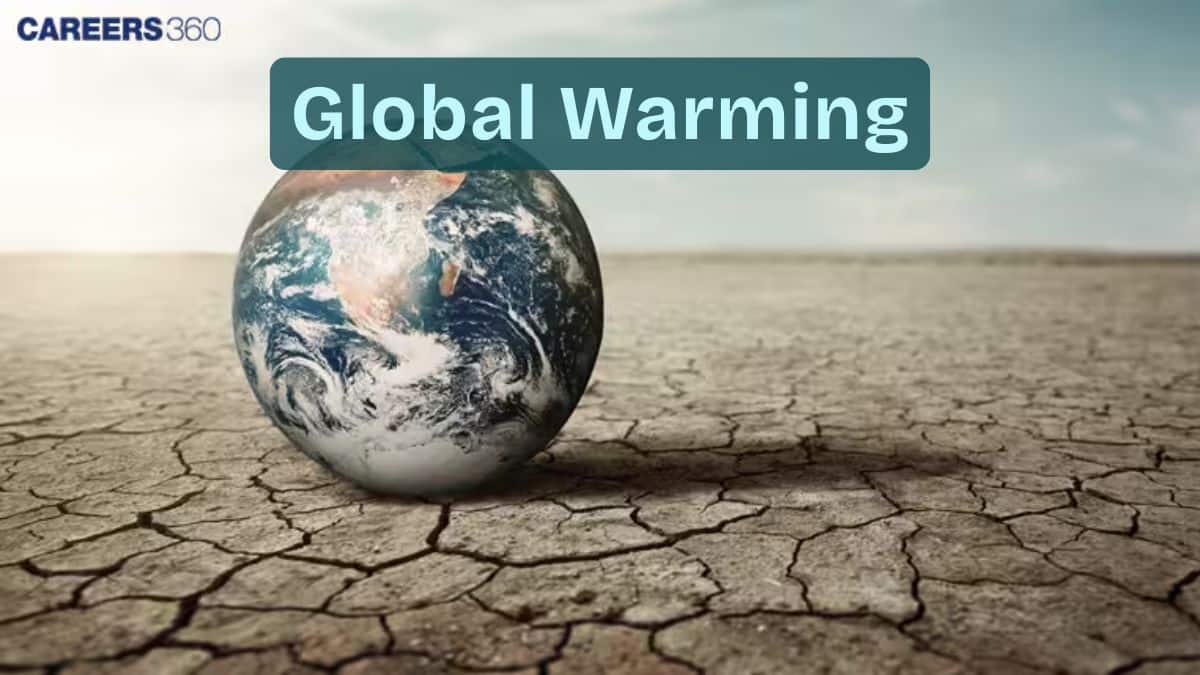
What Is Global Warming?
Global warming means gradual increase of the Earth’s temperature over an extended period. It occurs as a result of accumulation of gases that cause the greenhouse effect like carbon dioxide and methane. It is driven largely by human activities and leads to long-term climate changes affecting ecosystems and humans
History of Global Warming Concept
The theory of man-made global warming was first named in 1896 by Swedish scientist Svante Arrhenius. He suggested that increasing levels of carbon dioxide in the atmosphere could raise surface temperatures.
This concept received still more attention in the 20th century as empirical evidence, as well as climate models, became increasingly available. The awareness of climate change is important as it impacts future global climate, influencing the development of ecosystems, extreme climate conditions, and sea levels, as well as posing threats to human health. It is now a major global environmental concern.
Causes of Global Warming
Global warming is caused by the following reasons:
Natural Causes
| Natural Causes | Explanation |
|---|---|
Volcanic activity | Emit significant amounts of ash and other greenhouse gases like carbon dioxide into the atmosphere which cause short-term warming and cooling. |
Solar radiation | Fluctuation in solar energy affects the climatic conditions on the surface of the earth. |
Natural greenhouse gases | Anthropogenic emissions of greenhouse gases like carbon dioxide, methane, water vapour, and other toxins are emitted, impacting global temperatures. |
Forest Blazes or forest fires | This releases a large amount of carbon-laden gases into the atmosphere and increases the earth’s temperature. |
Anthropogenic Causes
| Anthropogenic Causes | Explanation |
|---|---|
Burning of Fossil Fuels | Burning of coal, oil and natural gas for energy and in vehicles releases carbon dioxide, one of the greenhouse gases into the environment. |
Deforestation limits the process of photosynthesis, which reduces the levels of CO2 in the air. This leads to a rise in the levels of carbon dioxide hence promoting climate change. | |
Industrial Activities | Gases like carbon dioxide, methane and nitrous oxide are produced by factories and industrial processes which cause global warming. |
Agriculture and Livestock | Livestock farming generates methane and the use of fertilizers and other activities in agriculture and animal husbandry emit nitrous oxide are Greenhouse gas. |
Chlorofluorocarbons(CFCs) | Air conditioners and refrigerators add CFCs into the environment and these CFCs lead to ozone layer depletion, thereby increasing the temperature of the earth. |
Effects of Global Warming
Climate change has devastating effects on the environment, living organisms, and human society.
Environmental Impacts
Melting of Polar Ice Caps and Glaciers: The increase in average global temperatures means that global ice caps and glaciers start to melt and lead to an increase in the level of sea.
Rising Sea Levels: Global warming cautions signs which include melting ice and thermal expansion of seawater causing the sea levels to rise disrupting the coastal areas and flooding the low areas.
Ocean Acidification: When the concentration of carbon dioxide goes up, this results in a high amount of carbonic acid in the water thus harming the sea creatures.
Changes in Weather Patterns: Climate change alters weather patterns in the world such that the incidences of heat waves, droughts as well as floods increase.
Ecological Impacts
Loss of Biodiversity: Fluctuating climate and environment lead to many species becoming endangered and therefore decreasing the biodiversity.
Shifts in Habitat Ranges: Frequently, species move to new areas because the temperature in the old habitat becomes unbearable.
Impact on Marine Life: It causes developmental dysfunctions and occurrences like coral bleaching which affects marine life.
Societal Impacts
Food Security: They extrapolated climate change as placing agriculture productivity in a vulnerable position, food shortage and high prices inclusive.
Human Health Risks: High temperatures and increased levels of diseases such as malaria and dengue fever are well-known threats to health.
Economic Consequences: Floods, hurricanes, and other natural calamities damage structures and cause loss in crops because of unfavourable climate changes.
Climate Refugees: Global warming leads to displacement by water, famines, and an increase in climate refugees, and puts pressure on climate.
Adaptation Strategies for Global Warming
There is a need for practical solutions in different fields that will help society reduce the effects resulting from global warming.
Building Resilient Infrastructure
Implementing structures that are resilient to climate change, including having better-designed buildings and countermeasures against floods, reduces the impact and danger to people.
Having protocols of early intervention programs and plan and response readiness flexibly allows for a quick reaction to natural disasters caused by climate change, these include; hurricanes, floods, and wildfires.
Agricultural Adjustments
Climate-smart agriculture which includes Maize- beans crop rotation, water-conserving practices, proper use of fertilizers, and properly planned conservation tillage to help reduce climate impacts and food insecurity.
Water Management
Proper water management and conservation through rainwater harvesting plus the proper usage of water for irrigation plays a major role in the case of unpredictable variation in the rainfall patterns and drought.
Role of Individuals in Combating Global Warming
It is for this reason that the problem of global warming as well as the effects that come with it can be fought through individual actions.
Reducing Carbon Footprint: To cut down their carbon footprint, people can save energy, use energy-saving devices and employ clean sources of energy such as solar or wind energy. Also, the reduction of personal car trips, carpooling, and utilising public transport or cycling decreases greenhouse gas emissions.
Sustainable Living Practices: Measures like recycling and keeping waste levels down, efficient use of water, and going for environment-friendly products and packing lower environmental effects. This includes encouraging freehold farming and insisting on locally produced products to check emission levels by contracting.
Community Initiatives: Other local activities include client involvement in clean-up crusades as well as advocating for environmental conservation policies to reduce global warming. Local environmental groups or initiatives are effective in spreading awareness and encouraging change at the community level.
Global Warming NEET MCQs (With Answers & Explanations)
Important questions asked in exams from this topic are:
Major causes of global warming
Effects of global warming
Practice Questions for NEET
Q1.The two gases making the highest relative contribution to greenhouse gases are
CO2 and N2O
CO2 and CH4
CH4 and N2O
CFC5 and N2O
Correct answer: 2) CO2 and CH4
Explanation:
The gasses that cause the greenhouse effect are called greenhouse gasses, and they trap radiation and do not allow it to reflect off the Earth's surface. The greenhouse gasses are chlorofluorocarbons (CFCs), carbon dioxide (CO2), methane (CH4), and nitrous oxide (N2O).
The approximate percentages of different greenhouse gasses in the atmosphere are:
CFC - 14%, CO2 - 60%, CH4 - 20%, N2O - 6%
Hence, the correct answer is option 2) CO2 and CH4
Q2. Ozone gas is continuously formed in the stratosphere by
Action of UV rays on nascent oxygen
Reaction of oxygen with water vapour
Action of UV rays on molecular oxygen
Action of UV rays on water vapour
Correct answer: 3) Action of UV rays on molecular oxygen
Explanation:
The role of ultraviolet (UV) radiation in ozone formation is essential in the Earth's atmosphere. When UV rays hit oxygen molecules (O₂), they split these molecules into individual oxygen atoms (O). Free oxygen atoms react with other O₂ molecules to form ozone (O₃). This is necessary for creating the ozone layer that protects life on Earth from absorbing harmful UV radiation.
Hence the correct answer is option 3) Action of UV rays on molecular oxygen.
Q3. High concentration of green house gases has resulted in maximum rise of atmospheric temperature in
tropic region
middle latitude
polar region
temperate region
Correct answer: 3) polar region
Explanation:
Increases in the level of greenhouse gases have led to considerable heating of the earth leading to global warming. During the past century, the temperature of the earth has increased by 0.6oC, most of it during the last three decades. The temperature rise is slight in the tropics, moderate in middle latitudes and maximum in polar regions. It will lead to the melting of polar ice caps as well as of other places like the Himalayan snow caps.
Hence, the correct answer is option 3) polar region.
Also Read-
Recommended Video for Global Warming
Frequently Asked Questions (FAQs)
The four main greenhouse gases that cause the greenhouse effect include Carbon dioxide (CO2), Methane (CH4), Nitrous oxide (N2O) and Fluorinated gases like Hydro fluoride carons. These gases make the atmosphere retain heat hence causing the greenhouse effect and overall warming of the climate.
It is through conserving energy through efficient means and sources, shifting to clean energy sources like wind and solar power, protecting forests and increasing afforestation, sustainable agricultural practices, better waste management and supportive policies towards control of greenhouse gases.
It implies that people can save energy by using compact fluorescent bulbs and other energy-saving devices, avoiding travelling in cars (carpooling, using public transport, walking, and cycling), purchasing sustainable products and packages, recycling and minimising waste, using water sparingly and supporting renewable energy.
Climate change is the gradual rise of global mean atmospheric temperature over the century, formerly attributed to human activities like emission of greenhouse gases like carbon dioxide-gas, and methane-gas. Some of the other factors include natural instances such as volcanic eruptions as well as the effects of solar radiation.
It triggers many ill effects on the biosphere; for example, the melting of the polar ice caps and glaciers, the phenomenon of global warming leads to high sea levels, ocean acidification, changes in climate occurrences like heat waves, drought and flooding, and disturbance to the earth’s ecosystems and life forms.
