


Solid Waste Management: Definition, Methods, Importance, Types, Sources
Solid waste management is the systematic process of collection, treatment, recycling, and disposal of waste generated by human activities. It aims to reduce environmental pollution, conserve resources, and protect public health through sustainable waste-handling practices. This topic forms an important part of Environmental Issues in Class 11 Biology and NEET preparation.
This Story also Contains
- What Is Solid Waste Management?
- What Is Solid Waste?
- Classification of Solid Waste
- Sources of Solid Wastes
- Methods of Solid Waste Management
- Waste Treatment and Disposal
- Advanced Waste Management Technologies
- Environmental and Health Impacts of Improper Waste Management
- Solid Waste Management NEET MCQs (With Answers & Explanations)
- Recommended Video for Solid Waste Management
What Is Solid Waste Management?
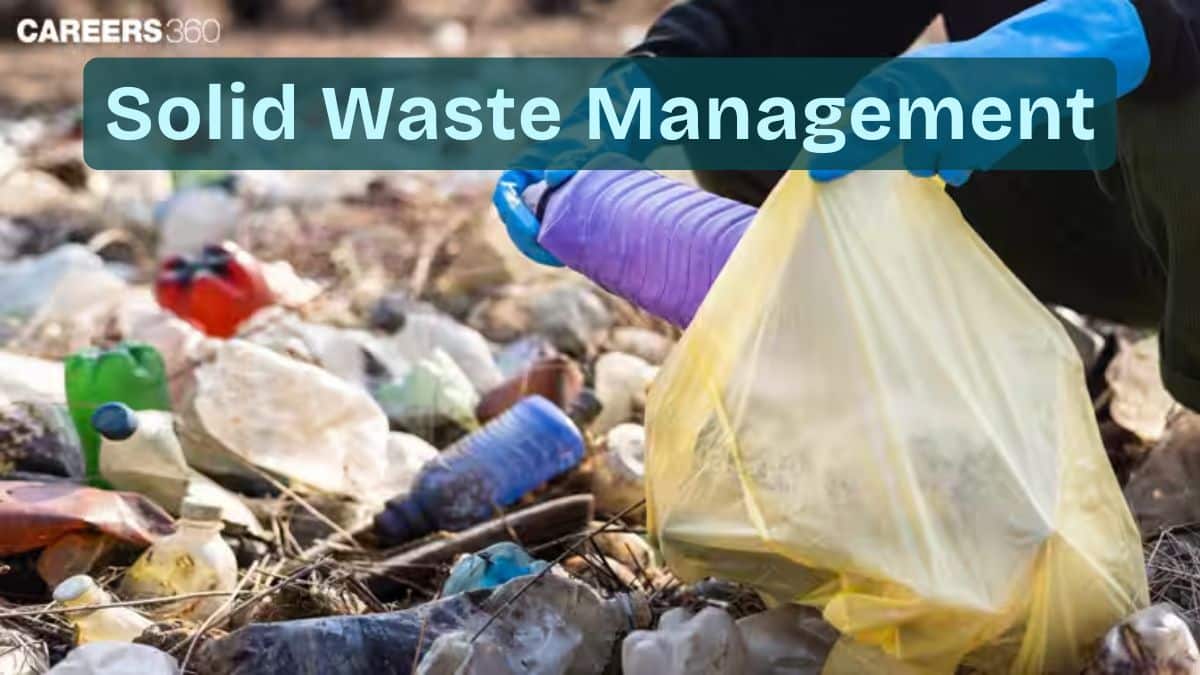
Solid waste management is the collection, treatment, and disposal of waste materials produced by human activities. This includes varied types of waste emanating from households, industries, healthcare institutions, and agricultural sectors. It ensures that public health and the environment are protected. It includes a reduction in environmental pollution and conserving resources by recycling and reusing materials. Managing waste also reduces the health hazards from waste.
What Is Solid Waste?
Solid waste refers to unwanted and discarded materials. It is generated from household, industries, health care and agriculture. It includes municipal, industrial, biomedical, hazardous, and agricultural waste.
Classification of Solid Waste
Solid waste is classified as follows:
Municipal Solid Waste
Household wastes are everyday things that are commonly discarded by households like food scraps, papers, plastics, glass, and metals.
Commercial wastes emanate from businesses and commercial establishments and comprise packaging materials, wastes from offices, and food waste.
Industrial Solid Waste
Industrial solid waste emanates from industries involved in manufacturing, mining, and construction processes.
Most of the wastes produced in these industries often have chemicals, heavy metals, and other dangerous elements that call for careful handling and disposal.
Biomedical Waste
Biomedical wastes are produced in health care centres like hospitals and clinics.
It comprises syringes, bandages, or any other materials that are soaked in blood or other body fluids.
Hence, highly infectious, and in most cases, require special treatment and ways of disposal.
Hazardous Waste
Hazardous wastes are wastes that pose a threat to human health and the environment by being toxic, corrosive, highly flammable, or reactive.
Examples include chemicals, batteries, and electronic waste.
Agricultural Waste
Agricultural wastes are wastes originating from agricultural-related activities and include crop residues, animal manure, and pesticides.
It is always essential that agricultural waste be handled and treated with proper management for environmental safety and a green future of sustainable agriculture.
Sources of Solid Wastes
The various sources of solid waste are:
| Source | Examples |
|---|---|
Residential | Food remains, materials used for packaging, and other everyday items |
Industrial | Scrap materials, chemicals, and unused by-products |
Commercial | Food wrappings, office supplies, and leftover foods |
Institutional | Paper and office equipment to hazardous medical wastes |
Construction and demolition | Concrete, wood, metals, and bricks. |
Methods of Solid Waste Management
The solid waste management process is described below:
Waste Collection and Transportation
Two important facets of solid waste management are effective collection and transportation.
Collection systems entail the methods of collecting refuse from homes, commercial institutions, and organisations.
Transportation methods denote techniques for moving wastes to treatment and disposal sites. Inadequate infrastructure, lack of funds, and logistical problems are some challenges in waste collection.
Waste Segregation
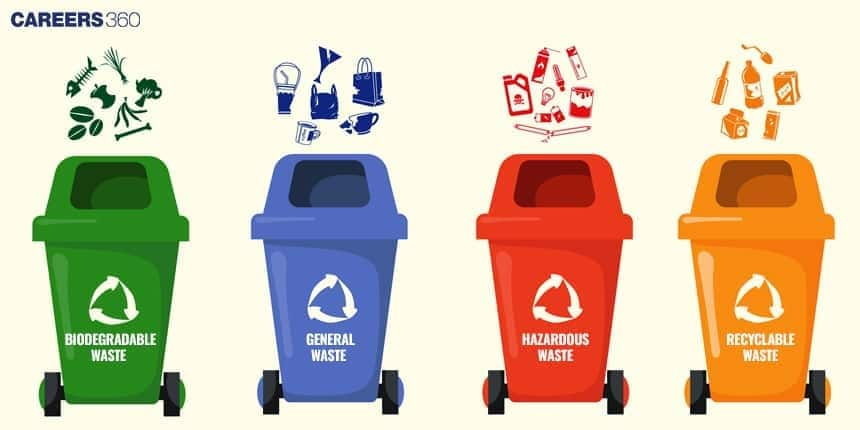
Segregation of wastes means the separating of different wastes to administrate them effectively.
This process is important as it can be seen that various wastes require different methods of treatment.
Sorting out includes segregative methodologies at the source, like organic, recyclable, and hazardous waste.
The segregation process is on the frontline with households and institutions ensuring the waste is sorted correctly from the generation point.
Waste Treatment and Disposal
The treatment and disposal of solid wastes are undertaken in a variety of ways. Some of these are pointed out below.
Landfilling
It is a method where the wastes are buried in a selected area. The modern design of landfills incorporates features that prevent environmental contamination. The major disadvantage is the use of land and the danger of pollution.
Incineration
It is a process of burning waste to reduce its volume and produce energy. It efficiently reduces the volume of waste but at the same time affects air quality.
Composting
It refers to the decomposition of organic materials into manure, which enhances fertility in soil. There are two types of composting: aerobic and anaerobic, each with its advantages.
Recycling
It is the process that involves the transformation of waste into reusable products. To recycle means to conserve resources and save the environment.
Anaerobic Digestion
It is the breaking down of organic waste in an oxygen-free environment to produce biogas. The benefit of this process is that it produces energy, but it has high development barriers.
Advanced Waste Management Technologies
Advanced technologies of waste management are necessary to control the complex nature and quantity of waste.
Waste-to-energy conversion: Treats wastes to get useful energy through various technologies.
Plasma Gasification: High temperatures to convert waste into syngas and slag.
Pyrolysis: Organic decomposition process in the absence of oxygen at high temperatures.
Bioremediation: Detoxification of hazardous waste through microorganisms.
Vermicomposting: It makes use of worms to decompose the organic refuse into very fine compost of high grade thus a natural and effective way of waste management.
Environmental and Health Impacts of Improper Waste Management
Improper waste management is associated with serious environmental and health effects.
Improper waste disposal significantly contributes to air, water, and soil pollution.
Respiratory problems, and exposure to toxic substances.
Wildlife is also affected by waste pollution since their habitats are destroyed
Food chains may be contaminated, leading to certain health complications and mortality.
Solid Waste Management NEET MCQs (With Answers & Explanations)
Important questions asked in NEET from this topic are:
Classification of solid waste
Waste treatment and disposal
Practice Questions for NEET
Q1. A higher biochemical oxygen demand in a particular segment of a river indicates that
the segment is free from pollution
the segment is highly polluted
aquatic life has started flourishing
the river has high number of aquatic animals
Correct answer: 2) the segment is highly polluted
Explanation:
A higher BOD in a river segment signifies organic pollution. BOD quantifies oxygen utilised by microbes to decompose organic substances like sewage and decaying plants. An elevated BOD implies increased organic content, necessitating more oxygen. This excessive demand can deplete water oxygen, adversely impacting aquatic life by decreasing available oxygen for fish and similar organisms.
Hence, the correct answer is option 2). The segment is highly polluted.
Q2. Statement 1: Open landfilling refers to throwing waste on an uncovered area, which is periodically burnt or compressed.
Statement 2: In sanitary landfilling, the waste is compacted and covered by a layer of dirt.
Both statements 1 and 2 are correct.
Statement 1 is correct but statement 2 is incorrect
Statement 1 is incorrect but statement 2 is correct
Both statements 1 and 2 are incorrect.
Correct answer: 1) Both statements 1 and 2 are correct.
Explanation:
Statement 1: Open landfilling is a primitive waste management practice where waste is merely dumped on an open terrain, which may undergo occasional burning or compaction.
Correct. In the context of waste disposal, open landfilling denotes the unsophisticated method of discarding waste on an exposed area, typically followed by periodic compression and, at times, burning. This archaic approach lacks effective containment systems, resulting in significant environmental degradation and health risks due to the emission of harmful gases.
Statement 2: Sanitary landfilling is an improved waste disposal technique that involves systematic compaction of waste and subsequent daily covering with soil.
Correct. Sanitary landfilling represents a more regulated method for waste management, where the waste is not only compressed to diminish its size but is also capped with a soil layer each day. This practice aims to mitigate air exposure, odor release, and the potential for pest breeding, thereby lessening the environmental impact and associated health concerns.
Hence, the correct answer is option 1) Both statements 1 and 2 are correct.
Q3. The amount of biodegradable organic matter in sewage water can be estimated by measuring.
Biochemical oxygen demand
The growth of anaerobic bacteria in water
Biogeological oxygen demand
The growth of aerobic bacteria in water.
Correct answer: 1) Biochemical oxygen demand
Explanation:
BOD is the quantity of oxygen needed by microbes to decompose the organic matter in water during a predetermined time frame, often five days at 20°C. Because microorganisms need more oxygen to break down organic material, a greater BOD denotes a larger degree of organic pollution. This measurement is crucial for evaluating the quality of water and figuring out how polluted sewage or wastewater is.
Hence, the correct answer is option 1)Biochemical oxygen demand.
Also Read-
Recommended Video for Solid Waste Management
Frequently Asked Questions (FAQs)
The broad spectrum of refuse materials resulting from human and animal activities that become discarded as unwanted and useless. It shall include household, commercial, industrial, and biomedical waste.
A good solid waste management system is highly essential for preventing environmental pollution and conservation of resources by way of recycling and re-use of scrap materials, and protection of public health from the dangers of wastes.
Solid waste management is the collection, treatment, and disposal of waste materials produced by human activities. It involves methods such as recycling, composting, and proper disposal to reduce environmental impact. The aim is to manage waste efficiently to protect human health and the environment.
The methods of solid waste management are collection and transportation, segregation, treatment, and recycling. Treatment methods are by landfilling, incineration, composting, and anaerobic digestion.
Recycling helps the environment preserve natural resources, reduce the quantity of waste disposed in landfills, reduce pollution and conserve energy normally used to make new materials from raw resources.