Download Careers360 App
Carboxylic Acids: Definition, Structure, Properties, Formula and Uses

Carboxylic Acids: Definition, Structure, Properties, Formula and Uses

Edited By Shivani Poonia | Updated on Jul 02, 2025 07:57 PM IST

Think of the sour taste of vinegar or the citrus odor of lemons; think of the relieving action of aspirin. Everyday things that share a common chemical platform are carboxylic acids. Since carboxylic acids form an inseparable part of everyday life, their properties, methods of preparation, and key reactions are very essential for any person approaching organic chemistry. These acids are very important not only in biological cycles but also in many broad-area industrial applications.

This Story also Contains
  1. How to Understand Carboxylic Acids
  2. Chemical Properties and Acidity
  3. Key Reactions
  4. Relevance and Applications
  5. Some Solved Examples
  6. Summary
Carboxylic Acids: Definition, Structure, Properties, Formula and Uses
Carboxylic Acids

By nature, carboxylic acids are rather versatile compounds due to their functional group—the carboxyl group $(-\mathrm{COOH})$ which imparts very peculiar chemical properties and reactivity. This usually allows a wide array of possible chemical reactions that carboxylic acids take part in, and it plays a very important role in the synthesis of a myriad of compounds. Different methods of preparation of Carboxylic Acids are of importance and have different applications.

How to Understand Carboxylic Acids

A carboxylic acid can be defined as an organic compound that contains a carboxyl group,$-\mathrm{COOH}$Such a functional group is one that consists of a carbonyl, C=O, and a hydroxyl group, OH, attached to one carbon atom. The general formula of the carboxylic acid is $\mathrm{R}-\mathrm{COOH}$ here, R is a hydrocarbon chain. These acids exhibit typical acidic behavior, which is a direct result of the possibility of the carboxyl group donating a proton in the solution. Their reactivity and utility in many organic synthetic reactions are direct consequences of their acidity. Their unique structure and reactivity make carboxylic acids the driving force of organic synthesis, therefore leading to a large number of compounds of central importance.

From Esters

Esters on acidic hydrolysis give acids, while on basic hydrolysis give carboxylates, which on acidification give corresponding acids. The reaction occurs as follows:

From Grignard reagents

Grignard reagents with dry ice form salts of carboxylic acids which after acidification give corresponding carboxylic acids. The reaction occurs as follows:

From Nitriles and Amides


Nitriles are hydrolyzed in an acidic or basic medium first to amides and then to acids. The reaction occurs as follows:

Chemical Properties and Acidity

There are several significant chemical properties of carboxylic acids. They do form hydrogen bonds and this has implications for their boiling and melting points. The acids are, by nature, typical acids since they neutralize with base forming salt plus water. Apart from that, carboxylic acids can undergo esterification with alcohol to yield esters and water. In addition, they can undergo reduction reactions to primary alcohols.

Formation of Anhydride

Carboxylic acid on heating with H2SO4 or P2O5 gives the corresponding anhydride. The reaction occurs as follows:

Reaction with Ammonia

On heating with NH3, carboxylic acid gives ammonium salt which on further heating at high temperature gives amides. The reaction occurs as follows:

Reduction

Carboxylic acids are reduced to$1^0$ alcohol by $\mathrm{LiAH}_4$ or better with $\mathrm{B}_2 \mathrm{H}_6 . \mathrm{B}_2 \mathrm{H}_6$ does not easily reduce esters, nitro, and halo groups, and $\mathrm{NaBH}_4$ does not reduce the (-COOH) group. The reaction occurs as follows:

Decarboxylation

When sodium salts of carboxylic acids are heated with soda lime$\left(\mathrm{NaOH}\right.$ and CaO in $3: 1$ ratio), they form hydrocarbons by losing $\mathrm{CO}_2$. This is known as decarboxylation. The reaction occurs as follows:

Kolbe's electrolysis

The electrolysis of aqueous solution of sodium or potassium salts of carboxylic acid makes the carboxylic acid undergo decarboxylation to form alkane. The reaction occurs as follows:

Halogenation

The method of preparing α-chloro or α-bromo acid is by Hell-Volhard-Zelinsky reaction, which is carried out by treating the acid with $\mathrm{Cl}_2$ or $\mathrm{Br}_2$ in the presence of a small amount of red phosphorous. The reaction occurs as follows:

Ring substitution

Aromatic carboxylic acid undergoes substitution electrophilic reactions in which the $(-\mathrm{COOH})$ group acts as a deactivating and meta-directing group. It does not undergo Friedel-Crafts reaction because the $(-\mathrm{COOH})$ group is deactivating and the catalyst $\mathrm{AlCl}_3$gets bonded to the (COOH) group. The reactions occur as follows:

Acidity in Carboxylic Acids

One of the more important characteristics of carboxylic acids is their acidity. This is ordered in relation to the stability of the carboxylate anion, R-COO-, upon deprotonation. Electron-withdrawing groups onto the hydrocarbon chain, R, in such a structure improves acidity by stabilizing the carboxylate anion, and electron-donating groups diminish acidity. An excellent example is formic acid,1. $\mathrm{H}-\mathrm{COOH}$, that is more acidic relative to acetic acid, $\mathrm{CH}_3-\mathrm{COOH}$ since the attached methyl group in acetic acid is electron-donating.

Carboxylic acids are weaker than mineral acids but they are stronger than alcohols, phenols, and peroxy acids.

  • Phenols are stronger acids than alcohols.
  • Carboxylic acids are stronger acids than phenols.
  • Carboxylic acids are stronger than peroxy acids.
  • Formic acid is stronger is a stronger acid than benzoic acid.
NEET Highest Scoring Chapters & Topics
This ebook serves as a valuable study guide for NEET exams, specifically designed to assist students in light of recent changes and the removal of certain topics from the NEET exam.
Download EBook

Key Reactions

Perkin Condensation

A reaction between an aromatic aldehyde with an anhydride in an alkali salt of the acid gives α,β-unsaturated carboxylic acids. This is utilized in infinitely many such instances, including in synthesizing cinnamic acids, which are precursors to a wide range of perfumes and pharmaceuticals.

Aromatic aldehydes when heated with the anhydride of an aliphatic acid (containing two $\alpha$-H atoms) in the presence of its sodium or potassium salt result in condensation to form α,β-unsaturated acid.

Mechanism

For example,

Reformatsky Reaction

The Reformatsky reaction This is the reaction of different α-halo esters and appropriate aldehydes or ketones in the presence of a zinc metal. The products for this kind of reaction include the β-hydroxy esters, which are very vital in the sense that they act as an intermediate in the synthesis of several biologically active compounds.

Ketones and aldehydes react with α-bromoesters(BrCHRCOOEt) and Zn in benzene to form $\beta$-hydroxy esters. First, the zinc organometallic BrZnCHRCOOEt is formed and then it adds to the ( $\mathrm{C}=0$ ).

Mechanism

For example,

Benzoin Condensation

Benzoin Condensation is a process whereby the reaction of two aromatic aldehydes in the presence of cyanide ions ultimately yields compounds called benzoins. This reaction becomes of immense importance in the synthesis of aromatic ketones and alcohols.

Benzil-Benzilic Acid Rearrangement

The Benzil-Benizilic Acid Rearrangement is a process whereby, upon treatment with a base, benzil is converted into benzilic acid. A certain rearrangement constitutes the most important step in the synthesis of a wide range of α-hydroxy acids that have very extensive applications in pharmaceuticals and cosmetics.

Benzoin condensation

When benzaldehyde is refluxed with aq. alcoholic KCN solution to give benzoin($\alpha$-hydroxy ketone), the process is called benzoin condensation.

Mechanism

For example,

Benzil-Benzilic acid rearrangement

$\alpha$-Diketones undergo a rearrangement when treated with base $(\mathrm{NaOH})$ to give -hydroxy acids.

Mechanism

For example,

Relevance and Applications

Carboxylic acids represent the main classes of compounds of great industrial and biological importance. They find broad application in the synthesis of aspirin and penicillin. It's also due to this acidic nature that carboxylic acids are used as preservatives in the food industry. This importance flows down into the synthesis of polymers, dyes, and perfumery, just to mention a few. This site presents basic knowledge of reactions and properties with elements of carboxylic acids for academic reasons, students learning organic chemistry, and researchers in further complex organic reactions and mechanisms. It is precisely the flexibility and reactivity of carboxylic acids in chemical processes that make these substances irreplaceable in most theories and applications of chemistry.

Recommended topic video on (Carboxylic Acids )


Some Solved Examples

Example 1
Question:

When CH3-CH2MgBr is treated with CO2 , CH3CH2COOH is formed, The C of -COOH group comes from -

1)methylene group

2)-CH3 group

3) from CO2 gas

4)None of these

Solution:

As we learned,

Grignard reagent with CO2 (dry ice) forms carboxylic acid via carboxylic acid salt as an intermediate.

$\mathrm{RMgX}+\mathrm{CO}_2 \rightarrow \mathrm{RCOOMgX} \rightarrow \mathrm{RCOOH}$

The carbon of the -COOH group comes from CO2 gas.

Hence, the answer is the option (3).

Example 2
Question:

In the following reaction :

$\mathrm{CH}_3-\mathrm{OH}+\mathrm{CH}_3 \mathrm{COCl} \rightarrow \mathrm{P}+\mathrm{H}_2 \mathrm{O} \rightarrow Q+R$

Q and R respectively are,

1)HCOOH + C2H5OH

2)CH3COOH + C2H5OH

3)HCOOH + CH3OH

4)CH3COOH + CH3OH

Solution:

As we learned,

Acidic and basic hydrolysis of Esters -

Acidic hydrolysis gives carboxylic acid directly. Basic hydrolysis gives carboxylates which acidify to give the carboxylic acid.

wherein
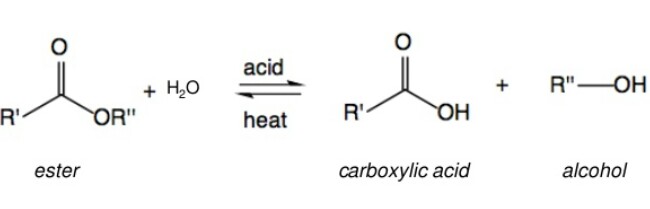

Therefore, Option(4) is correct

Example 3
Question:

$\mathrm{CH}_3 \mathrm{CH}_2 \mathrm{COOH} \xrightarrow[\operatorname{red} \mathrm{P}]{\mathrm{Cl}_2} A \xrightarrow{\text { alc. } \mathrm{KOH}} B$.

What is B ?

1)$
\mathrm{CH}_3 \mathrm{CH}_2 \mathrm{COCl}
$

2)$
\mathrm{CH}_3 \mathrm{CH}_2 \mathrm{CHO}
$

3) $
\mathrm{CH}_2=\mathrm{CHCOOH}
$

4)$
\mathrm{ClCH}_2 \mathrm{CH}_2 \mathrm{COOH}
$

Solution:

The reaction will be -

The correct option is 3.

Summary

The unique chemical properties and considerable acidity of carboxylic acids make them central for many chemical reactions and applications. Their potential to form hydrogen bonds and esters, and to take part in reduction reactions, only adds to their variability. Some of the key reactions, like Perkin's Condensation, the Reformatsky Reaction, Benzoin Condensation, and the Benzil-Benzilic Acid Rearrangement, are just a few indicative of their critical nature in organic synthesis.

Frequently Asked Questions (FAQs)

1. Why are carboxylic acids considered weak acids?
Carboxylic acids are weak acids because they only partially dissociate in water. The carboxyl group can release a proton (H+) in solution, but the process is reversible, resulting in an equilibrium between the acid and its conjugate base. This partial dissociation leads to their classification as weak acids.
2. How does the structure of carboxylic acids contribute to their acidity?
The acidity of carboxylic acids is due to the resonance stabilization of the carboxylate anion. When a proton is removed, the negative charge is delocalized over two oxygen atoms, making the anion more stable. This stability increases the likelihood of proton dissociation, contributing to the acidic nature of carboxylic acids.
3. How does the length of the carbon chain affect the properties of carboxylic acids?
As the carbon chain length increases in carboxylic acids, their solubility in water decreases, while their boiling points increase. This is because longer carbon chains increase the non-polar character of the molecule, reducing water solubility. However, the increased molecular weight and stronger intermolecular forces lead to higher boiling points.
4. How do carboxylic acids form hydrogen bonds, and why is this important?
Carboxylic acids can form hydrogen bonds through their -OH group (acting as a hydrogen bond donor) and the C=O group (acting as a hydrogen bond acceptor). This ability to form hydrogen bonds with water and other carboxylic acid molecules is crucial for their solubility in water and their relatively high boiling points compared to other organic compounds of similar molecular weight.
5. What is the difference between a carboxylic acid and an ester?
While both contain a carbonyl group (C=O), carboxylic acids have an -OH group attached to the carbonyl carbon, forming a -COOH group. Esters, on the other hand, have an -OR group (where R is an alkyl group) attached to the carbonyl carbon, forming a -COOR group. This structural difference leads to distinct properties and reactivity.
6. What are carboxylic acids, and how can we identify them?
Carboxylic acids are organic compounds containing a carboxyl group (-COOH) attached to a carbon atom. They can be identified by their general formula R-COOH, where R is a hydrogen atom or an alkyl group. The carboxyl group consists of a carbonyl group (C=O) bonded to a hydroxyl group (-OH).
7. What is the IUPAC naming system for carboxylic acids?
In the IUPAC system, carboxylic acids are named by replacing the "-e" ending of the corresponding alkane with "-oic acid." The longest carbon chain containing the carboxyl group is identified, and the position of the carboxyl group is assumed to be at the end of the chain. For example, CH3COOH is named ethanoic acid.
8. What is the difference between saturated and unsaturated carboxylic acids?
Saturated carboxylic acids contain only single bonds in their carbon chain, while unsaturated carboxylic acids have one or more carbon-carbon double or triple bonds. Unsaturated carboxylic acids, like oleic acid, tend to have lower melting points and are often liquids at room temperature. They also can participate in addition reactions due to their double bonds.
9. How does the presence of electron-withdrawing groups affect the acidity of carboxylic acids?
Electron-withdrawing groups (such as halogens or nitro groups) near the carboxyl group increase the acidity of carboxylic acids. These groups pull electrons away from the carboxyl group, making it easier for the acid to donate a proton. This stabilizes the conjugate base, resulting in a stronger acid with a lower pKa value.
10. How do carboxylic acids form salts, and what are their properties?
Carboxylic acids form salts by reacting with bases, replacing the acidic hydrogen with a metal ion. For example, sodium acetate is formed when acetic acid reacts with sodium hydroxide. These salts are typically more water-soluble than their parent acids and have higher melting points due to their ionic nature.
11. How do carboxylic acids react with bases, and what products are formed?
Carboxylic acids react with bases in a neutralization reaction, forming a salt and water. The carboxyl group (-COOH) loses a proton, which is accepted by the base. For example, when sodium hydroxide (NaOH) reacts with acetic acid (CH3COOH), it forms sodium acetate (CH3COONa) and water. This reaction is the basis for many important industrial and biological processes.
12. What is the mechanism of the acid-catalyzed esterification reaction?
The acid-catalyzed esterification reaction begins with protonation of the carbonyl oxygen in the carboxylic acid by the acid catalyst. This makes the carbonyl carbon more electrophilic. The alcohol then attacks this carbon, forming a tetrahedral intermediate. After a series of proton transfers, water is eliminated as a leaving group, resulting in the formation of the ester product.
13. How do carboxylic acids participate in reduction reactions?
Carboxylic acids can be reduced to primary alcohols using strong reducing agents like lithium aluminum hydride (LiAlH4) or sodium borohydride (NaBH4). The carbonyl group (C=O) is reduced to a CH2-OH group. This reaction is important in organic synthesis for converting carboxylic acids to alcohols, which can then be used in further reactions.
14. How do carboxylic acids form anhydrides, and what are their uses?
Carboxylic acids can form anhydrides by reacting with each other or with acid chlorides, eliminating a water molecule. The resulting anhydride contains two acyl groups bonded to an oxygen atom. Anhydrides are important in organic synthesis as acylating agents and in the production of certain polymers and pharmaceuticals.
15. How do carboxylic acids behave as Brønsted-Lowry acids?
In the Brønsted-Lowry acid-base theory, carboxylic acids act as proton donors. They can transfer their acidic hydrogen (from the -OH group) to a base, forming a carboxylate anion. This proton transfer is reversible, and the extent of dissociation depends on the strength of the acid and the base involved in the reaction.
16. How do carboxylic acids contribute to the taste and smell of foods?
Many carboxylic acids have distinct odors and flavors, contributing significantly to the taste and smell of various foods. For example, butyric acid gives rancid butter its characteristic smell, while acetic acid provides the sour taste in vinegar. The presence and concentration of these acids can greatly influence food quality and perception.
17. What role do carboxylic acids play in biological systems?
Carboxylic acids are crucial in biological systems. They are components of fatty acids, which are essential for cell membranes and energy storage. Amino acids, the building blocks of proteins, contain carboxyl groups. Carboxylic acids are also involved in the citric acid cycle, a key metabolic pathway, and act as neurotransmitters and hormones in some cases.
18. What is the significance of carboxylic acids in polymer chemistry?
Carboxylic acids play a crucial role in polymer chemistry. They are used to produce important polymers like polyesters and polyamides (nylons). The carboxyl group's ability to form ester or amide linkages allows for the creation of long chain molecules. Additionally, carboxylic acids can be used to modify polymer properties, such as increasing adhesion or water solubility.
19. What is the Fischer esterification reaction, and why is it important?
Fischer esterification is the reaction between a carboxylic acid and an alcohol to form an ester and water, typically catalyzed by a strong acid. This reaction is reversible and reaches an equilibrium. It's important because it's a key method for synthesizing esters, which are widely used in the fragrance, flavor, and polymer industries.
20. What is the significance of the pKa value in carboxylic acids?
The pKa value is a measure of acid strength, indicating the acid's tendency to dissociate in water. For carboxylic acids, pKa values typically range from 3 to 5. A lower pKa indicates a stronger acid, as it dissociates more readily. This value is crucial for understanding the acid's behavior in various chemical reactions and biological systems.
21. What is the importance of carboxylic acids in the food industry?
Carboxylic acids are widely used in the food industry as preservatives, flavor enhancers, and pH regulators. For example, benzoic acid and its salts are common food preservatives. Citric acid is used as a flavoring agent and to adjust pH in soft drinks. Acetic acid, in the form of vinegar, is used in pickling and as a condiment.
22. What is the Hell-Volhard-Zelinsky reaction, and why is it important?
The Hell-Volhard-Zelinsky reaction is a method for α-halogenation of carboxylic acids. It involves reacting a carboxylic acid with chlorine or bromine in the presence of a phosphorus trihalide catalyst. This reaction is important because it provides a way to introduce a halogen atom adjacent to the carboxyl group, allowing for further functionalization of the molecule.
23. How do carboxylic acids participate in decarboxylation reactions?
Decarboxylation is the removal of the carboxyl group from a carboxylic acid, resulting in the formation of carbon dioxide and a new compound with one less carbon atom. This reaction often requires heat or a catalyst. Decarboxylation is important in many biological processes and in organic synthesis for removing carboxyl groups.
24. What is the significance of carboxylic acids in the pharmaceutical industry?
Carboxylic acids are crucial in the pharmaceutical industry. Many drugs contain carboxylic acid groups, which can affect their solubility, absorption, and biological activity. For example, aspirin (acetylsalicylic acid) and ibuprofen are common pain relievers containing carboxylic acid groups. Carboxylic acids are also used as starting materials or intermediates in drug synthesis.
25. How do dicarboxylic acids differ from monocarboxylic acids in their properties and reactions?
Dicarboxylic acids contain two carboxyl groups, while monocarboxylic acids have only one. This affects their physical and chemical properties. Dicarboxylic acids generally have higher melting points due to stronger hydrogen bonding. They can form two types of salts and esters, and in some cases, they can form cyclic anhydrides. Their reactivity is often influenced by the distance between the two carboxyl groups.
26. What is the Kolbe electrolysis reaction, and how does it involve carboxylic acids?
The Kolbe electrolysis is an electrochemical reaction that converts carboxylic acids to alkanes with one less carbon atom. In this process, a carboxylate anion is oxidized at the anode, losing CO2 and forming a radical. Two of these radicals then combine to form a new carbon-carbon bond. This reaction is useful for synthesizing symmetrical alkanes and some cyclic compounds.
27. How do carboxylic acids interact with amino acids in biological systems?
Carboxylic acids interact with amino acids in various ways in biological systems. The carboxyl group of amino acids can form peptide bonds with the amino groups of other amino acids, creating proteins. Carboxylic acids can also form salt bridges with the basic side chains of amino acids, contributing to protein structure and function. Additionally, some amino acids have carboxylic acid side chains that participate in various biochemical reactions.
28. What is the importance of carboxylic acids in the production of soaps and detergents?
Carboxylic acids, particularly fatty acids, are key components in soap and detergent production. Soaps are typically sodium or potassium salts of long-chain fatty acids. When these carboxylic acid salts are mixed with water, they form micelles that can trap and remove dirt and oil. The polar carboxylate head interacts with water, while the non-polar hydrocarbon tail interacts with oily substances, making them effective cleaning agents.
29. How do carboxylic acids contribute to the acidity of rainwater?
Carboxylic acids contribute to the acidity of rainwater through various processes. Formic acid and acetic acid can be formed in the atmosphere from the oxidation of organic compounds emitted by plants and human activities. These acids dissolve in water droplets, lowering the pH of rainwater. While not as significant as sulfuric and nitric acids in acid rain formation, carboxylic acids do play a role in atmospheric chemistry and precipitation acidity.
30. What is the Curtius rearrangement, and how does it relate to carboxylic acids?
The Curtius rearrangement is a chemical reaction that converts carboxylic acids to isocyanates. It involves first converting the carboxylic acid to an acyl azide, which then decomposes to form an isocyanate with the release of nitrogen gas. This rearrangement is important in organic synthesis as it provides a way to convert carboxylic acids into compounds containing nitrogen, such as amines or carbamates.
31. How do carboxylic acids participate in esterification reactions with alcohols other than ethanol?
Carboxylic acids can undergo esterification with various alcohols, not just ethanol. The reaction mechanism is similar: the carbonyl carbon of the acid is attacked by the nucleophilic oxygen of the alcohol, forming a tetrahedral intermediate. After proton transfers and loss of water, an ester is formed. The nature of the alcohol (primary, secondary, tertiary) and its size can affect the reaction rate and yield. This versatility allows for the synthesis of a wide range of esters with different properties.
32. What is the role of carboxylic acids in the production of biodiesel?
Carboxylic acids, specifically fatty acids, are crucial in biodiesel production. Biodiesel is typically made through the transesterification of vegetable oils or animal fats, which contain triglycerides (esters of fatty acids and glycerol). In this process, the triglycerides react with an alcohol (usually methanol) in the presence of a catalyst, producing fatty acid methyl esters (FAME), which constitute biodiesel. Understanding the properties and reactions of these carboxylic acids is essential for optimizing biodiesel production and quality.
33. How do carboxylic acids behave in buffer solutions?
Carboxylic acids can form buffer solutions when combined with their conjugate bases (carboxylate ions). A buffer solution resists changes in pH when small amounts of acid or base are added. For example, acetic acid and sodium acetate form an effective buffer system. The carboxylic acid can donate protons to neutralize added base, while the carboxylate ion can accept protons to neutralize added acid, maintaining a relatively stable pH. This buffering capacity is crucial in many biological and industrial processes.
34. What is the significance of carboxylic acids in the wine-making process?
Carboxylic acids play a vital role in wine-making, affecting both the fermentation process and the final flavor profile. Tartaric, malic, and citric acids are naturally present in grapes and contribute to wine acidity. During fermentation, yeasts produce acetic acid and other carboxylic acids. Malolactic fermentation, a secondary fermentation process, converts malic acid to lactic acid, softening the wine's acidity. The balance of these acids is crucial for the wine's taste, stability, and aging potential.
35. How do carboxylic acids participate in the formation of amides?
Carboxylic acids can form amides through reaction with amines. This typically involves first activating the carboxylic acid by converting it to an acid chloride or anhydride. The activated species then reacts with an amine, with the amine nitrogen attacking the carbonyl carbon. After elimination of the leaving group and proton transfer, an amide bond is formed. This reaction is fundamental in peptide synthesis and the production of various pharmaceuticals and polymers.
36. What is the importance of carboxylic acids in the Krebs cycle?
Carboxylic acids are central to the Krebs cycle (also known as the citric acid cycle), a key metabolic pathway in cellular respiration. Several intermediates in this cycle are carboxylic acids, including citric acid, isocitric acid, α-ketoglutaric acid, succinic acid, fumaric acid, and malic acid. These acids undergo various transformations, including oxidation and decarboxylation, driving the cycle and producing energy in the form of ATP and reducing agents (NADH and FAD

Articles

Back to top