


Pinhole Camera - Definition, How To Make a Pinhole Camera, Images, FAQs
A pinhole camera is one of the simplest optical devices used to understand how images are formed without using any lens. It works on the basic principle that light travels in straight lines, known as rectilinear propagation of light. This concept is very important in pinhole camera Class 6 science, where students learn about light, shadows, and image formation. Despite its simple construction, a pinhole camera can produce a clear, real, and inverted image of an object. It helps in visualizing how light enters through a tiny hole and forms an image on a screen. In this article, we will explore the working principle and uses of a pinhole camera in an easy and student-friendly way.
This Story also Contains
- What is a Pinhole Camera?
- Pinhole Camera Images
- How to Make a Pinhole Camera?
- How to Make a Pinhole Camera Using Household Items?
- Principle of Pinhole Camera – Image Formation
- Pinhole Camera Image Features
- What are the Uses of a Pinhole Camera?

What is a Pinhole Camera?
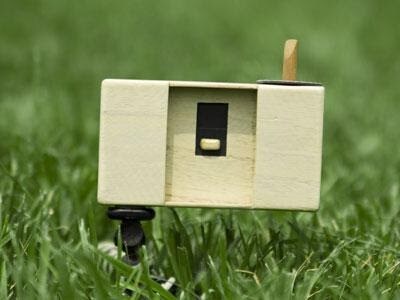
A pinhole camera is a simple optical device that forms an image without using any lens or mirror. It works on the principle that light travels in straight lines. When light passes through a tiny pinhole, it produces an inverted and real image of the object on the opposite screen.
Before understanding the pinhole camera, remember that a camera is an instrument used to capture images. Modern digital cameras use lenses, but the pinhole camera is the earliest form of a camera and is widely used to demonstrate the basic behaviour of light.
You may have noticed small bright spots of sunlight on the ground when light passes through holes in leaves or damaged roofs. These holes act like natural pinhole cameras.
Pinhole Camera Images
|
|
|
|
Fig1. Pinhole Camera |
Fig 2. Simple Camera |

How to Make a Pinhole Camera?
A pinhole camera is a simple optical device that forms an image without using a lens. It works on the principle of rectilinear propagation of light.
Materials Required
- A small box (shoe-box or coffee can)
- Black paint or black paper
- Thick black chart paper
- Duct tape
- Adhesive
- Cardboard (for viewfinder)
Procedure
- Take a small box and make it completely light-proof by painting or covering it with black material from inside.
- Make a very small circular hole (pinhole) on one side of the box.
- On the opposite side, place a screen or film where the image will be formed.
- Prepare a shutter using a small piece of thick black chart paper.
- Fix the shutter over the pinhole using duct tape so it can open and close easily.
- Use adhesive to control the movement of the shutter and prevent unwanted light.
- Make a simple viewfinder using cardboard to help align the object.
Working
When light from an object passes through the tiny pinhole, it travels in straight lines and forms a real, inverted image on the opposite side of the box.
Conclusion
A pinhole camera demonstrates the basic principle of image formation without lenses and helps in understanding how light travels and forms images.
|
Related Topics Link, |
How to Make a Pinhole Camera Using Household Items?
1. Get a small box like a shoebox or coffee can
2. Paint the box completely black to block the light
3. Appropriately determine the distance between the film and the light source and create a round pinhole at the bottom of the box
4. Create a shutter by cutting out a thick sheet of black paper (2 x 2 inches ideally)
5. Use strong tape to hold the shutter in position
6. Use light glue to control the shutter cover and light entering the box 7. Make a viewfinder out of cardboard
Also check-
Principle of Pinhole Camera – Image Formation
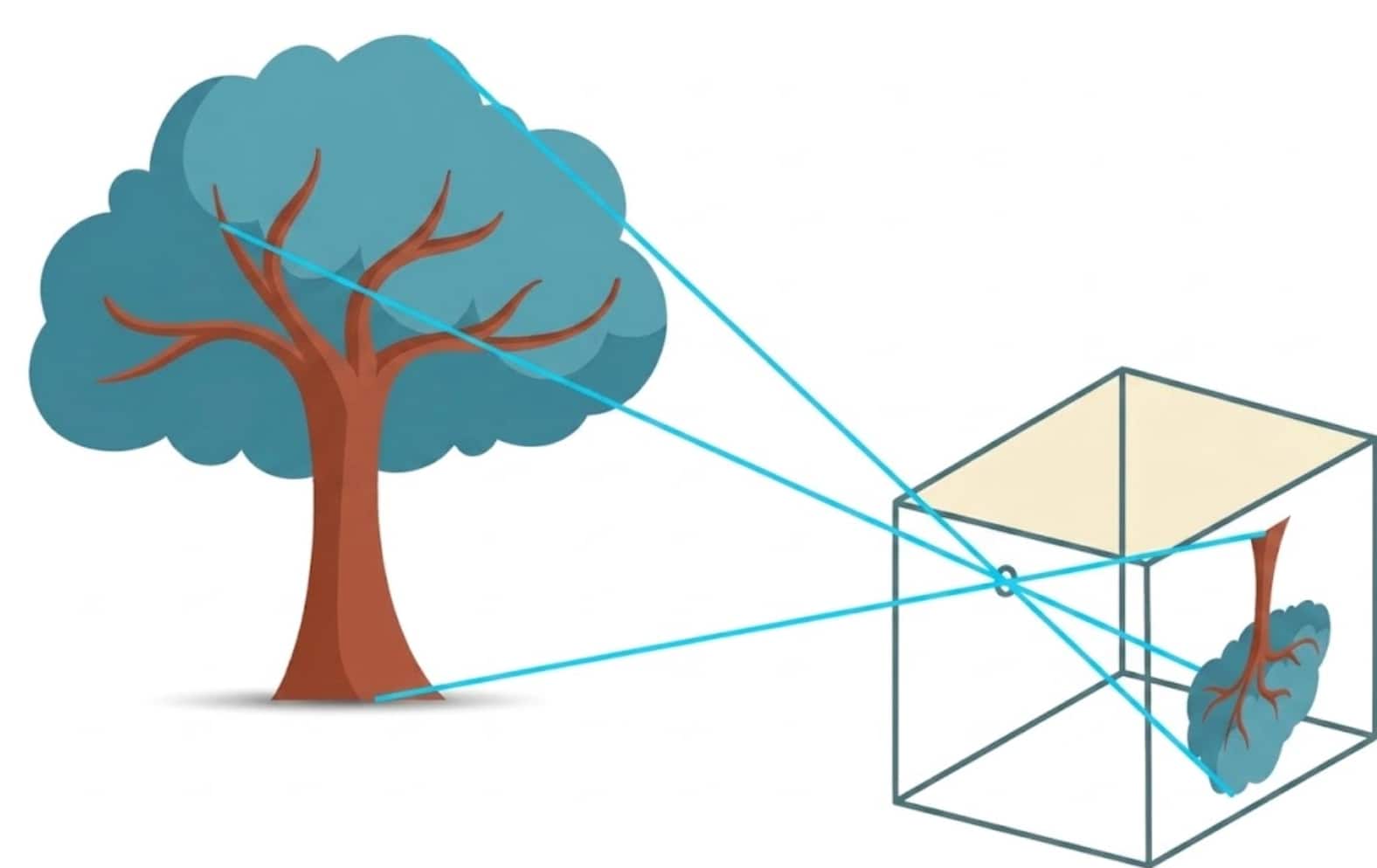
A pinhole camera works on the principle of rectilinear propagation of light, which means light travels in straight lines. This simple idea explains how an image is formed without using any lens.
To understand this, imagine a completely dark room with a tiny hole in one wall. When light from an external object passes through this small opening, only a narrow beam of rays enters. These rays travel in straight lines and strike the opposite wall, forming an image. If the source of light moves, the position and intensity of the image also change accordingly.
Similarly, in a pinhole camera, a light-proof box has a very small hole on one side and a screen or film on the opposite side. Light rays from different points of the object pass through the pinhole and intersect, producing a real, inverted image on the screen.
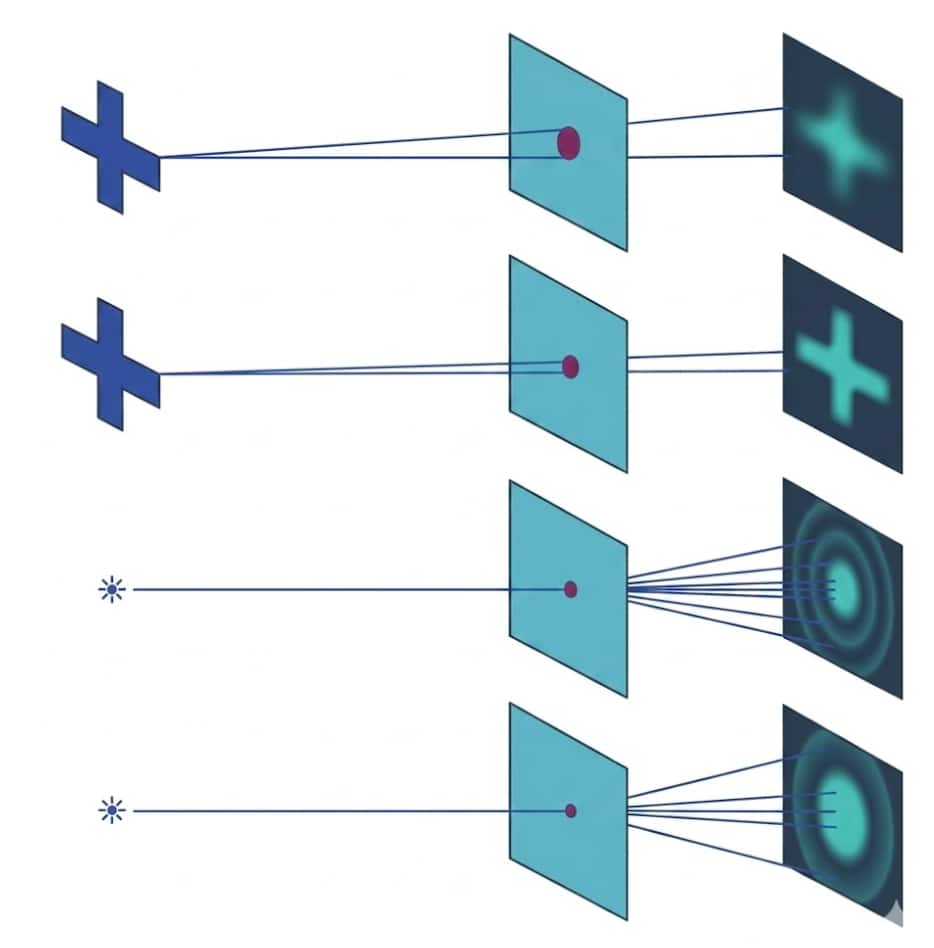
Since the pinhole allows only a small amount of light to enter, the image formed is usually dim but sharp. Increasing the size of the pinhole makes the image brighter but blurred. Hence, an optimum pinhole size is necessary for clear image formation.
Pinhole Camera Image Features
• Real images are obtained when images are captured on the sheet.
• The size of the resulting image is relatively smaller than the actual object.
• The image is reversed on the y axis as well as on the x axis.
• Imaging can be used to analyze light transmission through space.
What are the Uses of a Pinhole Camera?
-
The image produced by the pinhole camera can be projected on a translucent screen for real-time viewing or observation of the solar or lunar eclipse.
-
A common use of pinhole photography is to capture the movement of the sun over a long period of time.
-
Pinhole cameras are sometimes used for surveillance because they are difficult to detect.
Also read -
- NCERT Solutions for Class 11 Physics
- NCERT Solutions for Class 12 Physics
- NCERT Solutions for All Subjects
NCERT Physics Notes:
Frequently Asked Questions (FAQs)
The pinhole camera is the simplest camera. It consists of a shading box, some kind of film and pinholes. When the light passes through the pinhole, an inverted image is generated on the back of the box.
The pinhole camera is a simple camera used by photographers. Besides artistic reasons, it is also used to observe the movement of the sun in the eclipse sky, and to watch eclipses.
The concept of creating a pinhole is to block unnecessary rays of light as it passes through the pinhole. This will produce a sharp image of the object being displayed.
It is also called the camera obscura.
The biggest drawback is that it is very slow and requires a very high f / number and long exposure. That is, you need to hold the camera very quietly.
Ibnal Haytham invented the pinhole camera. He was an Arab scholar, who first studied the pinhole camera and showed how light could be used to project an image onto a flat surface using a camera.
If you increase the size of the hole in the pinhole camera, the sharpness of the image you can get will be reduced. Also, the image is thickly blurred. This is because as the size of the hole increases, the amount of light entering the box increases, which prevents the formation of the image.
The images formed with the pinhole camera are real, inverted, and small.
To get a focused image, the pinhole diameter should be 0.236mm.
