KCC Institute of Legal and Higher Education, Greater Noida
Law Admissions 2026 Open | Avail Merit-Based Scholarships


Disorders of the excretory system arise when kidneys, ureters, bladder, or urethra fail to remove metabolic wastes effectively. Conditions such as nephritis, glomerulonephritis, kidney stones, CKD, AKI, UTIs, renal failure, and uremia can severely disrupt homeostasis. This guide covers causes, mechanisms, symptoms, diagnosis, treatment, diagrams, FAQs, and NEET MCQs.
This Story also Contains
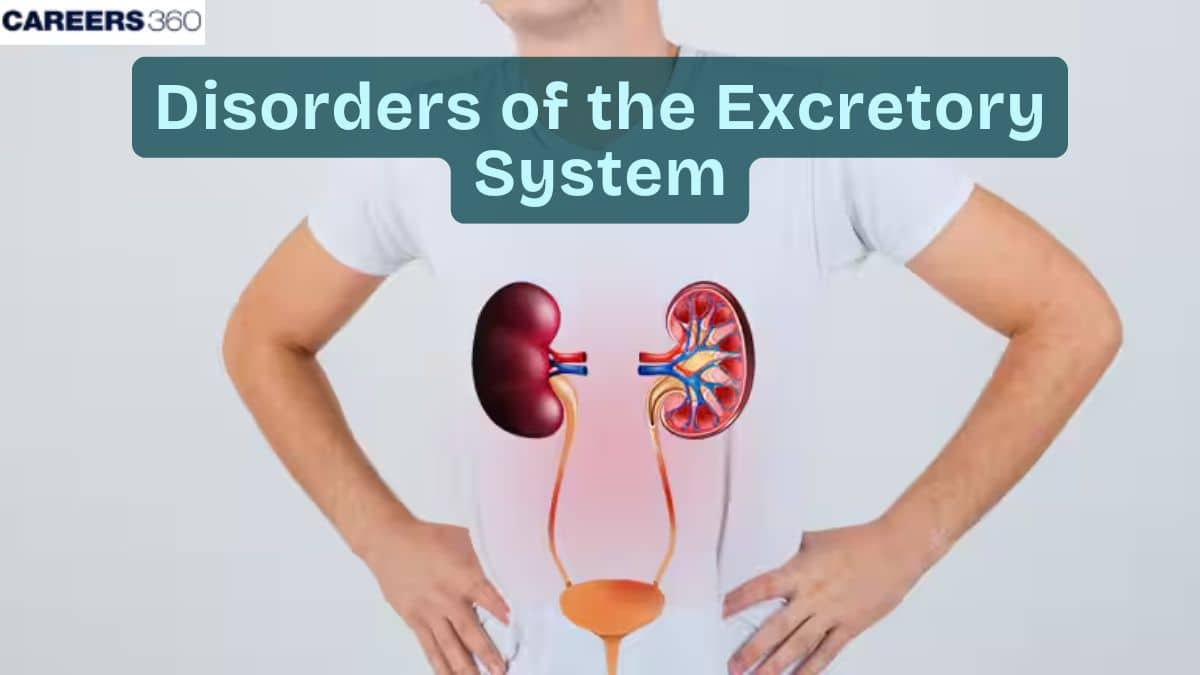
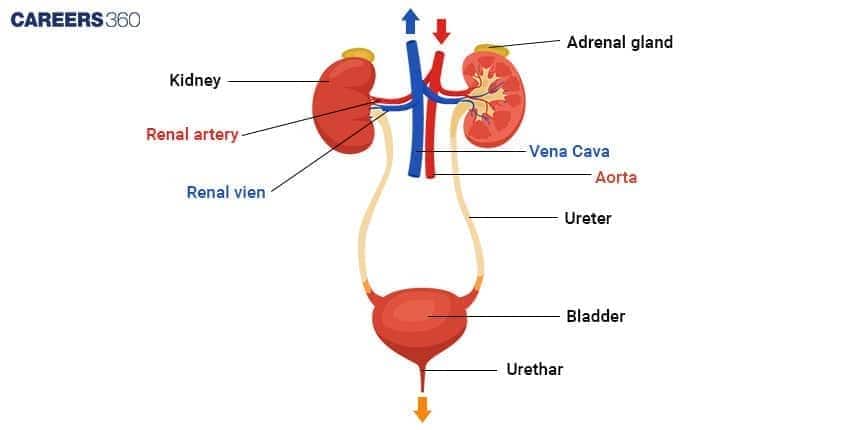
This excretory system is a well-driven system in which all the organs work together to keep the body free of waste products. The primary organs are kidneys, ureters, bladder and urethra. The kidneys filter blood to produce the urine that travels through the ureters to the bladder where it goes for storage until excretion through the urethra.
Diseases of the excretory system are infections and diseases that affect the kidneys, urinary tract, and other related organs. Most of these diseases occur with different symptoms and therefore require different types of treatments. Some of the common diseases of the excretory system are listed below:
Law Admissions 2026 Open | Avail Merit-Based Scholarships
BBA/MBA/PGDM Early Bird Applications Deadline 06th Nov'26. Apply now using coupon code CAREER250 and get ₹250 off the application fee
Nephritis is a condition where the kidneys become inflamed. It can be either acute or chronic. There are symptoms such as swelling, high blood pressure, and blood or protein in the urine. Medication is used to reduce the inflammation and alleviate symptoms.
Glomerulonephritis is a form of nephritis that affects the glomeruli, which are the filtering units of the kidney. It can be caused by infections, autoimmune diseases, or hypertension. Treatment involves medications and dietary changes to manage symptoms and prevent further complications.
Kidney stones are hard deposits of minerals and salts within the kidneys. Symptoms may include severe pain, blood in the urine, and nausea. Treatments range from increased fluid intake and medications to surgical interventions in severe cases.
CKD is a progressive excretory system disease, where there's a gradual loss of the kidney's function over time due to conditions like diabetes, hypertension, or glomerulonephritis. Management includes treatment for the underlying cause, life modification, and drugs which can help in slowing disease progression.
Acute Kidney Injury (AKI) refers to the sudden loss of kidney function, usually as a result of severe dehydration, infection, or exposure to toxins. Treatment will depend on the underlying cause and supportive therapy to reverse kidney function.
UTIs are infections affecting any part of the urinary tract, which includes the bladder, urethra, and kidneys. Its symptoms include a sudden urgency to urinate, pain during urination, and cloudy urine. Treatment often involves antimicrobial therapy and increased fluid intake to flush out the infection.
This has two types which are :
Acute Renal Failure: Acute renal failure also referred to as acute kidney injury, comes on suddenly, and its aggregation is due to critical illness, injury, or toxins. The symptoms are a decrease in urine output, swelling, and tiredness. Treatment involves treating the cause and rendering supportive care.
Chronic Renal Failure: Chronic renal failure, or chronic kidney disease, is a gradual process and occurs mainly due to chronic conditions such as diabetes and hypertension. It can be treated by treating the underlying causes of the disorder by changes in one's lifestyle and the administration of medications, dialysis, or even kidney transplantation.
Uremia is an ailment in which there are waste products, mainly urea, in the blood due to kidney diseases. Symptoms include fatigue, confusion, nausea, and cramps in the muscles. Treatment usually involves dialysis to remove waste and disease management of the kidney disorder.
Excretory disorders are diagnosed by:
Urinalysis: It examines the characteristics of urine to detect abnormalities such as sugar, protein, blood cells, or infections.
Blood tests: Blood levels of urea and creatinine indicate how well the kidneys are functioning.
Ultrasound, CT: Ultrasound and CT scans check kidney structure, stones, tumors, cysts, or blockages.
GFR: The Glomerular Filtration Rate measures how efficiently the kidneys filter blood, serving as a key indicator of kidney function and staging of kidney disease.
Excretory disorders can be prevented by:
Hydration: Maintaining adequate water intake helps the kidneys remove wastes efficiently.
Blood pressure control: Keeping blood pressure within normal limits protects the kidneys from damage.
Diabetes control: Managing blood glucose levels prevents a major cause of chronic kidney disease.
Avoid nephrotoxic drugs: Avoiding medications that can harm the kidney helps preserve normal renal function.
Important questions asked in NEET from this topic are:
Common disorders of the excretory system
Diagnosis and management of the disorders
Q1. Which of the following is not correct regarding haemodialysis?
In this method urea can be removed from the blood
The unit contains a coiled chromatic tube having same composition as that of plasma
Nitrogenous waste absent in dialysing fluid
Clear blood is pumped back in vein
Correct answer: 2) The unit contains a coiled chromatic tube having same composition as that of plasma
Explanation:
Hemodialysis
In uremic patients, urea can be removed by a process called hemodialysis. Blood drained from a convenient artery is pumped into a dialysing unit after adding an anticoagulant like heparin. The unit contains a coiled cellophane tube surrounded by a fluid (dialysing fluid) having the same composition as that of plasma except the nitrogenous wastes. The porous cellophane membrane of the tube allows the passage of molecules based on concentration gradient. As nitrogenous wastes are absent in the dialysing fluid, these substances freely move out, thereby clearing the blood.
Hence, the correct answer is option 2) The unit contains a coiled chromatic tube having the same composition as that of plasma.
Q2. A functioning kidney used in transplantation from a donor, preferably a close relative to
Minimize the chance of rejection
Minimize the loss of a nephron
Minimize the effect on the immune system
More than one correct answer
Correct answer: 4) More than one correct answer
Explanation:
A functioning kidney is typically sourced from a near relative for transplantation due to key advantages. Siblings, parents, and children exhibit higher genetic compatibility, notably in HLA matching, which decreases the likelihood of the recipient's body rejecting the kidney. This compatibility enhances the kidney's functionality and longevity post-transplant. Moreover, relatives usually provide the organ faster than awaiting a deceased donor, which is vital for ESRD patients. This approach adheres to ethical and legal standards, ensuring voluntary donation and minimizing illegal trade risks. Consequently, such transplants boast higher success rates and superior long-term effects for recipients.
Hence, the correct answer is option 4) More than one correct answer.
Q3. The condition of accumulation of urea in the blood is termed as
Renal Calculi
Glomerulonephritis
Uremia
Ketonuria
Correct answer: 3) Uremia
Explanation:
A dangerous illness called uremia, or uremic syndrome, is brought on by the kidneys' inability to remove waste from the blood. Toxins including urea and creatinine accumulate in the blood as a result. Any region of the body can be affected by uremia, which can be fatal if untreated. Dialysis and kidney transplants are the two primary treatments for uremia. Dialysis is a synthetic procedure that uses a machine or catheter to remove waste, fluids, and poisons from the blood. In a kidney transplant, a healthy kidney from a donor is used to replace a damaged kidney.
Hence, the correct answer is option 3) Uremia.
Also Read:
Frequently Asked Questions (FAQs)
Urinary tract infections can be prevented by adequate intake of water, good hygiene practices, and avoidance of a list of irritants such as soaps that are harsh to the skin, and bubble baths, among others.
Acute renal failure is abrupt, and usually reversible if treated promptly, whereas on the other hand, chronic renal failure develops over some time and mostly requires long-term management.
Early warning signs of kidney diseases include swelling in legs and ankles, fatigue, change in urinary output, and high blood pressure.
Treatments for kidney stones include increasing fluid intake, pain-relieving medications, medication to help pass stones, and surgical procedures for bigger stones.
Common causes of chronic kidney diseases are usually long-term diabetes, high blood pressure, and glomerulonephritis.

Law Admissions 2026 Open | Avail Merit-Based Scholarships
BBA/MBA/PGDM Early Bird Applications Deadline 06th Nov'26. Apply now using coupon code CAREER250 and get ₹250 off the application fee
Ranked #36 amongst institutions in Management by NIRF | 100% Placement
Globally Recognized by AACSB (US) & AMBA (UK) | 18 LPA Avg. CTC for PGPM 2026
NEET PG All India & State College Predictor with Admission Process Guide
Top B-School: Ranked #9 in NIRF Management Rankings 2025.