KCC Institute of Legal and Higher Education, Greater Noida
Law Admissions 2026 Open | Avail Merit-Based Scholarships


Glomerular Filtration Rate (GFR) is the most important test of kidney function. It is the volume of plasma filtered per minute by all functioning nephrons. Doctors use the glomerular filtration rate to check kidney health. Normal GFR is about 125 ml/min. A low glomerular filtration rate means weak kidney filtration. This guide covers nephron anatomy, glomerular filtration mechanism, three‑layer filtration barrier, factors affecting Glomerular Filtration Rate (GFR), labelled diagrams, and solved NEET MCQs with detailed explanations.
This Story also Contains

Glomerular Filtration Rate is important because it tells how well kidney remove waste and extra fluid. A healthy glomerular filtration rate in the human excretory system keeps the balance between water, slats and acids in the body. GFR depends on glomerular blood pressure, filtration membrane integrity, and the relative resistance of afferent and efferent arterioles. Disorders of the excretory system affect the glomerular filtration rate (GFR), leading to reduced kidney function. Understanding the glomerular filtration rate helps students know kidney physiology clearly.
The glomerular filtration rate is a measure of renal function expressed in millilitres per minute. It represents the rate at which plasma infiltrates through glomeruli found in the nephrons to form urine. It is one of the most important indicators of the kidney, for it represents the efficiency and health concerning the removal of waste and too much of anything in the blood.
Law Admissions 2026 Open | Avail Merit-Based Scholarships
BBA/MBA/PGDM Early Bird Applications Deadline 19th Oct '26. Apply now using coupon code CAREER250 and get ₹250 off the application fee
The nephron is the functional unit of the kidney and contains the glomerulus. It is a network of capillaries where filtration occurs. The glomerulus filters the blood, and that filtrate moves into the tubules. The optimum GFR for proper body functioning is of importance in maintaining the balance of metabolic waste removal and fluid, electrolyte, and acid-base balances.
The glomerular filtration rate is the most reliable measure of kidney health. It shows how much plasma is filtered by nephrons each minute. A healthy glomerular filtration rate keeps the body free from waste and toxins. It also maintains water, salts, and acid‑base balance. That is why the glomerular filtration rate is central to the human excretory system. This process is also called ultrafiltration, as the glomerulus selectively filters plasma under high pressure through its specialised barrier.
It reflects how efficiently nephrons filter blood.
Normal glomerular filtration rate (125 ml/min) ensures proper waste removal.
Low glomerular filtration rate signals kidney disease or damage.
A high glomerular filtration rate indicates strong filtration capacity.
The glomerular filtration rate helps regulate fluid, electrolytes, and pH balance.
The nephron is the smallest unit of structure in the kidney that undertakes its function. It consists of a few components, all necessary: the glomerulus, Bowman's capsule, proximal convoluted tubule (PCT), loop of Henle, distal convoluted tubule (DCT), and the collecting duct. Every part of the nephron plays a clear role in the process of filtering blood such that it eventually becomes urine.
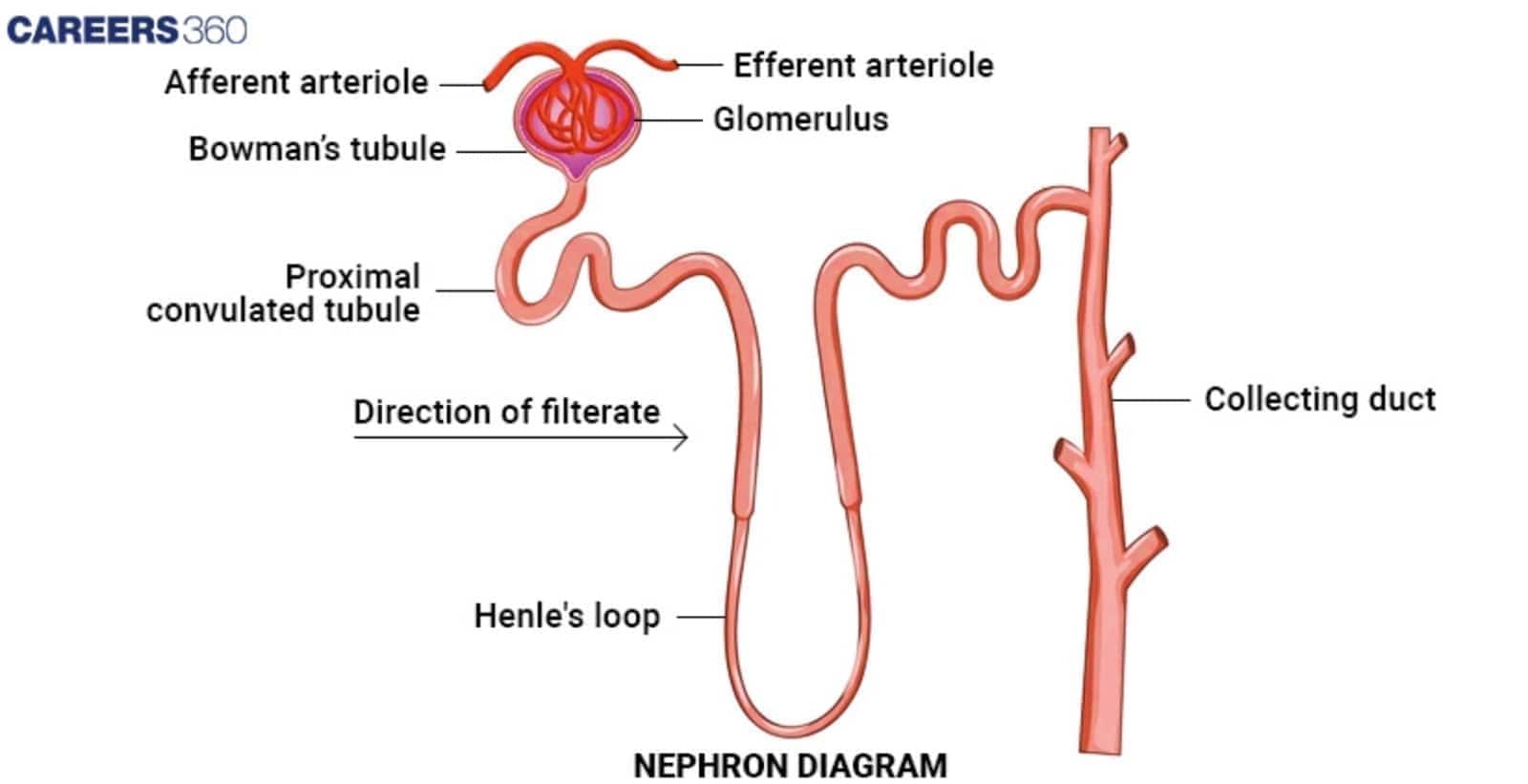
The network of capillaries encased by Bowman's capsule is known as the glomerulus. It is the place within the blood plasma where filtration occurs. Since the blood pressure inside the glomerular capillaries is so high, it pushes out water, ions, and small solutes from the blood to Bowman's capsule, thus forming the glomerular filtrate. This is the first step in the formation of urine and an important process for clearing waste products and extra substances from the blood.
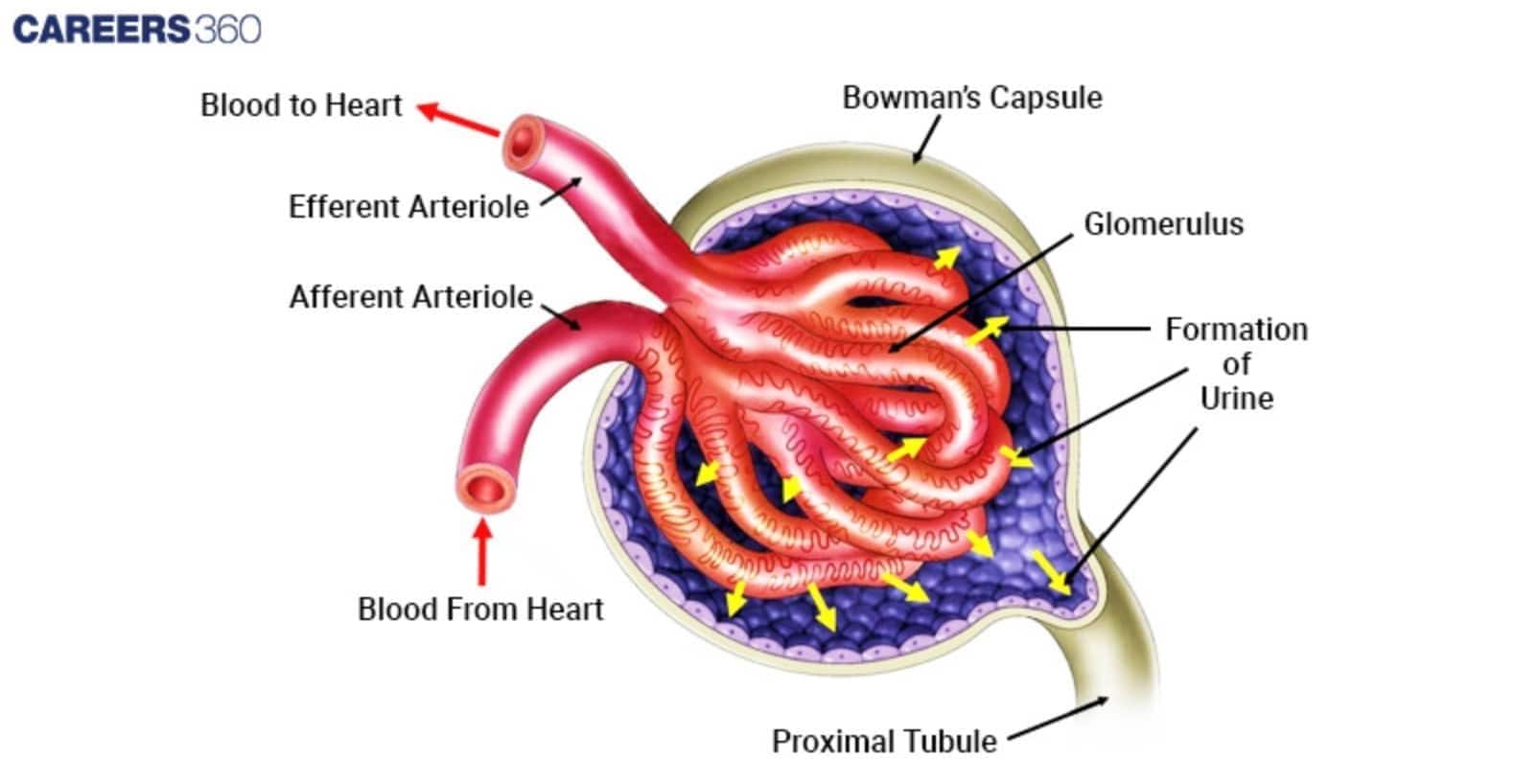
The glomerular filtration process is the first step in urine formation. It occurs in the glomerulus of the nephron. The process of glomerular filtration involves:
Mechanism Of Filtration:
Filtration occurs because of the high pressure the blood creates when entering the glomerulus through the afferent arteriole. This filtration is via a specialised filtration barrier.
Blood enters the glomerulus through the afferent arteriole and exits through the efferent arteriole. The relative diameter between the two arterioles creates a pressure gradient encouraging filtration.
Filtration Barrier (Three Layers):
The filtration barrier consists of three layers -
Endothelium: The inner lining of the glomerular capillaries, which is perforated with fenestrations (pores) that allow plasma to pass through but at the same time block blood cells.
Basement Membrane: A thin, gel-like matrix supporting the structure of the basement membrane and allowing those molecules, mostly large proteins, to pass through the space.
Podocytes: These are special epithelial cells that wrap the capillaries with their footlike extension, forming filtration slits to bar larger molecules.
The Glomerular Filtration Rate (GFR) is influenced by several physiological factors. These factors decide how efficiently the kidneys filter blood and maintain the balance of water, salts, and acids. The factors affecting glomerular filtration rate are -
Systemic Blood Pressure
High blood pressure elevates GFR by increasing the pressure gradient in the glomerulus, whereas low blood pressure lowers the GFR.
Blood Volume
An increase in blood volume will result in high blood pressure, hence elevating GFR by increasing the amount of plasma available for filtration.
Plasma Protein Levels
Plasma protein concentration changes the osmotic pressure and, hence, the GFR. If the plasma protein concentration is higher, there would occur a reduction in GFR since more water is reabsorbed in the capillaries.
Several disorders of the excretory system damage the glomerulus and lower the glomerular filtration rate (GFR). When GFR declines, kidneys cannot filter blood properly, leading to waste accumulation and imbalance of water, salts, and acids. Several pathologies of the glomerulus compromise the filter, hence lowering GFR. Pathological conditions affecting GFR are:
Glomerulonephritis
Inflammation of the glomeruli damages the filtration membrane, reducing GFR and allowing proteins or blood cells to leak into the urine.
Diabetes
Long-term high glucose injures glomerular capillaries, which impairs normal filtration.
Hypertension
Persistently elevated blood pressure strains and hardens renal blood vessels, decreasing blood flow to nephrons and lowering GFR.
Kidney Injury
Acute or chronic damage to nephrons from toxins, infections, or trauma disrupts filtration efficiency and causes a rapid decline in GFR.
Important questions asked in NEET from this topic are:
Glomerular Filtration Process
Factors affecting glomerular filtration rate
Q1. How much blood passes through the kidneys per minute in a healthy person?
125-150 ml
600-700 ml
1100-1200 ml
500-600 ml
Correct answer: 3) 1100-1200 ml
Explanation:
The term glomerular filtration rate (GFR) refers to the volume of filtrate produced by the kidneys per minute. Approximately 1 to 1.2 liters of blood go through the kidneys each minute in a healthy individual. Renal blood flow is the term for this. In order to help the body maintain the proper balance of fluids, electrolytes, and other vital components, the kidneys filter this blood to eliminate waste and excess substances.
Hence, the correct answer is option 3) 1100-1200 ml.
Q2. The quantity of glomerular filtrate formed each minute in all the nephrons of both kidneys is called.
Glomerular Filtration Rate (GFR)
Filtration fraction
Net Filtration Rate
Glomerular Filtration Fraction
Correct answer: 1) Glomerular Filtration Rate (GFR)
Explanation:
Glomerular Filtration Rate (GFR) refers to the amount of glomerular filtrate formed each minute across all the nephrons in both kidneys. It is a key indicator of kidney function, reflecting how effectively the kidneys filter blood. In a healthy individual, the normal GFR is approximately 125 ml per minute, which equates to about 180 liters per day. This filtration rate ensures the kidneys effectively remove waste products and excess substances from the blood, maintaining fluid and electrolyte balance in the body.
Hence, the correct answer is option 1) Glomerular filtration rate (GFR).
Q3. A fall in glomerular filtration rate (GFR) activates
juxtaglomerular cells to release renin
adrenal cortex to release aldosterone
adrenal medulla to release adrenaline
posterior pituitary to release vasopressin.
Correct answer: 1) juxtaglomerular cells to release renin
Explanation:
The JGA plays a complex regulatory role. A fall in glomerular blood flow/glomerular blood pressure/GFR can activate the JG cells to release renin which converts angiotensinogen in blood to angiotensin I and further to angiotensin II. Angiotensin II, being a powerful vasoconstrictor, increases glomerular blood pressure and thereby GFR.
Hence, the correct answer is option 1) juxtaglomerular cells to release renin.
Frequently Asked Questions (FAQs)
The normal GFR is about 125 ml/min, which equals approximately 180 litres per day.
GFR is the amount of filtrate formed per minute in all nephrons of both kidneys. It is the most reliable measure of kidney function.
A low GFR may indicate mild kidney malfunction or chronic kidney disease (CKD). It is a caution that the kidneys are not filtering waste and excessive fluids from the blood effectively, hence their possible medical evaluation and management to lower risks of developing further damage to the kidneys.
Systemic blood pressure, blood volume, and plasma protein concentration are the main factors influencing GFR.
NSAIDs, some antibiotics, and medications for the treatment of high blood pressure, and diabetes can change the work of the kidneys.


Law Admissions 2026 Open | Avail Merit-Based Scholarships
BBA/MBA/PGDM Early Bird Applications Deadline 19th Oct '26. Apply now using coupon code CAREER250 and get ₹250 off the application fee
Ranked #36 amongst institutions in Management by NIRF | 100% Placement
Globally Recognized by AACSB (US) & AMBA (UK) | 18 LPA Avg. CTC for PGPM 2026
Leading Design College | 95% Placement Record | Merit-cum-Means Scholarships for Deserving Students
NEET PG All India & State College Predictor with Admission Process Guide