KCC Institute of Legal and Higher Education, Greater Noida
Law Admissions 2026 Open | Avail Merit-Based Scholarships


Digestive enzymes are protein catalysts that break complex food molecules into simpler, absorbable forms during digestion. They convert carbohydrates into sugars, proteins into amino acids, and fats into fatty acids and glycerol, ensuring proper nutrition and energy supply. This guide explains types, sources, functions, and stages of action of digestive enzymes with NEET-focused clarity.
This Story also Contains

Digestive enzymes are essential in the body as they help in the digestion through breaking down large food molecules into smaller molecules which can be absorbed into the body.
These enzymes help in digestion where carbohydrates are broken down into sugar, proteins into amino acids, and fat into fatty acids. It makes sure that the body is provided with the nutrients it needs for metabolism and energy-making. Also, these enzymes enhance the immunity of the body.
Digestive enzymes are important because they:
Enable chemical digestion of food
Ensure efficient absorption of nutrients
Prevent nutritional deficiencies
Help destroy harmful microbes in the stomach
Maintain digestive health and immunity
Digestive enzymes are a special type of protein used to break down the particles in ingested food to their constituent components. There are several categories depending on the target macromolecules that are affected by these drugs.
Act on carbohydrates.
Key enzymes are:
Amylase: Converts starch to maltose and dextrin; secreted by salivary glands and the pancreas.
Maltase: Catalyzes the conversion of maltose to glucose in small intestines.
Lactase: Cleaves lactose into glucose and galactose, found in the small intestine.
Sucrase: Splits sucrose into glucose and fructose, found in the small intestine.
Law Admissions 2026 Open | Avail Merit-Based Scholarships
BBA/MBA/PGDM Early Bird Applications Deadline 19th Oct '26. Apply now using coupon code CAREER250 and get ₹250 off the application fee
Act on proteins.
Key enzymes are:
Pepsin: Secrete in stomach, pepsin aids in the digestion of proteins as it splits them into peptides.
Trypsin: Produced in the pancreas and operating in the small intestine, trypsin breaks proteins into peptides.
Chymotrypsin: Pancreatic enzyme that functions in the small intestine where it catalyses the breakdown of proteins into peptides.
Carboxypeptidase: Pancreatic enzyme that cleaves off amino acids from the terminal end of peptides.
Act on carbohydrates.
Key enzymes are:
Pancreatic Lipase: Emulsifies dietary fats into fatty acids and glycerol in the small intestine.
Phospholipase: Acts on phospholipids to release fatty acids and other lipophilic compounds”
Cholesterol Esterase: Catalyzes the hydrolysis of cholesterol esters into free cholesterol and fatty acids, which play a role in lipid digestion and absorption.
Act on carbohydrates.
Key enzymes are:
DNase: Catalyses the breaking down of DNA into smaller nucleotide units.
RNase: Catalyses the hydrolysis of RNA into smaller parts.
Both DNase and RNase are secreted in the pancreas, but they act in small intestine.
The various sources of the digestive enzymes are:
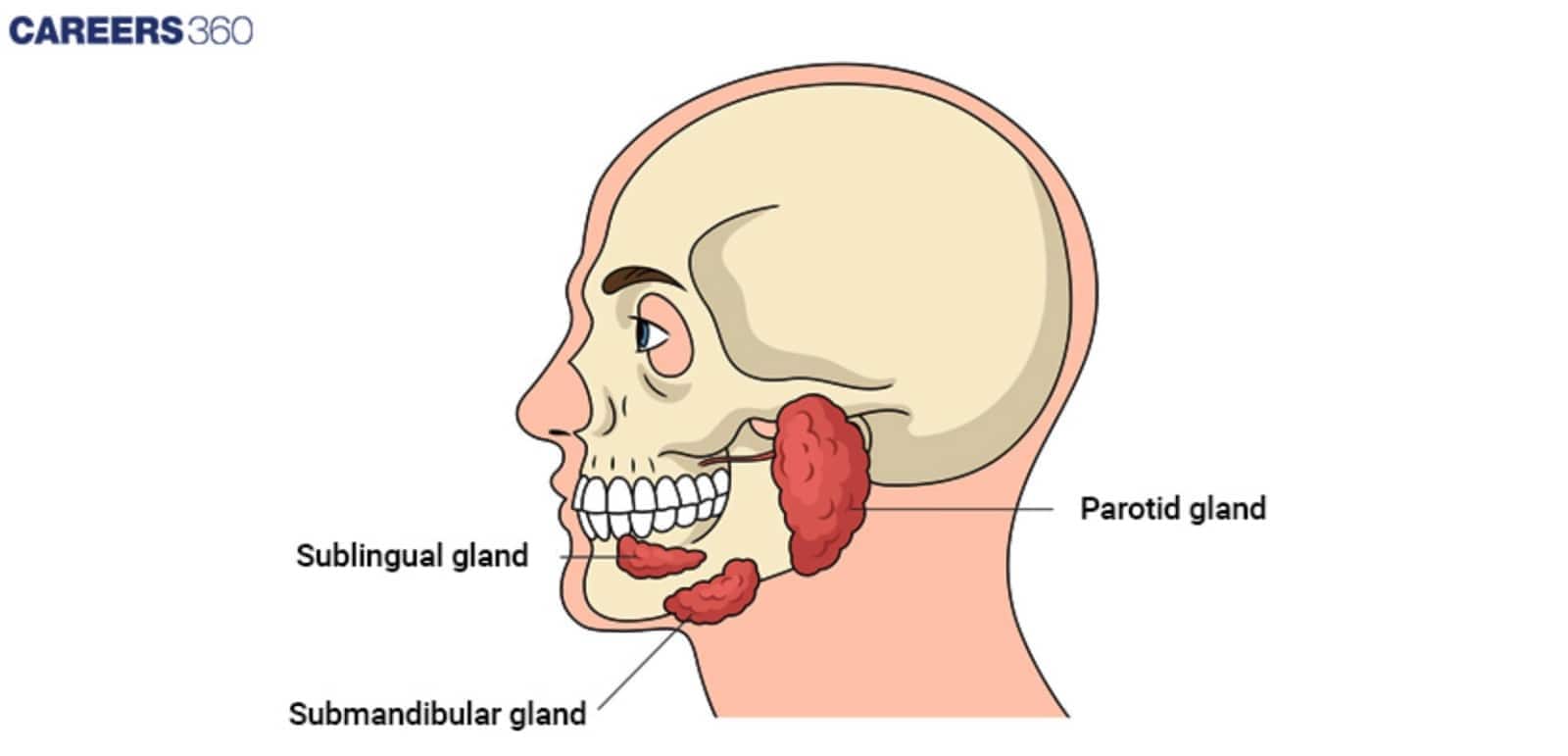
The salivary glands situated in the mouth secrete saliva containing amylase which decomposes starch into maltose and dextrin.
This starts from the process of chewing and therefore, saliva is the first component in digestion.
Gastric juices are produced in the stomach, including hydrochloric acid and pepsin.
Pepsin catalyzes the hydrolysis of proteins into smaller peptides and inhibits the action of other enzymes
Acidic pH denatures proteins and activates pepsinogen.
Major source of digestive enzymes and it secretes enzymes via pancreatic duct into the small intestine. It produces a variety of enzymes, including:
Amylase: Digestion of carbohydrates.
Trypsin and Chymotrypsin: Protein digestion to peptides.
Carboxypeptidase: Cleaves peptide bonds to give the constituent amino acids.
Pancreatic Lipase: Emulsifies fats and reduces them into fatty acids and glycerol.
Nucleases (DNase and RNase): Break down nucleic acids to the monomers form.
The cellular lining of the small intestine contains enzymes like maltase, lactase and sucrase to further digest carbohydrates.
The villi of the small intestine release peptidases that help in the breakdown of peptides into amino acids.
The liver secretes bile which is picked up by the gall bladder and is released into the small intestine.
Although bile is not an enzyme, it contains the bile salts that emulsify the fats, making more of their surface available to the pancreatic lipase.
Digestive enzymes play an important role at different stages of digestion
The digestion starts in the mouth, whereby food is mechanically reduced in size by mastication, and moistened with saliva.
Salivary amylase digests starch and converts it into maltose and dextrin.
The process of digestion of protein starts.
Gastric glands release hydrochloric acid (HCL) and pepsin.
HCl breaks proteins.
Pepsin derived from inactive pepsinogen through HCl breaks down proteins into small peptides.
A majority of the digestion and most of the absorption occurs in the small intestine.
It involves:
Pancreatic Enzymes: Pancreatic amylase acts on carbohydrates, trypsin and chymotrypsin work on proteins, pancreatic lipase for fats and nucleases for nucleic acids.
Brush Border Enzymes: Inner lining of the small intestine is made of microvilli; contains enzymes like maltase, lactase, and sucrase which converts disaccharides into monosaccharides like glucose, galactose, and fructose; splits peptides into amino acids.
Important questions asked in NEET from this topic are:
Types of digestive enzymes
Role of digestive enzymes at different stages stages
Q1. Which of the following is not a function of the salivary glands?
Moistening and lubricating food
Initiating the digestion of carbohydrates
Secreting enzymes for protein digestion
Neutralizing acids in the mouth
Correct answer: 3) Secreting enzymes for protein digestion
Explanation:
The salivary glands primarily function in moistening and lubricating food, initiating the digestion of carbohydrates with the enzyme amylase, and neutralizing acids in the mouth with bicarbonate. However, they do not secrete enzymes for protein digestion. This function is carried out by the stomach and the pancreas.
Hence, the correct option is 3) Secreting enzymes for protein digestion.
Q2. The pH of saliva is maintained at
6.85 - 7.4
5.0 - 6.0
3.0 - 4.5
4.0 - 6.1
Correct answer: 1) 6.85 - 7.4
Explanation:
Bicarbonate and phosphate ions are present in the saliva and function as chemical buffers, maintaining saliva at a pH between 6.85 and 7.4.
Hence, the correct answer is option 1) 6.85 - 7.4.
Q3. The parotid glands bear a duct called
Wharton’s duct
Rivinus duct
Stenson’s duct
Salivary duct
Correct answer: 3) Stenson’s duct
Explanation:
The parotid gland secretes saliva into the mouth through the parotid duct or Stenson’s duct, which is located near the second upper molar tooth. The parotid gland, the largest of the salivary glands, secretes serous saliva rich in enzymes, aiding in the initial digestion of starches and lubricating food for swallowing. Saliva is delivered into the mouth through the parotid duct, also known as Stenson’s duct, which opens near the second upper molar tooth on the buccal mucosa. The gland is located anterior to the ear and extends inferiorly to the mandibular angle. It is innervated by the glossopharyngeal nerve (cranial nerve IX) and plays a role in maintaining oral health by producing antibacterial enzymes.
Hence, the correct answer is option 3) Stenson’s duct.
Also Read:
Frequently Asked Questions (FAQs)
Meals containing natural enzymes include; Pineapples containing bromelain, papayas containing papain, mangoes, honey, bananas, avocados and fermented products such as yoghurt and sauerkraut.
Enzyme replacement therapy delivers synthetic or natural enzymes to the patient to enhance nutrient digestion and minimise digestive signs.
Carbohydrases: Digest carbohydrates (e.g., amylase, maltase, lactase, sucrase).
Proteases: Protein Cleave (e. g. pepsin, trypsin, chymotrypsin, carboxypeptidase).
Lipases: These include; Breaking down fats, for example, pancreatic lipase, phospholipase and cholesterol esterase.
Nucleases: Digest nucleic acids (e.g., nucleases such as DNase and RNase).
Digestive enzymes participate in the chemical division of large food particles into smaller ones that are easy to incorporate into the digestion column.
Deficiency of certain enzymes can cause complications that include malabsorption disorders, digestive symptoms, nutrient deficiencies, and lactose intolerance or pancreatic insufficiency.


Law Admissions 2026 Open | Avail Merit-Based Scholarships
BBA/MBA/PGDM Early Bird Applications Deadline 19th Oct '26. Apply now using coupon code CAREER250 and get ₹250 off the application fee
Ranked #36 amongst institutions in Management by NIRF | 100% Placement
Globally Recognized by AACSB (US) & AMBA (UK) | 18 LPA Avg. CTC for PGPM 2026
Leading Design College | 95% Placement Record | Merit-cum-Means Scholarships for Deserving Students
NEET PG All India & State College Predictor with Admission Process Guide