KCC Institute of Legal and Higher Education, Greater Noida
Law Admissions 2026 Open | Avail Merit-Based Scholarships


Gas exchange ensures oxygen enters the bloodstream while carbon dioxide is removed, maintaining life and cellular respiration. This exchange occurs mainly in the alveoli through diffusion and is regulated by the medulla, pons, and chemical receptors. Understanding these processes is crucial for NEET, nursing, and Class 11/12 Biology.
This Story also Contains
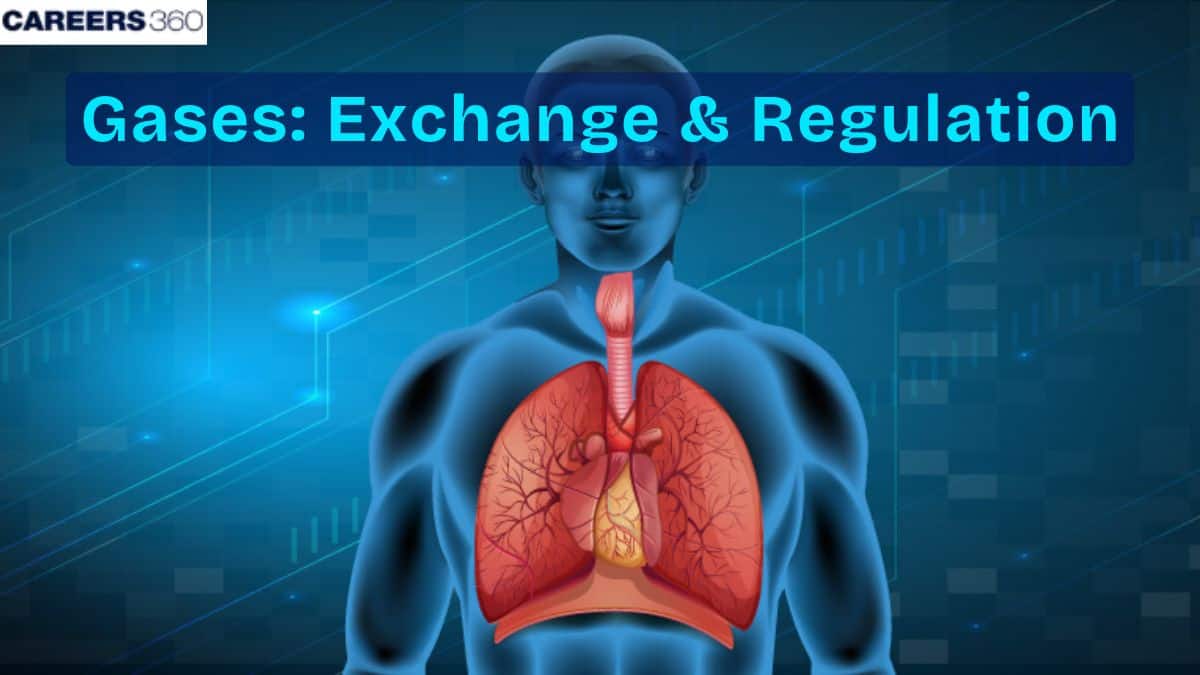
Gas exchange is one of the essential processes in any eukaryotic aerobic organism. This describes inhaling oxygen with the corresponding discharge of carbon dioxide. Actually, these exercises form the basic activities of cellular respiration and essentially energy production. This paper discusses mechanisms of gas exchange in human bodies, their control and the significance of the process to the general well-being.
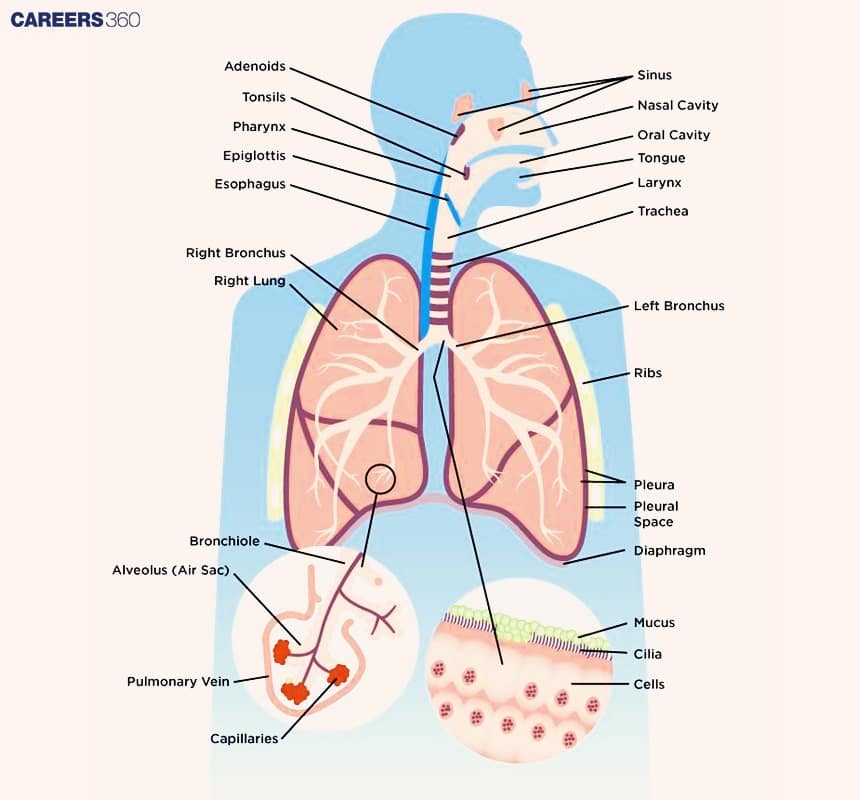
The human respiratory system is designed anatomically in such a fashion that enough gas is availed to the system. The parts are as follows:
The air enters one's body through the nasal cavity. Being inhaled through the nasal cavity, where it gets cleansed, heated, and humidified. It passes down through the pharynx.
The larynx is the upward-directed structure called the voice box, which lies just above the opening of the trachea. The trachea is the windpipe conducting the air into the lungs upon inhalation.
The two divisions of the trachea lead into two bronchi that further bifurcate in the lung to result in the formation of a network of many small bronchioles.
There are millions of tiny sacs within the lungs that make up the alveoli. The gaseous exchange occurs at this site.
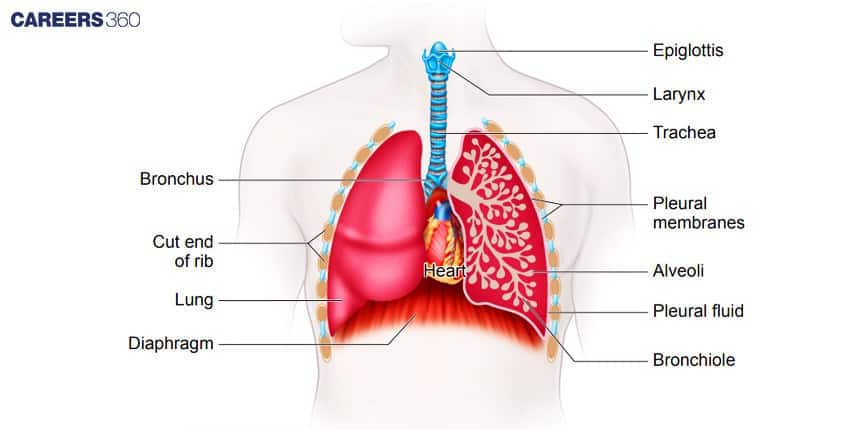
Breathing is the alternate process of inspiration and expiration through which air is moved in and out of the lungs. This is brought about by pressure changes within the thoracic cavity.
When the diaphragm contracts and moves downwards, expanding the thoracic cavity and the intercostalis muscles lift the rib cage, air rushes in because of the low pressure inside.
When the diaphragm relaxes up, and the intercostalis muscles depress the ribcage down, the volume in the thoracic cavity is decreased, and pressure increases forcing the air out of the system.
Gas exchange is the uptake of oxygen from the surroundings into the blood and the exhalation of carbon dioxide to the environment. In the human respiratory system, the process takes place in the lungs, oxygen is diffused into the blood, and carbon dioxide is diffused out.
The walls of alveoli are thin, and the networking of the capillaries is extensive. Therefore, they are specialized for the process of gas exchange.
Oxygen from alveoli diffuses into the blood within surrounding capillaries due to its higher amount in alveoli.
CO2 will diffuse from blood to the alveoli for exhalation since there is more of it in the blood.
The transport of gases is carried through certain mechanisms.
In its transportation to the tissues, it binds with the haemoglobin in red blood cells to form oxyhaemoglobin.
Carbon dioxide is transported in three forms, dissolved in plasma, as bicarbonate ions and attached to haemoglobin in the red blood cells.
The breathing rate is regulated so that the amount of oxygen demanded by the body is adequately supplied and carbon dioxide is removed from the body at an adequately rapid rate.
Nerves from the medulla oblongata and pons, two closely associated parts of the brain, receive input from chemoreceptors that monitor the amount of carbon dioxide in the blood and other sensors that monitor the amount of oxygen in the blood and instantaneous activity level of the body.
Chemoreceptors sense fluctuations in the pH, carbon dioxide and oxygen concentration in the blood of the vascular system in the medulla and carotid bodies and modify or reestablish the ventilation rate.
Several respiratory disorders have the potential to compromise or block the efficacy of gas exchange in a person's life. Some of these conditions include:
Asthma is the inflammation in the airway that may give one a hard time breathing and limit the amount of air one is capable of taking in very comfortably.
COPD is a group of progressive diseases that show airflow obstruction, which would worsen the problem of the ability to be able to breathe out fully.
Essentially, one is to take it as the inflammation due to infection of a person's lung air sacs. The air sacs then fill with fluid, which is termed pus, and in turn, gases cannot be exchanged freely.
Important topics for NEET are:
Human respiratory system
Gaseous exchange and transport of gases
Regulation of Gas exchange
Law Admissions 2026 Open | Avail Merit-Based Scholarships
BBA/MBA/PGDM Early Bird Applications Deadline 19th Oct '26. Apply now using coupon code CAREER250 and get ₹250 off the application fee
Q1. Complex organisms use special fluid to transport
Nutrients
O2
N2
All of these
Correct answer: 4) All of these
Explanation:
Complex organisms use special fluids within their bodies to transport nutrients, O2 and other essential substances. A transport system is necessary for organisms to develop and sustain themselves. Cells in increasingly complex organisms have less interaction with the outside world. For food, oxygen, water, and other vital components to be distributed throughout the body, a transport system is required. Additionally, it moves waste materials from cells to the organs responsible for excretion.
Hence, the correct answer is option 4) All of these.
Q2. Major function of endothelium of alveolar capillaries is
To secrete surfactant
Prevent air bubble formation
Secrete carbonic anhydrase
Secrete hormones responsible for breathing
Correct answer: 2) Prevent air bubble formation
Explanation:
Endothelium of alveolar capillaries. It exists to prevent air bubbles from forming in the blood and from blood entering the alveoli. The diffusion membrane consists of three layers: the thin squamous epithelium of alveoli, the endothelium of alveolar capillaries, and the fused basement membrane between them. This thin barrier facilitates efficient gas exchange of oxygen and carbon dioxide. Its structure ensures minimal resistance to diffusion while maintaining the integrity of the blood-air barrier.
Hence, the correct answer is option 2) To prevent air bubble formation.
Q3. Organisms like sponges and coelenterates circulate water through
Body cavity
Mouth
Anus
All of these
Correct answer: 1) Body cavity
Explanation:
Transport of substances among different groups of animals -
Organisms like sponges and coelenterates. Simple organisms like sponges and coelenterates circulate water from their surroundings through their body cavities to facilitate the cells to exchange these substances
Hence, the correct answer is option 1) Body cavity.
Also Read:
Frequently Asked Questions (FAQs)
The alveoli have a greater surface area and wall thinness which allows the rapid diffusion of gas between air. Hemoglobin takes up and carries oxygen within the blood, while bicarbonate carries carbon dioxide.
The medulla oblongata and pons alter the rhythm of breathing in response to neural and chemical changes in the body's needs.
Common gas exchange disorders include those that arise from asthma and COPD, pneumonia, and other conditions that involve significant airway obstruction or damage to lung Parenchyma. The treatments typically involve medications, therapies, and alterations of lifestyles.
Blood circulates from the lungs to the tissues of the body, where it receives oxygen and goes to the body tissues and the carbon dioxide produced by body tissues carries it back to the lungs.

Law Admissions 2026 Open | Avail Merit-Based Scholarships
BBA/MBA/PGDM Early Bird Applications Deadline 19th Oct '26. Apply now using coupon code CAREER250 and get ₹250 off the application fee
Ranked #36 amongst institutions in Management by NIRF | 100% Placement
Globally Recognized by AACSB (US) & AMBA (UK) | 18 LPA Avg. CTC for PGPM 2026
Leading Design College | 95% Placement Record | Merit-cum-Means Scholarships for Deserving Students
NEET PG All India & State College Predictor with Admission Process Guide