
Endocrine Glands And Hormones: Function, Organs, Diseases
The endocrine system is a network of ductless glands that release hormones directly into the bloodstream to regulate growth, metabolism, reproduction, stress, and homeostasis. Major endocrine glands include the pituitary, hypothalamus, thyroid, parathyroid, adrenal glands, pancreas, pineal gland, and gonads. This guide explains each endocrine gland with its hormones, functions, diagrams, NEET notes, and exam-focused MCQs.
This Story also Contains
- What are Endocrine Glands?
- Pituitary Gland — The Master Gland
- Hypothalamus — The Master Regulator
- Thyroid Gland
- Adrenal Glands — Cortex & Medulla
- Pancreas — Endocrine + Exocrine
- Pineal Gland
- Gonads (Testes and Ovaries)
- Endocrine Glands & Hormone NEET MCQs (With Answers & Explanations)
- Recommended Video for Endocrine Glands and Hormones
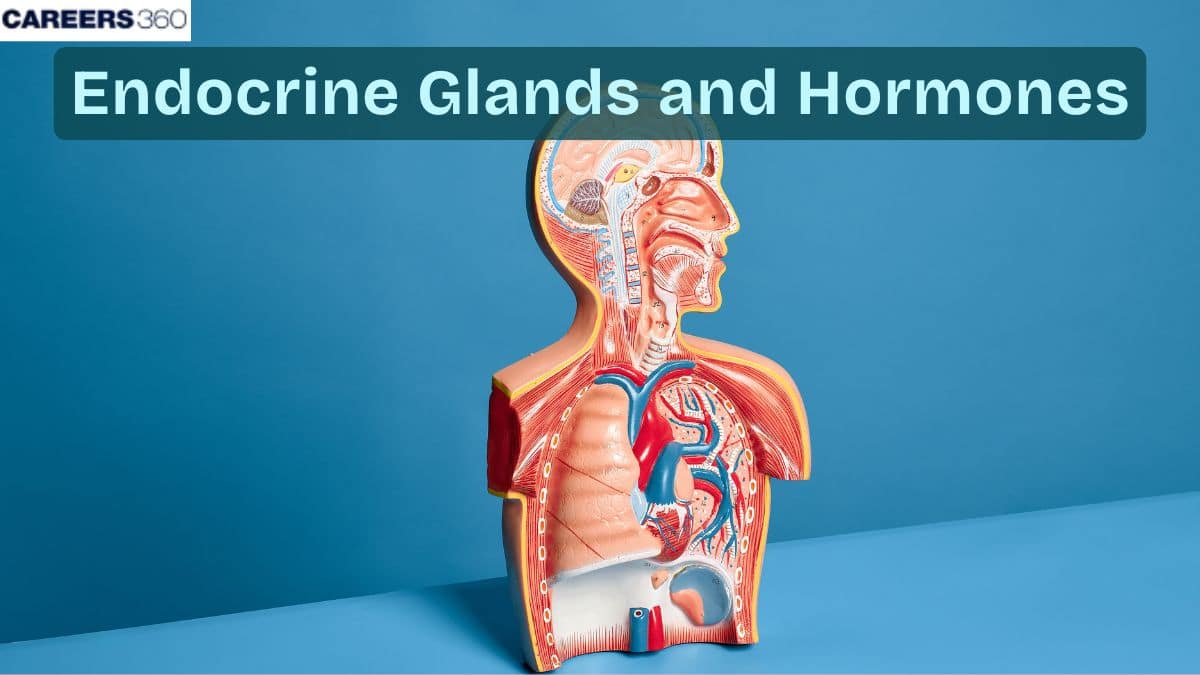
What are Endocrine Glands?
The endocrine glands in the human body are organs that produce and secrete hormones directly into the bloodstream. They control a wide array of physiological processes as those related to growth, metabolism, and homeostasis. This includes major glands such as the pituitary, thyroid, adrenals, and pancreas, which participate in the maintenance of internal balance.
Unlike exocrine glands, which release secretions through ducts to specific locations like sweat glands or salivary glands, the endocrine glands are ductless and require the circulatory system for transmission. This direct release into the circulatory system results in a diffuse action, systemic in nature, required for the coordination of activities of the body over long periods and responses to internal and external stimuli. The endocrine system plays a vital role in maintaining homeostasis, affecting growth and development, and regulating reproduction, therefore, keeping a person healthy and fit.
Pituitary Gland — The Master Gland
The pituitary gland is a pea-sized endocrine gland located at the base of the brain directly behind the socket of the eye and just below the hypothalamus. It is enclosed within a bony prominence of the sphenoid bone, the sella turcica.
Pituitary Hormones
Growth Hormone (GH): Stimulation of growth and cell reproduction.
Prolactin: Milk production within the mammary glands.
Adrenocorticotropic Hormone (ACTH): Stimulation of the adrenal cortex to release cortisol.
Thyroid-Stimulating Hormone (TSH): Stimulation of the thyroid gland to produce thyroid hormones.
Follicle-stimulating hormone (FSH): It regulates the reproductive process. This includes activities such as maturation of ovarian follicles and spermatogenesis.
Luteinizing Hormone (LH): Ovulation stimulation and maintenance of sex hormone secretion.
Antidiuretic Hormone (ADH): Water amount regulation in the body, water reabsorption in kidneys.
Oxytocin: Uterine contractions at birth, Milk letdown, lactation.
Functions
This is also known as the "master gland". Such functions, through the release of hormones, actually do different facets of the body to control other endocrine glands. It has a very vital role in growth, metabolism, stress response, and reproductive processes.
Hypothalamus — The Master Regulator
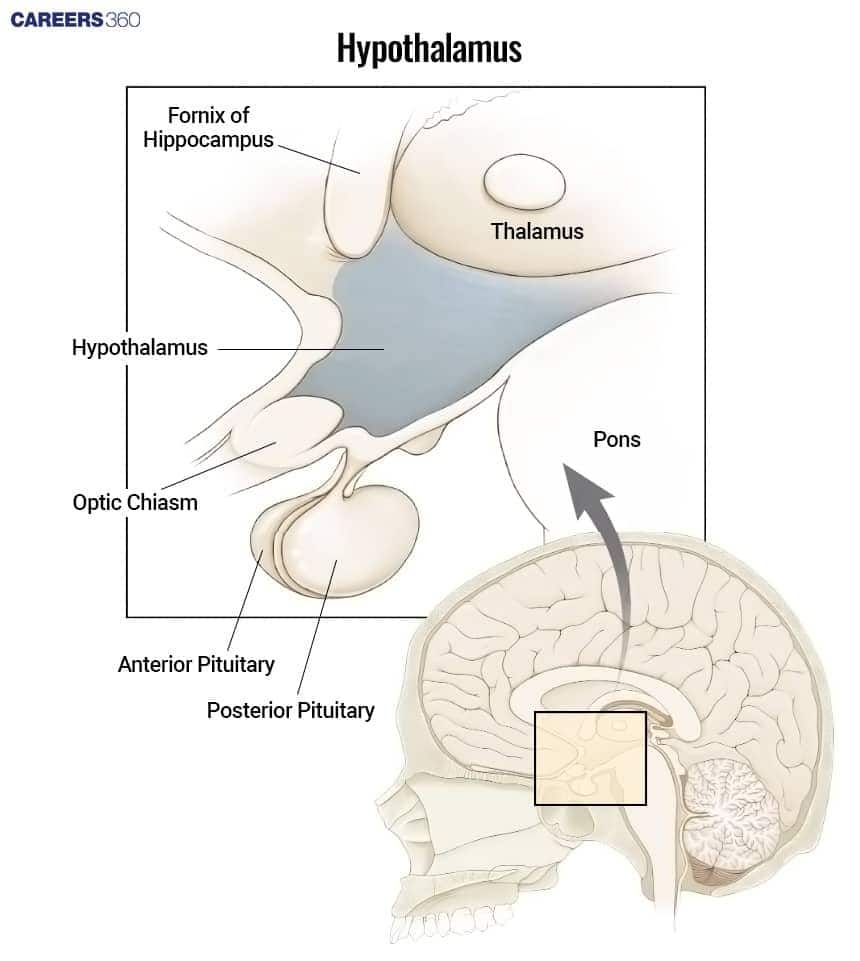
The hypothalamus lies just above the pituitary gland and communicates with it through the hypothalamic-pituitary portal circulation, a system of blood vessels that enables the direct exchange of hormones between the two.
Hypothalamic Hormones
Thyrotropin Releasing Hormone (TRH): Stimulates TSH release from the pituitary.
Corticotropin Releasing Hormone (CRH): Stimulates ACTH release from the pituitary.
Gonadotropin-releasing hormone (GnRH): Controls the release of FSH and LH from the pituitary.
Growth Hormone Releasing Hormone: stimulates growth and development.
Somatostatin: Inhibits GH and TSH release.
Dopamine: Inhibits prolactin release.
Role
It has control over the activities of the pituitary. The hypothalamus indirectly regulates many of the body's functions, from overall growth and development to metabolic rate, responses to stress and reproductive activities.
Thyroid Gland
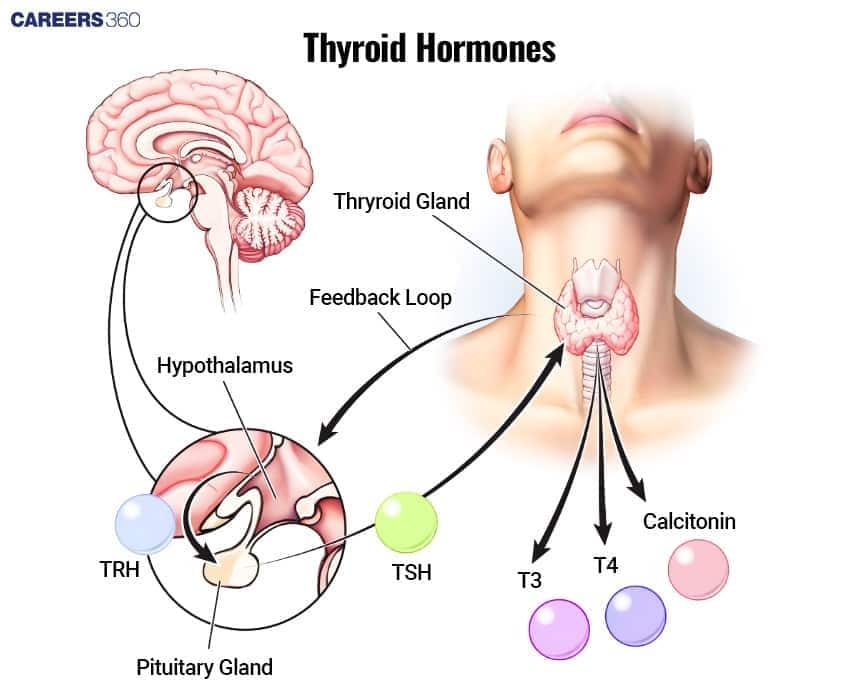
It is located anterior to the trachea in the neck. The thyroid gland has two lobes joined at an isthmus
Thyroid Hormones
Thyroxine (T4) and Triiodothyronine (T3): This mediates the metabolic processes, producing energy, and growth.
Calcitonin: This reduces blood calcium through the inhibition of bone resorption and with an increased calcium deposition within the bones.
Functions
Thyroid hormones regulate the metabolic rate, which affects growth. In addition, they are also necessary for maturation of nervous tissue.
Parathyroid Glands
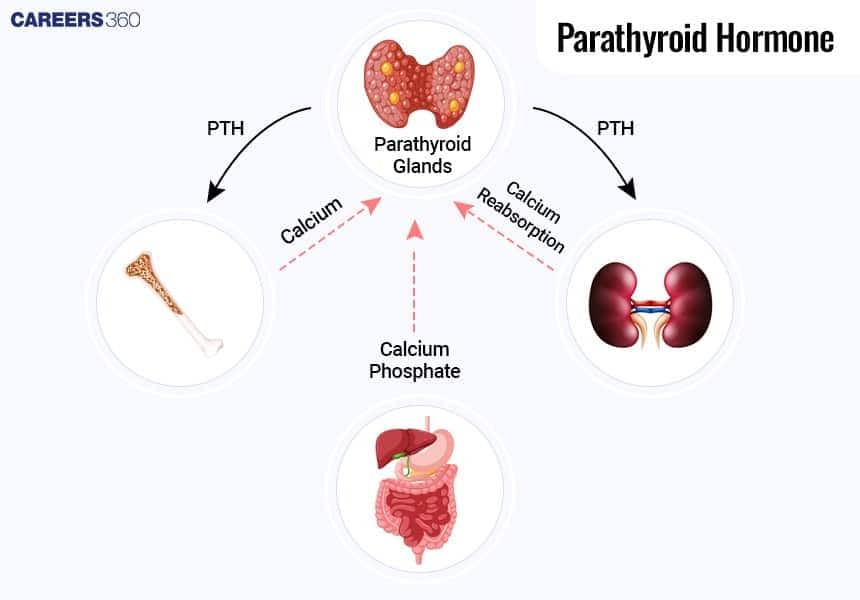
The parathyroid gland has four small glands on the posterior surface of the thyroid gland.
Parathyroid Hormone
Parathyroid Hormone (PTH): As a result of increased bone resorption, improved renal calcium reabsorption, and stimulation of intestinal calcium absorption, PTH brings up the level of calcium in the blood.
Functions
PTH controls the level of calcium required to keep the proper working of the muscles, transmission of nerve impulses, and correct bone health.
Adrenal Glands — Cortex & Medulla
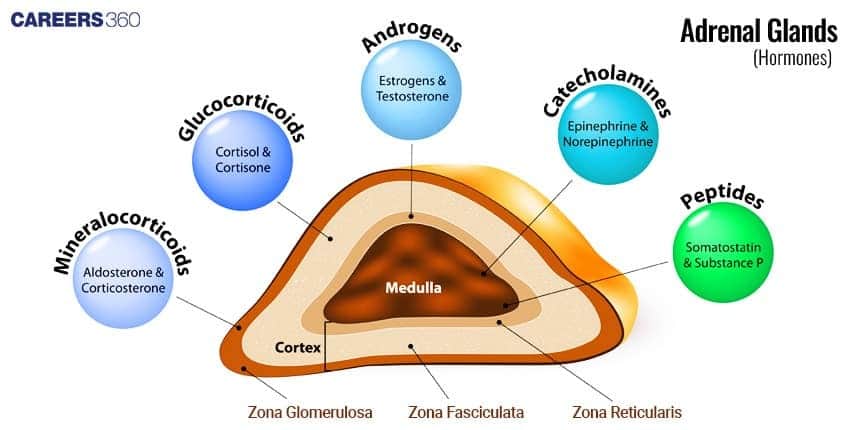
Two adrenal glands sitting at the top of each kidney are divided into two distinct parts—the cortex and the medulla.
Hormones of Adrenal Cortex
Cortisol: Controls the metabolism, and immune response, and enables the body's response to stress.
Aldosterone: Controls the balance of sodium-potassium. The product of this event affects blood pressure.
Hormones of Adrenal Medulla
Adrenaline (Epinephrine) and Noradrenaline (Norepinephrine): These are also referred to as "fight-or-flight" hormones. During dangerous situations, they increase heart rate, blood pressure, and energy supply.
Functions
The adrenal glands are mainly concerned with the management of stress reactions and controlling a wide array of metabolic and physiological activities.
Pancreas — Endocrine + Exocrine
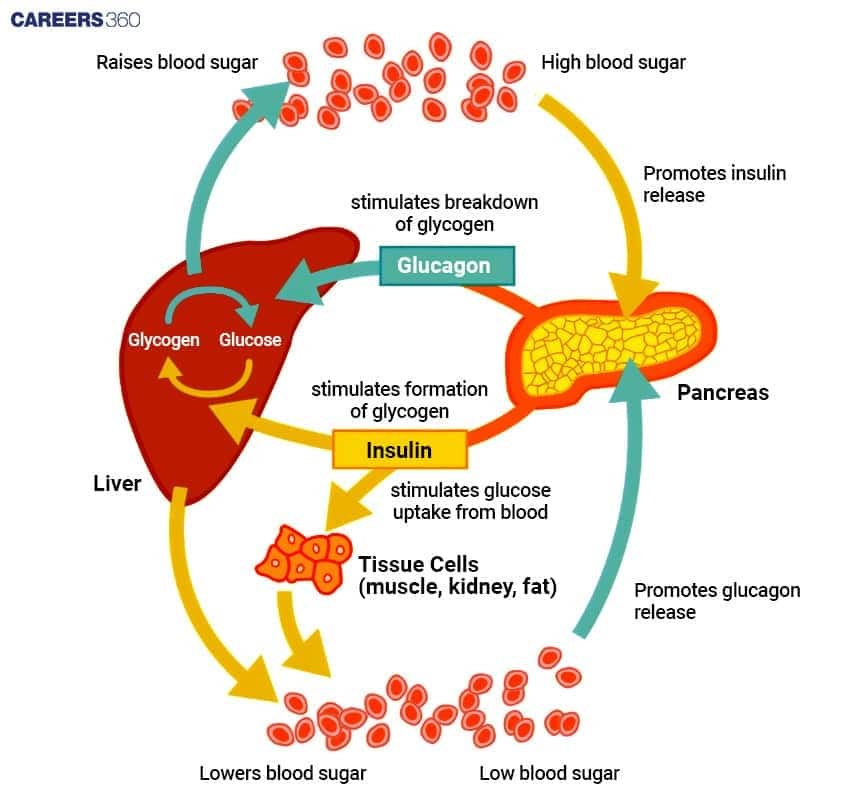
The pancreas acts both as an endocrine gland concerning the production of hormones and as an exocrine gland concerning the secretion of digestive enzymes.
Pancreatic Hormones
Insulin: It reduces blood sugar by increasing the uptake of glucose by cells.
Glucagon: It increases blood sugar by releasing glucose that is stored in the liver.
Somatostatin: This is against the release of both insulin and glucagon.
Functions
The pancreas controls the concentration of glucose in the blood through actions of insulin and glucagon. Hence this maintains homeostasis in energy
Pineal Gland
Pineal Gland is a very small, pea-shaped gland, which rests in the epithalamus of the brain close to the middle of the brain.
Melatonin
Runs an individual's sleep-wake cycle and is also responsible for seasonal biological rhythms.
Functions
Melatonin appears to play a role in the production of the 'circadian rhythm' and sleep-wake cycles and, therefore, acts as the 'body clock.'
Gonads (Testes and Ovaries)
Testes are in the scrotum whereas ovaries are in the pelvic cavity.
Hormones
Testosterone: It controls male reproductive functions as well as secondary sexual characteristics.
Estrogen and Progesterone: They regulate female reproductive activity, the menstrual cycle, and the manifestation of secondary sexual characteristics.
Functions
Gonads play a crucial role in reproduction and in expressing secondary sexual traits and, therefore impact the physical characteristics and behaviours defining sexual maturation.
Endocrine Glands & Hormone NEET MCQs (With Answers & Explanations)
Important questions asked in NEET from this topic are:
Glands and their hormones
Functions of hormones
Practice Questions for NEET
Q1. Which of the following are the types of Chemical hormones?
Proteins, steroids & biogenic amines
Proteins only
Steroids only
Biogenic amines only
Correct answer: 1) Proteins, steroids & biogenic amines
Explanation:
Chemically, hormones are composed of proteins, steroids, and biogenic amines. Protein hormones are composed of amino acids and include examples such as insulin and growth hormone. Steroid hormones are derived from cholesterol and include examples such as testosterone and cortisol. Biogenic amine hormones are derived from amino acids and include examples such as epinephrine and serotonin.
Hence, the correct answer is option 1) Proteins, steroids & biogenic amines.
Q2. How many of the following hormones given below will interact with the membrane-bound receptor?
Thyroxin, epinephrine, progesterone, relaxin, estrogen:
Three
Two
Five
One
Correct answer: 2) Two
Explanation:
Out of the given hormones, only two hormones will interact with membrane-bound receptors. These two hormones are thyroxine and epinephrine.
Thyroxine is a thyroid hormone that interacts with membrane-bound receptors to regulate metabolism and growth. Epinephrine, also known as adrenaline, interacts with membrane-bound receptors in response to stress, increasing heart rate and blood pressure, among other effects. Progesterone, relaxin, and estrogen are steroid hormones that interact with intracellular receptors rather than membrane-bound receptors.
Hence, the correct answer is option 2) Two.
Q3. Proteins perform many physiological functions. For example, some functions as enzymes. Which of the following represents an additional function that some proteins discharge?
Antibiotics
Pigment conferring colour to skin
Pigments making colours of flowers
Hormones
Correct answer: 4) Hormones
Explanation:
Antibiotics that contain enzymes do not possess proteins, but many antibodies might not have proteins or enzymes. Moreover, pigments are not proteins. Hormones can be categorized chemically as either proteins or steroids. Except for sex hormones and those derived from the adrenal cortex, every hormone in the human body is a protein or a protein derivative.
Hence, the correct answer is option 4) Hormones.
Also Read:
Recommended Video for Endocrine Glands and Hormones
Frequently Asked Questions (FAQs)
The pancreas secretes hormones like insulin and glucagon and maintains the blood sugar at a normal level.
The thyroid gland produces thyroxine and triiodothyronine which are involved in the regulation of the metabolic rate, growth and development and calcitonin, which is responsible for calcium homeostasis.
Hormones are chemical messengers in the blood that act on tissues and organs to control metabolism, growth, mood, and reproductive functions.
Common disorders of this kind include diabetes mellitus, hypothyroidism, hyperthyroidism, Cushing's syndrome, Addison's disease, and growth hormone disorders like gigantism and dwarfism.
Diagnosis of endocrine disorders is made by blood tests, imaging techniques and physical examinations; treatment may be in the form of hormone replacement therapy, drugs and lifestyle changes; at times, surgical intervention may also be required.
It is referred to as a couple of organs called glands that are in charge of producing and secreting hormones to regulate a few activities within the body, such as metabolism, growth, and reproduction.
Major endocrine glands include the pituitary, hypothalamus, thyroid, parathyroid, adrenals, pancreas, pineal, and gonads.
