


Hormones: Definition, What They Are, Function, Types, Causes, Symptoms, Treatment
Hormones are chemical messengers secreted by endocrine glands that regulate growth, metabolism, reproduction, mood, and homeostasis. They travel through the bloodstream to specific target organs and act via specialised receptors. This guide explains types of hormones, functions, endocrine glands, mechanisms of action, disorders, and NEET-focused MCQs.
This Story also Contains
- What Are Hormones?
- Types of Hormones
- Functions of Hormones
- Major Endocrine Glands and Hormones
- Mechanisms of Hormone Action
- Hormone Action and Receptors
- Important Hormones
- Roles of Hormones in the Body
- Hormonal Diseases
- Hormones NEET MCQs (With Answers & Explanations)
- Recommended Video on Hormones
What Are Hormones?
Hormones are chemical messengers synthesised from the endocrine glands. They travel in blood to reach target organs and tissues to control various physiological processes to maintain homeostasis.
Types of Hormones
The types of hormones include:
Peptide Hormones
Consisting of amino acids.
Examples: Insulin, glucagon, and growth hormone.
Steroid Hormones
Consisting of cholesterol.
Examples: Cortisol, aldosterone, estrogen, and testosterone.
Amino Acid-Derived Hormones
Consisting of single amino acids.
Examples: Thyroxine, epinephrine, and norepinephrine.
Glycoprotein Hormones
Protein hormones with carbohydrate groups.
Examples: Follicle-stimulating hormone, luteinizing hormone.
Functions of Hormones
The functions of hormones include:
Regulation of Metabolism
Insulin and glucagon act on the levels of blood sugar.
Thyroid hormones act on metabolic rate.
Growth and Development
Growth hormone acts on growth in the tissues.
Estrogen and testosterone act as sex hormones in reproductive growth and development.
Homeostasis
Aldosterone holds homeostasis in sodium and potassium balance.
Antidiuretic hormone maintains the balance of water in the body.
Stress Response
Cortisol and adrenaline control the stress response in the body.
Reproduction
Hormones like FSH and LH maintain the menstrual cycle in females and spermatogenesis in males.
Major Endocrine Glands and Hormones
The major endocrine glands are:
Pituitary Gland
Also known as the master gland.
Produces hormones like growth hormone, prolactin, and oxytocin.
Thyroid Gland
Produces thyroid hormones T3 and T4
Maintain the metabolic rate.
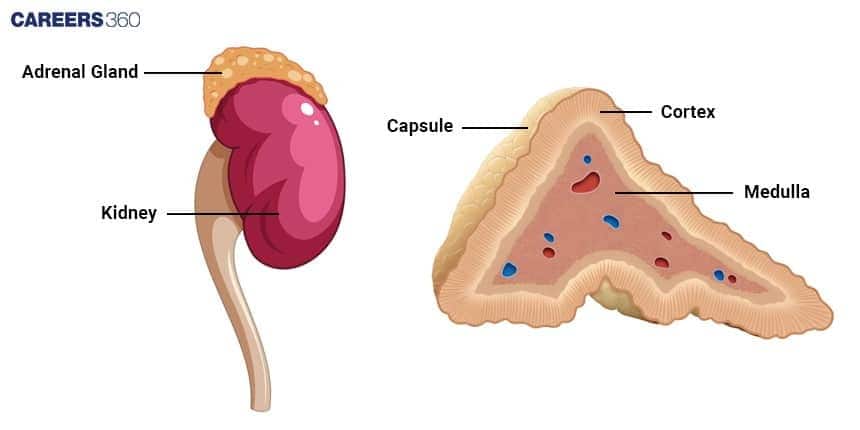
Adrenal Glands
They secrete hormones like cortisol, adrenaline, and aldosterone.
Pancreas
Produces hormones like insulin and glucagon
Regulate blood sugar levels.
Gonads
Ovaries in females produce oestrogen and progesterone
Testes in males produce testosterone.
Mechanisms of Hormone Action
The mechanism of hormone action include:
Feedback Mechanism
Negative feedback loops maintain homeostasis.
For example, the level of the thyroid hormone is maintained by the hypothalamic-pituitary axis.
Response to Stimuli
Stress, increased blood sugar, change in ion concentration, etc can lead to the secretion of hormones.
Hormone Action and Receptors
Hormones exert their action by combining with specific receptors on target cells.
Cell Surface Receptors
These are for peptide hormones and amino acid-derived hormones.
The receptors trigger an intracellular cascade after binding between the hormone and the receptor.
Intracellular Receptors
These belong to steroid and thyroid hormones.
They reside in the cell, and the hormones diffuse through the plasma membrane
They elicit their response, mostly changes in gene expression, upon binding.
Important Hormones
Some important hormones include:
| Hormones | Functions |
|---|---|
Cortisol | Respond to stressful situations, increasing heart rate and blood sugar levels, and the amount of energy available |
Estrogen | Development of secondary sexual characteristics of females, preparing the uterus for impregnation, and maintaining female reproductive health |
Melatonin | Regulates the circadian rhythm, sleep and maintains the normal sleep-wake cycle |
Progesterone | Involved in the menstrual cycle, preparing the uterus for the implantation and maintaining embryogenesis. |
Testosterone | Primary male sex hormone responsible male sexual development and general health. |
Roles of Hormones in the Body
Hormones carry out a range of crucial roles in the body, which include:
Food metabolism
Growth and development
Thirst and hunger regulation
Thermoregulation
Mood and cognition
Sex development and reproduction
Hormonal Diseases
The hormonal diseases are brought about by disorders or malfunctioning of the endocrine glands, similar to that of the hypothalamus, adrenal, and pituitary glands. Some of the well-known diseases include
Hyperthyroidism: Too much production of thyroid hormone occurs.
Osteoporosis: Condition characterized by reduced bone mass due to hormonal imbalance.
Diabetes: Abnormality in insulin production or action which misregulates the sugar level in the blood.
Hormones NEET MCQs (With Answers & Explanations)
Important questions asked in NEET from this topic are:
Types of hormones
Major glands and the their hormones
Mechanism of hormone action
Practice Questions for NEET
Q1. Which of the following are the types of Chemical hormones?
Proteins, steroids & biogenic amines
Proteins only
Steroids only
Biogenic amines only
Correct answer: 1) Proteins, steroids & biogenic amines
Explanation:
Chemically, hormones are composed of proteins, steroids, and biogenic amines. Protein hormones are composed of amino acids and include examples such as insulin and growth hormone. Steroid hormones are derived from cholesterol and include examples such as testosterone and cortisol. Biogenic amine hormones are derived from amino acids and include examples such as epinephrine and serotonin.
Hence, the correct answer is option 1) Proteins, steroids & biogenic aminesis.
Q2. Proteins perform many physiological functions. For example, some functions as enzymes. Which of the following represents an additional function that some proteins discharge?
Antibiotics
Pigment conferring colour to skin
Pigments making colours of flowers
Hormones
Correct answer: 4) Hormones
Explanation:
Antibiotics that contain enzymes do not possess proteins, but many antibodies might not have proteins or enzymes. Moreover, pigments are not proteins. Hormones can be categorized chemically as either proteins or steroids. Except for sex hormones and those derived from the adrenal cortex, every hormone in the human body is a protein or a protein derivative.
Hence, the correct answer is Option 4) Hormones.
Q3. Name a peptide hormone which acts mainly on hepatocytes, and adipocytes and enhances cellular glucose uptake and utilization.
Insulin
Glucagon
Secretin
Gastrin
Correct answer: 1) Insulin
Explanation:
Insulin - Insulin is a peptide hormone, which plays a major role in the regulation of glucose homeostasis. Insulin acts mainly on hepatocytes and adipocytes (cells of adipose tissue) and enhances cellular glucose uptake and utilization
Hence, the correct answer is option 1) Insulin.
Also Read:
Recommended Video on Hormones
Frequently Asked Questions (FAQs)
It is through any of the many hormones taking control, including insulin and glucagon, both of which take part in controlling the sugar level in the blood, while the thyroid hormones themselves manage the metabolic rate.
Growth hormones and sex hormones act on tissue growth, reproductive development, and function.
Cortisol and adrenaline are some of the playing hormones in the body's reaction to stress.
Hormones are messenger chemicals resulting from endocrine glands that govern different physiological activities.
There are peptide, steroid, amino acid-derived, and glycoprotein hormones.
