


How to Become an Army Doctor in India After 12th
A career as an army doctor in India is a highly prestigious role. If you are an aspirant with a 12th class qualification from a science background, this career offers a unique blend of opportunities, where you can practice medicine and also contribute to the defence system. Army doctors play an integral role in providing medical support to the soldiers and their families.
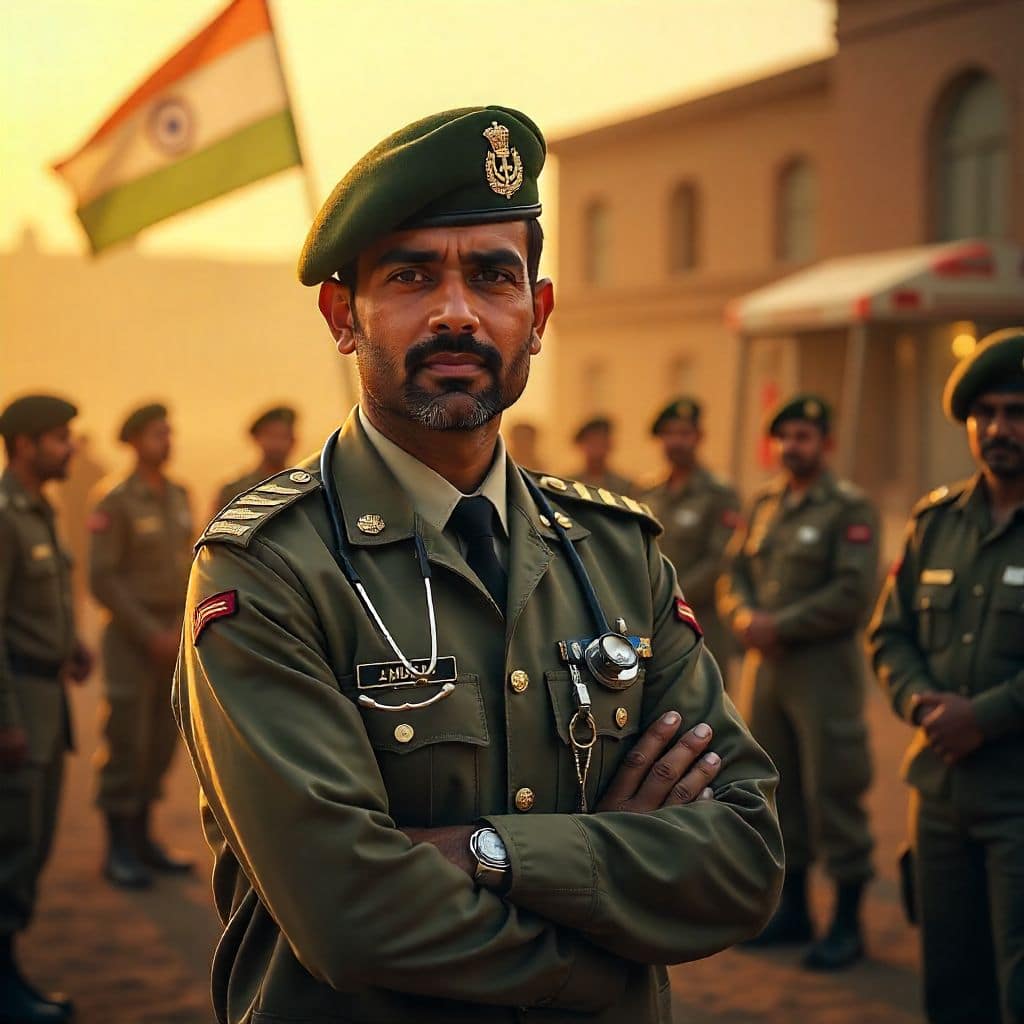
To become an army doctor, a candidate needs to meet a set of clear eligibility criteria, including competitive entrance exams and specialised medical training, followed by military service. In this article, we explain how to become an army doctor in India after 12th, focusing on important details such as entrance exams, educational pathways, training process and career scope. Let’s begin!
Why Choose a Career as an Army Doctor?
For aspirants exploring how to become an army doctor in India after 12th, a career as a doctor in the army in India is not just a job; it is a privilege. These medical professionals hold ranks that are similar to those of an Army officer. Beyond just wearing the uniform, these noble professionals contribute to the nation with the discipline and honour of the armed forces. They also enjoy the same perks, allowances and privileges as other officers in the armed forces, such as:
Retirement benefits
Family pension
Medical treatment
Free accommodation and ration
Travel concessions
Whether you are a girl or a boy, the process of how to become an army doctor in India remains the same. This article provides a complete roadmap for aspirants wondering how to pursue this noble profession immediately after class 12th.
Step-by-Step Guide: How to Become an Army Doctor in India After 12th
A career as a Doctor in the Armed Forces is one of the most sought-after career choices for medical aspirants and is often perceived as one of the top govt jobs after 12th. While this career path is highly rewarding, it is also quite competitive compared to other medical careers, especially when appearing for the Army Medical Exam after 12th. This profession is not only prestigious but also comes with all the benefits and stability of a government job, along with lucrative salaries and post-retirement benefits. Unlike other career paths in medicine, the career of a military doctor is secure with long-term success and growth, similar to how to become an Indian army officer.
Read on to know about the step-by-step guide on how to become a doctor in the army after 12th.
Step 1: Complete 10+2 with Science Stream
The first step for those asking how to become an army doctor in India is to complete 10+2 with Physics, Chemistry and Biology (PCB). Aspirants must score a minimum of 60% in PCB and 50% in English in the first attempt from a recognised board. Also, passing mathematics in class 10 is mandatory.
Step 2: Qualify for The Army Doctor Exam
NEET (National Eligibility cum Entrance Test) is the most popular medical exam conducted to provide admissions to aspiring doctors. Early preparation and strong dedication are crucial to qualify for this exam and to secure admission to the Armed Forces Medical College (AFMC), Pune.
Step 3: Secure Admission in AFMC Pune
Once you secure the required cut-off marks in NEET, you can apply for AFMC Pune. If qualified, you will go through a challenging screening process that explains how to become an army doctor in India after 12th for male, including:
Test of English Language, Comprehension, Logic and Reasoning (ToELR): A Computer-Based Test (CBT).
Psychological Assessment Test (PAT)
Interview by a Board of Officers.
Medical Examination as per AFMS standards.
A final list is then prepared based on NEET scores and scores from ToELR, PAT, and the Interview. All these assessments are part of the army medical exam after 12th, and selected students can pursue an MBBS course to serve as doctors or other medical professionals in the armed forces.
AFMC MBBS Eligibility Criteria At A Glance:
Around 150 seats (145 for Indian nationals + 5 for friendly foreign countries) are offered in MBBS. 115 seats are reserved for male candidates, while 30 are reserved for female candidates.
Candidates must be citizens of India. Candidates who are subjects of Nepal or Bhutan, or Persons of Indian Origin who have migrated from Pakistan or other foreign countries to permanently settle in India, may also be eligible under specific government rules.
10+2 with 60% in PCB and 50% in English.
Must have passed the Class 10 Mathematics course/subject
Must be unmarried and medically fit as per the standards of the government
Age between 17–24 years
It is crucial to note that Candidates who qualify for the Army doctor exam and secure admission in AFMC must sign a mandatory Service Liability Bond. For aspirants exploring how to become an army doctor in India after 12th for female, this bond requires a compulsory liability period of 7 years for the Short Service Commission, which may be extended to Permanent Commission. Candidates who try to resign or seek other careers during the bond period will face significant financial penalties (repayment of bond money) and should gain official approval. For the 2023 admissions, the bond amount was Rs 65 Lakhs.
Tips To Prepare For The Army Doctor Exam After 12th
Studying for the army medical exam demands academic skills, physical fitness and mental strength. Here, we have listed some of the best tips for aspirants to prepare well.
Build a strong foundation in PCB to qualify for NEET
Conduct regular self mock tests for NEET as well as AFMC
Maintain physical fitness with exercise and lifestyle
Create a structured plan to study
Stay up to date with exam notifications and deadlines
Entry Rank and Promotion Structure
After clearing the army medical exam after 12th and all the other selection processes, you will be commissioned into the Army Medical Corps with the following entry ranks:
Captain – For those with full Medical Registration
Lieutenant – For those with provisional registration or undergoing internship
This prestigious path shares similarities with the career as an Indian air force airman, where medical professionals and officers both serve the nation.
Promotion Hierarchy
Based on their fitness and satisfactory services provided, army doctors are promoted to a higher rank. We have listed here the eligibility criteria for promotion to specific posts in the medical field of the armed forces, providing a clear structure on how to become an army doctor in India after 12th after MBBS.
Captain: For those who possess permanent registration after completion of the prescribed internship, partly or wholly in the Armed Forces.
Major: Eligible after completion of four years of service as Captain.
Lt. Colonel: After completion of 13 years of reckonable service or on completion of 13 years from the date of eligibility for permanent registration
Colonel to Lt. General: Based on merit and available vacancies
What You Earn as an Army Doctor in India
The starting gross monthly salary of a newly commissioned Captain (MBBS) in the AFMS is approximately Rs 1,00,000 to 1,30,000 per month. This salary range involves basic pay as defined by the 7th CPC, along with allowances like
Military Service Pay (MSP)
Non-Practising Allowance (NPA)
Dearness Allowance (DA)
Qualifying for the Army doctor exam can open ways to build a prestigious and lucrative medical career in uniform. Such additional benefits and perks make this profession increasingly appealing to young aspirants.
Final Thoughts
A career as a medical doctor is about serving the nation with courage and commitment. If this is a dream career for you, just remember that pursuing MBBS from AFMC is the most direct route. However, AFMC offers only limited seats, and it is highly competitive to secure admission through the Army Doctor exam. Although the army exam after 12th is challenging and the path is difficult, it is essential to note that once you clear this, the reward is a lifetime of pride and national honour.
Frequently Asked Questions (FAQs)
To become doctor in Indian army after 12th for female candidates, you must know that meeting the required eligibility criteria is necessary. Candidates should be a 12th pass in science with at least 60% in PCB and 50% in English. Qualifying for NEET, which is an essential army doctor exam, is crucial to get admission in AFMC Pune. Clear TOELR, PAT, interview, and medical tests to secure admission into 30 MBBS seats reserved for girls.
Yes, NEET is a mandatory qualification to get admission into AFMC Pune. It is the official army doctor exam after 12th, and the army conducts no separate entrance.
A doctor joins the Armed Forces Medical Services (AFMS) at the entry-level with the rank of a Captain. A captain placed at Level 10B in the Defence Pay Matrix earns a basic salary of Rs 61,300. Their gross salary includes other allowances such as Military service pay (MSP), Non-Practising Allowance (NPA) and Dearness Allowance (DA).
(Source: 7th Central Pay Commission Report)
