KCC Institute of Legal and Higher Education, Greater Noida
Law Admissions 2026 Open | Avail Merit-Based Scholarships


Macromolecules in biology are large molecules made up of smaller units called monomers. These molecules are necessary for life and form the basis of cell structure and function. The four major types of macromolecules are carbohydrates, proteins, lipids, and nucleic acids. Each type of macromolecule plays a unique role in growth, energy storage, and genetic information.
This Story also Contains
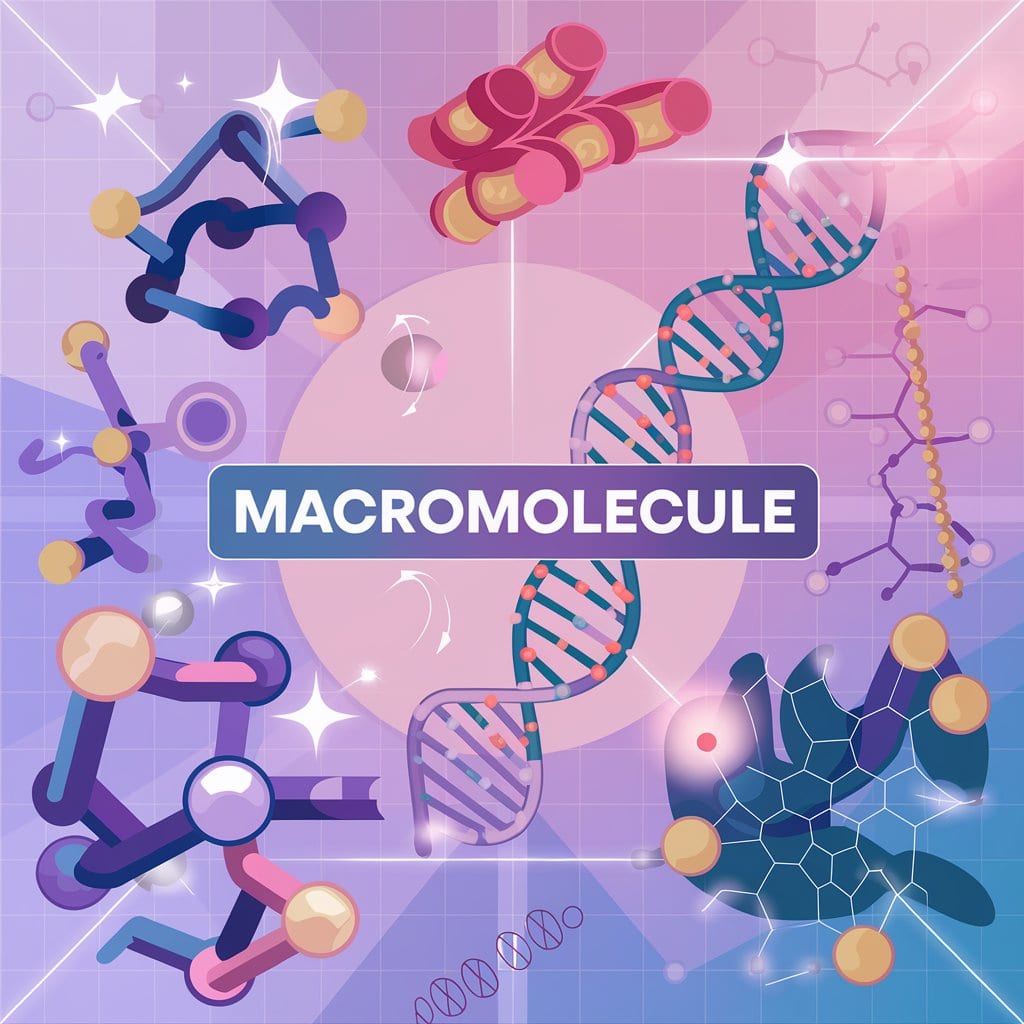
The definition of macromolecules explains their importance in living organisms. Examples of macromolecules in biology include starch, enzymes, fats, and DNA. Factors such as genetics, nutrition, and environment affect the structure and function of macromolecules. Studying macromolecules helps students understand biomolecule metabolism, heredity, and exam topics in competitive exams like NEET preparation.
Macromolecules are large, complex molecules with great importance in living things. They include carbohydrates, proteins, lipids, and nucleic acids. Each biomolecule's chemical composition has different key roles in the life of an organism. Understanding macromolecules is required in fields such as biochemistry, molecular biology, and genetics.
Law Admissions 2026 Open | Avail Merit-Based Scholarships
BBA/MBA/PGDM Early Bird Applications Deadline 06th Nov'26. Apply now using coupon code CAREER250 and get ₹250 off the application fee
Macromolecules are polymers and are composed of many smaller molecules known as monomers. In biology topics, such as biochemistry and molecular biology, these macromolecules play a crucial role in various cellular functions. The monomers are joined by covalent bonds, forming a long chain. The properties of macromolecules are different from those of their monomeric subunits because their size and complex structures are huge.
Macromolecules in biology are large, complex molecules essential for life. They are built from monomers that join to form polymers. The four major types of macromolecules are carbohydrates, proteins, lipids, and nucleic acids. Each macromolecule has unique functions in energy storage, structure, and genetic information.
Macromolecules are very big molecules made of repeating small units called monomers.
They are formed by the polymerisation of monomers like glucose, amino acids, nucleotides, and fatty acids.
All living organisms need macromolecules for survival, growth, and reproduction.
They form cell structures and regulate biological functions.
The four major types are carbohydrates, proteins, lipids, and nucleic acids.
Some macromolecules store energy (carbohydrates, lipids), while others store genetic information (DNA, RNA).
They control metabolism, heredity, and cell communication.
Genetics, nutrition, and environment influence their structure and function.
There are four major classes of macromolecules. These are:
Each class contains unique monomers, structures, and functions. Let me explain in detail.
Macromolecule | Monomer | Example |
Carbohydrates | Monosaccharides (glucose, fructose) | Starch, Cellulose |
Lipids | Fatty acids + Glycerol | Fats, Oils, Phospholipids |
Proteins | Amino acids | Enzymes, Haemoglobin |
Nucleic Acids | Nucleotides (A, T, G, C, U) | DNA, RNA |
Carbohydrates are the organic compounds of carbon, hydrogen, and oxygen that serve as energy sources for living organisms. The three main classes of carbohydrates are as follows:
Type | Structure | Function |
Monosaccharides | Simple sugars (e.g., glucose) | Immediate energy source |
Disaccharides | Two monosaccharides (e.g., sucrose) | Energy source, transport form |
Polysaccharides | Long chains of monosaccharides (e.g., starch, glycogen) | Energy storage and structural support |
Amino acids are the building blocks of proteins, and proteins perform numerous functions within the body: structural, enzymatic, transport, and defence. Proteins have a complex hierarchical structure:
Protein Structure | Description |
Primary | Sequence of amino acids |
Secondary | Alpha helices and beta sheets |
Tertiary | 3D folding of the protein |
Quaternary | Assembly of multiple polypeptide chains |
Lipids are a structurally diverse group of hydrophobic organic molecules essential in biological systems:
Energy Storage: Lipids serve as energy reserves in the form of triglycerides.
Cell Membrane Structure: Phospholipids provide the cell membrane with its bilayer structure.
Type | Structure | Function |
Fatty Acids | Long hydrocarbon chains | Building blocks of lipids |
Triglycerides | Glycerol + three fatty acids | Energy storage |
Phospholipids | Glycerol + two fatty acids + phosphate | |
Steroids | Four fused carbon rings | Hormonal signalling |
Nucleic acids, including DNA and RNA, are essential for storing and transmitting genetic information:
DNA: Double-stranded helix that contains the genetic blueprint.
RNA: A single-stranded molecule that plays a role in protein synthesis.
Nucleic Acid | Structure | Function |
Double helix | Genetic information storage | |
Single-stranded | Protein synthesis (mRNA, tRNA, rRNA) |
Macromolecules are synthesised through different biochemical pathways:
Synthesis of carbohydrates - The process of photosynthesis produces glucose, which is converted largely into starch.
Synthesis of proteins - transcription of DNA into mRNA yields a sequence of bases that are translated into amino acids, thus building proteins.
Synthesis of lipids - fatty acids are esterified to form triglycerides.
Many macromolecular syntheses are condensation reactions in which a molecule of water is eliminated as a by-product. Such reactions are known as dehydration syntheses or condensations. Breakdown of macromolecules into their constituent monomers is, in general, a hydrolysis reaction, involving the addition of water molecules.
Macromolecules interact in complex ways to enable biological processes:
Protein-Protein Interactions: Enzymes often work together in metabolic pathways.
Protein-Nucleic Acid Interactions: Transcription factors interact with DNA to regulate gene expression.
These interactions are critical for the structure and function of cells and organisms. Together, macromolecules maintain metabolism, heredity, and cellular communication.
Macromolecules have a key role in health and disease:
Carbohydrate-Related Disorders: Diabetes is a disorder affecting carbohydrate metabolism.
Protein Folding Diseases: Many diseases, like Alzheimer's disease, are the result of protein misfolding.
Lipid Disorders: The abnormal amounts of certain lipids can lead to diseases such as cardiovascular disease.
Knowledge of the structure and function of macromolecules is important to understand how to develop treatments and cures for various diseases.
Macromolecules are influenced by several internal and external factors that determine their structure and function:
Genetic Factors: Different types of mutations in DNA or hereditary traits can alter protein structure, enzyme activity, and nucleic acid stability.
Nutritional Factors: Availability of amino acids, glucose, fatty acids, and nucleotides affects the synthesis of proteins, carbohydrates, lipids, and nucleic acids.
Environmental Factors: Temperature, pH, toxins, and radiation can denature proteins or damage nucleic acids.
Metabolic Factors: Hormones and enzymes regulate macromolecule metabolism, influencing energy storage and gene expression.
Pathological Factors: Diseases like diabetes, cancer, or autoimmune disorders disrupt normal macromolecule interactions.
Frequently Asked Questions (FAQs)
Monomers are the smaller units combined to form polymers or macromolecules.
Carbohydrates are major providers of energy among living things.
Proteins exhibit a complex hierarchical structure-primary, secondary, tertiary, and quaternary-and carry out a wide range of functions, including structural support, catalysis, transport, and defence.
DNA stores the cell's genetic material, and RNA carries the information from the DNA to the cellular site where proteins are synthesized.
Macromolecules are large, complicated molecules requisite to life, mostly made up of smaller units, known as monomers. The four major kinds of macromolecules are carbohydrates example, starch- proteins-for example, enzymes- lipids-for example, triglycerides-and nucleic acids-for example, DNA. Every one of these has a critical role in biological function and structure.
Macromolecules are large Biomolecules necessary for life; these include carbohydrates, proteins, lipids, and nucleic acids.

Law Admissions 2026 Open | Avail Merit-Based Scholarships
BBA/MBA/PGDM Early Bird Applications Deadline 06th Nov'26. Apply now using coupon code CAREER250 and get ₹250 off the application fee
Ranked #36 amongst institutions in Management by NIRF | 100% Placement
Globally Recognized by AACSB (US) & AMBA (UK) | 18 LPA Avg. CTC for PGPM 2026
NEET PG All India & State College Predictor with Admission Process Guide
Top B-School: Ranked #9 in NIRF Management Rankings 2025.