


- Home
- Veterinary Doctor
Who is a Veterinary Doctor?
As a veterinarian and lover of animals, I feel the time is now to stop the practice of horse soring for good ~ Ted Yoho
A veterinary doctor is a professional who treats animals. The individual plays an important role in animal welfare by looking after the health of pets, livestock, and wildlife. Veterinary doctors also help in preventing illnesses with the help of vaccinations and give information on proper nutrition and care of their pets. If you are an individual who loves animals and wants to contribute to the health and well-being of animals, becoming a veterinary doctor is a good career choice.
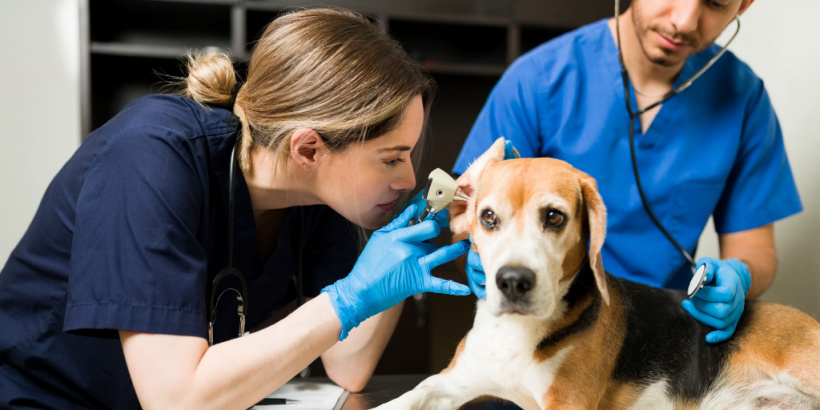
Veterinary Doctor in a Nutshell
A Veterinarian is responsible for diagnosing, treating, and preventing diseases in animals. The individual performs surgeries, guides nutrition, and provides animal care. A Bachelor’s in Veterinary Science (B.Vsc.) is a mandatory degree. The profession brings together medical knowledge and a strong commitment to animal welfare.
Quick Facts for Veterinary Doctor
-
Industry
Healthcare
-
Average Salary in India
₹49500
-
Suitable for
Male, Female, Others
A professional who is responsible for animal healthcare is known as a veterinary doctor. Individuals of any gender can become a veterinary doctor.
-
Any special needs
No
A career as a veterinary doctor might not be suitable for those candidates who have certain special needs. Reason being that physical or functional limitations can have adverse effects on the performance, putting in jeopardy the career prospects. Veterinary doctors are required to be physically fit and should be able to carry out medical and surgical procedures effectively.
Table of Contents for Veterinary Doctor
What is the role of Veterinary Doctor?
The Veterinary doctors roles and responsibilities are to diagnose and cure the illnesses of animals. Their routine tasks involve performing surgeries, advising on nutrition, and educating animal owners. They also assist with the reproduction and breeding of animals. Candidates are required to enrol in a vet science course to acquire the skills and knowledge essential to work as a veterinary doctor.
Veterinary doctors perform a series of physical examinations, conducting the entire body checkup, to help animals identify any irregularities and develop strategic treatment plans.
Veterinary doctors perform routine surgeries, such as spays, neuters, dental procedures, and mass removals, ensuring the safety and well-being of the patients.
They attend appointments, review lab work and diagnostic results, and communicate the findings to pet owners.
They check on hospitalised animals, return phone calls, finalise medical records, and may engage in administrative tasks.
They also ensure regulations, manage staff, and handle clinic operations, which require their attention and expertise.
Types of a Veterinary Doctor
There are numerous types of Veterinary Doctors or related career options available in the field of veterinary science. One can choose to become a veterinary receptionist, veterinary assistant, or veterinary supervisor, among many other options. A career in veterinary science is very opportunistic because one can work in a variety of environments, such as community animal shelters, private practice clinics, public health research groups.
Veterinary Assistant: A Veterinary assistant works with veterinarians and veterinary technicians. He or she not only works with the animals but also with the people. He or she helps keep veterinary offices running smoothly, and works with pet owners. A Veterinary assistant is required to inform the health conditions of the patient both the pet owner as well as the veterinarian.
Veterinary Technologist: A Veterinary Technologist is a practitioner who works under the supervision of a Pet Doctor. He or she is primarily responsible for testing animals and diagnosing disorders, illnesses, and other diseases in animals.
Veterinary Supervisor: A Veterinary Supervisor is the one whose responsibility is to keep a check on several veterinary assistants that are working. He or she is responsible for maintaining a record of work details as well as which assistant is responsible for which patient.
Veterinary Receptionist: A veterinary receptionist acts like an extra player in a sports team. His or her primary job is to take care of the receptionist work but in cases of emergency or in situations where there is no veterinary assistant one could take over and provide assistance to the animal by providing first aid.
Veterinary Sales Manager: A Veterinary Sales Manager meets the relevant distributor, veterinary doctors and farm owners. He or She achieves growth and sales targets by managing the sales team. There are several sales companies that sell animal products. These companies prefer hiring professionals from the field as they are the ones who have a better understanding and knowledge of animals and their requirements.
What is the workplace/work environment of Veterinary Doctor like?
A Veterinary Doctor works across multiple settings, such as animal hospitals, shelters, zoos, and in emergencies. The word schedule can be demanding, especially at a place where the footfall is immense. Regular appointments as well as sudden emergencies can require extra hours.
Does Veterinary Doctor require travelling?
Likely
Travelling for a veterinary depends on both specialisation and sometimes situation. If a vet doctor is specialised in the treatment of exotic animals he or she needs to travel to zoos and animal sanctuaries and sometimes needs to travel in emergency time. One who is in the teaching veterinary science field may travel to different colleges to teach and demonstrate procedures to students.
Time Pressure
Likely
Veterinary doctors work under time pressure, especially in emergency situations or when dealing with critical cases. They work many hours during a week to treat animals. They need to make quick decisions to provide timely care to animals.
How to become a Veterinary Doctor?
Steps to become a Veterinary Doctor
If you love animals, feel empathetic towards their suffering, and want to help them heal, then becoming a veterinary doctor can be an ideal career choice. It allows you to care for animals while making a meaningful difference in their lives. Below are the steps to understand how to become a veterinary doctor in India after Class 12.
What are the skills and qualities required to become a/an Veterinary Doctor?
A veterinary doctor must be good at communication and pay attention to important details. He or she requires critical thinking to make effective decisions. Here are several Veterinary Doctor skills that are required to function effectively in this career.
Communication Skills: A veterinary doctor must have a good command of his or her language. It is important for his or her job position to be able to explain their message to the recipient clearly and precisely. He or she effectively communicates with the pet owners and reduces the chances of errors caused by miscommunication. It is essential to be a good listener in order to communicate well.
Attention to Detail: A Veterinary Doctor is expected to have extremely high attention to detail. One needs to keep a close monitoring eye on the animal and the recovery process.
Service Orientation: For any individual who wishes to be a part of the healthcare industry it is important that he or she is service-oriented. One must have the inner urge to help a person in need therefore it is one of the primary skills required to be a Veterinary Doctor.
Decision-Making Skills: A Veterinary Doctor is required to determine the treatment procedure after diagnosing the disease. He or she needs to be calculative as well as decisive to identify the risks.
Critical Thinking: After the diagnosis of a patient the next step is to choose the treatment process. The Vet Doctor is required to rationally compare available options, critically think about them, and then choose to go with the one which promises a better outcome.
Which certifications and internships can be helpful in becoming Veterinary Doctor?
Internship Availability
Veterinary internships are designed to train candidates with the skills and knowledge required to work in the industry. An effective veterinary internship includes a strong didactic component. It may also include journal clubs, seminars, lectures, morbidity or mortality rounds, clinicopathologic conferences, and various other training sessions. A veterinary science qualification is required to opt for veterinary internships.
Veterinary Doctor Jobs and Salaries
Junior Veterinary Doctor
- Average Salary 41000
Job Description
The Junior Veterinary Doctor job description includes examining the animals, treating wounds and providing emergency care. A Junior Veterinary Doctor provides vaccinations and does regular check-ups and provides advice to the animal owner on preventive and care measures.
Salary Description
An entry-level Veterinary Doctor salary in India ranges between Rs 1.0 Lakhs to Rs 8.0 Lakhs with an average annual salary of Rs 5.2 Lakhs per annum. Junior Veterinary Doctor salary in India may vary depending on the various job factors like skills and experience of the candidates, job location, and others.
Salary Source: AmbitionBox
Senior Veterinary Doctor
- Average Salary 58000
Job Description
The Veterinary Doctor job description includes conducting x-rays and ultrasounds and analysing the results of medical tests like blood and urine. A Senior Veterinary Doctor treats the wounds, sets the fractures and performs surgeries.
Salary Description
The estimated Veterinary Doctor salary in India ranges from Rs 2.5 Lakhs to Rs 15.4 Lakhs with an average annual salary of Rs 7.2 Lakhs per annum. Senior Veterinary Doctor salary may vary depending on the various job factors.
Salary Source: AmbitionBox
Disclaimer: “The salary figures mentioned anywhere in this article are just for reference purposes. Please treat them as such. Actual salaries may vary depending on respective candidates, employer, job location, job profile and many other factors."
What is the job outlook for Veterinary Doctor?
The veterinary sector in India is expanding rapidly. It is driven by rise in pet ownership and awareness regarding animal health. India has emerged as one of the fastest-growing pet care markets. The growth has lead to demand for services such as clinical care, diagnostics, grooming, nutrition and specialised treatments.
Career progression is strong due to the rising demand and diversified roles. Veterinarians work in private clinics, hospitals and animal shelters. This career offers long-term stability and has a great future due to multiple specialisations and an increase of opportunities across both urban and semi-urban treatments.
Frequently Asked Questions for Veterinary Doctor
Que. How to become a Veterinary Doctor?
Ans.To become a veterinary doctor, complete 10+2 with physics, chemistry, and biology, then pass the NEET exam. Pursue a bachelor's in veterinary science (B.V.Sc. & AH), followed by M.Sc, M.V.Sc, or PhD for career advancement. Obtain a licence and specialise in a specific field for a fulfilling career in veterinary medicine.
Que. What is the average Veterinary Doctor salary?
Ans.According to the AmbitionBox, a veterinary doctor salary in India ranges between Rs. 0.5 Lakhs to Rs. 10 Lakhs with an annual salary of Rs. 6.5 Lakhs
Que. How to become a veterinary doctor after 12th without NEET?
Ans.If you want to become a veterinary doctor after 12th without Neet, then you can opt for Diploma in Veterinary and Livestock Development Assistant courses that are short term and need any national level of entrance examination for admission.
Que. How many years to become a veterinary doctor?
Ans.To become a veterinary doctor in India typically involves an 8-year journey, including a 4-year Bachelor of Veterinary Science (BVSc) degree followed by a 4-year Doctor of Veterinary Medicine (DVM) program. This education prepares individuals for a fulfilling career in veterinary medicine.
Que. How to become a veterinary doctor after 12th ?
Ans.Once you complete your 12th, you have to pass the NEET exam then Pursue a bachelors in veterinary science (B.V.Sc. & AH), followed by M.Sc, M.V.Sc, or PhD for career advancement. Obtain a licence and specialise in a specific field for a fulfilling career in veterinary medicine.
You might also be interested in
Select your reason of reporting
Explore Related Careers


Did you know?
Fact 1
The world’s first veterinary school was established in Lyon, France, in 1761 by Claude Bourgelat.
Fact 2
India’s first veterinary college was started in Chennai in 1876, known today as Madras Veterinary College.
Fact 3
According to the Indian Veterinary Council, India has over 75,000 registered veterinary practitioners as of recent data.
Fact 4
The global veterinary healthcare market was valued at over $34 billion in 2023 and continues to grow rapidly.
Fact 5
In 2022, India had approximately one veterinary doctor for every 5,000 livestock animals—far below the FAO-recommended ratio of 1:500.