


Non-Verbal Reasoning Classification: Meaning, Questions, Examples
Imagine you are shown a group of figures and asked to identify which one does not belong - maybe three shapes follow a pattern while one is different. Spotting that odd one out is exactly what non-verbal reasoning classification questions are about. These questions test your ability to recognise patterns, similarities, and differences among figures, symbols, or images without using words. Classification is an important topic in non-verbal reasoning and is frequently asked in competitive exams like SSC, banking exams, MBA entrance tests, and defence exams. In this article, you will learn the meaning of classification in reasoning, different types of questions, step-by-step methods, and examples to help you solve them quickly and accurately.
This Story also Contains
- What is Classification in Non-Verbal Reasoning
- Key Concepts to Understand in Classification Reasoning
- Patterns of the Non-Verbal Reasoning Classification
- Best Books for Non-Verbal Reasoning Classification Preparation
- Tips to Deal With the Non-Verbal Classification Questions
- Step-by-Step Approach to Solve Classification Questions
- Shortcut Tricks to Solve Classification Questions Quickly
- Question Weightage of Non-Verbal Reasoning Questions of Classification in Competitive Exams
- Non-Verbal Reasoning Topics
- Practice Questions For Non-Verbal Reasoning Classification
- Important Rules and Concepts for Non-Verbal Reasoning Classification (Quick Revision Table)
- Verbal Reasoning Topics
What is Classification in Non-Verbal Reasoning
Classification in non-verbal reasoning is a fundamental concept where you identify patterns, similarities, and differences among figures, shapes, or symbols. These questions are designed to test your ability to observe visual information carefully and group items based on common properties. It is one of the most important topics in non-verbal reasoning for competitive exams and is considered both easy and scoring with proper practice.
Definition of classification reasoning
Classification reasoning refers to a type of problem where a group of figures or objects is given, and you need to identify which one does not belong to the group or which items share a common pattern.
- It involves grouping objects based on similar characteristics
- The task is often to find the odd one out or classify similar figures
- Questions are based on visual logic rather than language
- Commonly asked in non-verbal reasoning sections of exams
Understanding this concept is essential for solving classification reasoning questions quickly.
Concept of grouping and identifying patterns
The main idea behind classification is to recognize patterns and group similar items together.
- Figures may be grouped based on shape, size, color, or orientation
- Patterns can involve rotation, reflection, or repetition
- Some questions focus on identifying a common rule among multiple figures
- Others require spotting the figure that breaks the pattern
Developing strong observation skills helps in solving non-verbal classification questions more efficiently.
Importance in non-verbal reasoning section
Classification plays a key role in the non-verbal reasoning section of competitive exams.
- It tests visual intelligence and pattern recognition ability
- Helps improve logical thinking without relying on language
- Often appears as direct and quick-to-solve questions
- Strengthens overall performance in reasoning sections
Because of its simplicity and scoring nature, it is an important topic to prepare.
Why classification questions are asked in competitive exams
Classification questions are included in exams to evaluate analytical and observation skills.
- They test how quickly you can identify similarities and differences
- Measure your ability to recognize patterns under time pressure
- Check your attention to detail and accuracy
- Help assess logical thinking without verbal reasoning
This is why classification questions are commonly asked in SSC, banking, MBA, and defence exams, making them an essential part of reasoning preparation.
Key Concepts to Understand in Classification Reasoning
To solve classification questions in non-verbal reasoning quickly and accurately, it is important to understand a few core concepts. These concepts help you identify patterns, compare figures, and select the correct answer without confusion. A strong grasp of these basics improves both speed and accuracy in competitive exams.
Pattern recognition and visual logic in classification reasoning
Pattern recognition is the most important skill required for solving classification questions.
- You need to observe how figures are arranged or repeated
- Identify common rules followed by most of the figures
- Look for changes in design, number of elements, or arrangement
- Understand the logic behind the pattern instead of guessing
Strong visual logic helps you quickly identify which figure follows a pattern and which one does not.
Similarity and dissimilarity identification in non-verbal reasoning
Classification questions are often based on finding similarities and differences.
- Compare all given figures carefully
- Identify common features shared by most options
- Focus on the figure that does not match the group
- Avoid ignoring small but important differences
This concept is especially useful in solving odd one out type classification questions.
Shape, size, and orientation in figure classification
Many classification problems are based on basic visual properties.
- Shapes may differ such as circle, square, triangle, or combination figures
- Size variations may indicate a pattern or exception
- Orientation refers to the direction in which a figure is placed
- A slight change in position can completely change the pattern
Careful observation of these elements helps in solving classification reasoning questions efficiently.
Rotation, reflection, and symmetry in classification questions
Advanced classification questions often involve transformations.
- Rotation means the figure is turned at a certain angle
- Reflection involves mirror images of figures
- Symmetry refers to balanced or identical halves
- Patterns may follow consistent rotation or reflection rules
Understanding these transformations is essential for solving non-verbal reasoning classification questions, especially in higher-level exams.
Patterns of the Non-Verbal Reasoning Classification
The following are the patterns based on the non-verbal reasoning classification that we often see in the exams-
Out of the given figures, elements of some of the figures would be rotating clockwise or anticlockwise by 45 degrees, 90 degrees or 180 degrees.
Out of the given figures, the elements of some of the figures would be black, while the elements of the odd figure would not contain the black colour.
Out of the given figures, the elements of some of the figures might increase or decrease in size.
Out of the given figures, the elements contained in some of the figures might increase or decrease in number.
Best Books for Non-Verbal Reasoning Classification Preparation
Here is an exam-focused table of the most recommended books to master classification questions in non-verbal reasoning:
| Book Name | Author | Key Features | Best For |
|---|---|---|---|
| A Modern Approach to Verbal & Non-Verbal Reasoning | R.S. Aggarwal | Covers classification and all non-verbal topics with clear explanations and practice questions | Beginners and SSC aspirants |
| Analytical Reasoning | M.K. Pandey | Focus on concept-building and advanced logical reasoning questions | Banking and MBA exams |
| A New Approach to Reasoning Verbal & Non-Verbal | B.S. Sijwali | Includes shortcut techniques and topic-wise practice for non-verbal reasoning | Beginners to intermediate level |
| Magical Book on Puzzles | K. Kundan | Helps improve pattern recognition and speed through practice sets | Speed improvement |
| Logical Reasoning and Data Interpretation for CAT | Nishit K. Sinha | Covers high-level reasoning and visual logic questions | MBA entrance exams |
| SSC Reasoning Chapterwise Solved Papers | Kiran Publications | Previous year classification questions with detailed solutions | SSC exam preparation |
| Logical Reasoning | Arun Sharma | Concept-based learning with a variety of reasoning questions | Advanced learners |
Tips to Deal With the Non-Verbal Classification Questions
To solve non-verbal classification questions, an aspirant must have the following understanding-
An aspirant must be able to distinguish between the common and uncommon elements, if any are present in the given group of figures.
An aspirant must be able to visualise the rotation of elements taking place in the given figures.
Step-by-Step Approach to Solve Classification Questions
To solve classification questions in non-verbal reasoning accurately, it is important to follow a clear and structured approach. These questions are mostly pattern-based, and a step-by-step method helps in identifying the correct answer quickly without confusion.
Observe all figures carefully in classification reasoning
The first step is to carefully look at all the given figures.
- Do not rush into answering immediately
- Pay attention to small details like shapes, lines, and elements
- Check how each figure is constructed
- Look at all options before forming a conclusion
Careful observation is the foundation of solving non-verbal classification questions.
Identify common patterns among figures
After observing, try to find what most figures have in common.
- Look for repeated shapes or designs
- Identify consistent changes such as increasing elements or patterns
- Check if a particular rule is followed by most figures
- Focus on similarities rather than differences initially
This helps in understanding the base pattern of the question.
Compare differences to find the odd figure
Once the common pattern is clear, compare each figure.
- Identify which figure does not follow the pattern
- Look for missing or extra elements
- Check for changes in direction or structure
- Focus on logical differences, not just appearance
This step helps in identifying the odd one out accurately.
Eliminate incorrect options logically
Instead of directly choosing the answer, remove wrong options first.
- Eliminate figures that clearly follow the pattern
- Narrow down the choices step by step
- Avoid confusion by focusing only on remaining options
- This method saves time in multiple-choice questions
Elimination is a useful strategy in competitive exams.
Select the odd one out with confidence
After eliminating incorrect options, choose the final answer.
- Ensure the selected figure truly does not match the pattern
- Double-check your logic before confirming
- Avoid changing answers without reason
This final step ensures accuracy in classification reasoning questions.
Shortcut Tricks to Solve Classification Questions Quickly
Using shortcut techniques can significantly improve your speed in solving classification questions, especially in time-bound exams.
Focus on major differences first
Instead of analyzing everything in detail, start with obvious differences.
- Look for major variations in shapes or structure
- Identify figures that stand out immediately
- This helps in solving easy questions quickly
This trick is useful for saving time.
Check shape, size, and orientation quickly
Basic visual properties often reveal the answer.
- Compare shapes used in each figure
- Look for size differences or missing parts
- Check the direction or position of figures
Small visual changes often determine the correct answer.
Look for rotation or reflection patterns
Many classification questions involve transformations.
- Check if figures are rotated at different angles
- Identify mirror images or reflections
- Look for consistent transformation patterns
This is especially helpful in advanced non-verbal reasoning questions.
Use elimination technique for faster solving
Elimination is one of the most effective shortcuts.
- Remove options that clearly follow the pattern
- Focus only on the remaining choices
- Reduces time and improves accuracy
This method is widely used in competitive exams.
By following this approach and applying these shortcut tricks, you can solve classification reasoning questions quickly and accurately, improving your overall performance in non-verbal reasoning sections.
Question Weightage of Non-Verbal Reasoning Questions of Classification in Competitive Exams
In past years, a good number of questions were seen on this topic, but nowadays in various competitive exams like SSC, Railways, and CUET, an aspirant can hardly expect any questions from this topic. The weightage is 0 to 1 question.
The important non-verbal reasoning topics are given below:
Non-Verbal Reasoning Topics
This section includes topics based on figures, patterns, and visual logic rather than words. It covers areas like classification, analogy, series, mirror images, and figure-based puzzles to test observation skills and pattern recognition ability.
For Non-Verbal reasoning, read the topics below:
Practice Questions For Non-Verbal Reasoning Classification
The practice questions are based on the latest non-verbal reasoning syllabus. The candidates must practice it carefully.
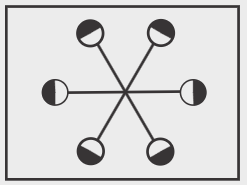
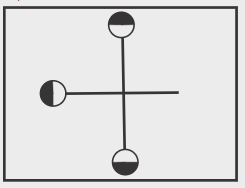
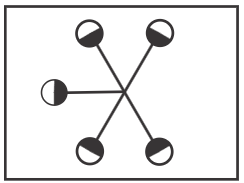
1. Directions: In the following question, find the odd figure out from the given responses.
![Classification Figure]()
![Classification Figure]()
![Classification Figure]() (correct)
(correct)![Classification Figure]()
 (correct)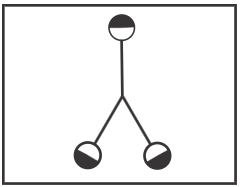
Solution-
Let's check each option –
First option: In this figure, the top part of the circle is shaded.
Second option: In this figure, the top part of the circle is shaded.
Third option: In this figure, the bottom part of the circle is shaded.
Fourth option: In this figure, the top part of the circle is shaded.
So, the figure in the third option is different from the others as the bottom part of the circle is shaded. Hence, the third option is correct.
2. Directions: Find the odd figure from the given alternatives.
![Classification Figure]() (correct)
(correct)![Classification Figure]()
![Classification Figure]()
![Classification Figure]()
 (correct)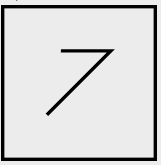
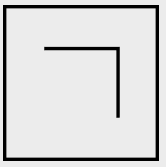
Solution-
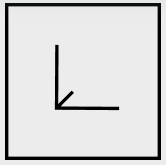
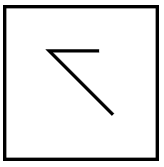
Let's check the options –
First option: In this figure, three lines are connected.
Second option: In this figure, two lines are connected.
Third option: In this figure, two lines are connected.
Fourth option: In this figure, two lines are connected.
So, the figure in the first option is different from the others, as here, three lines are connected. Hence, the first option is correct.
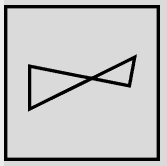
3. Directions: In the following question, find the odd figure from the given alternatives.
![Classification Figure]() (correct)
(correct)![Classification Figure]()
![Classification Figure]()
![Classification Figure]()
 (correct)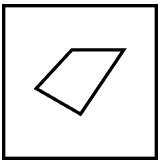
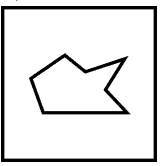
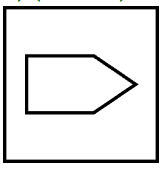
Solution-
Let's check the options –
First option: The given figure is a regular pentagon.
Second option: The given figure is irregular.
Third option: The given figure is irregular.
Fourth option: The given figure is irregular.
So, the figure in the first option is different from the others as all others are irregular figures. Hence, the first option is correct.
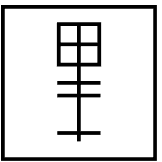
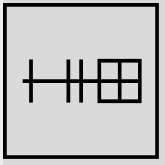
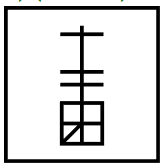
4. Directions: In the given question, there are four given figures, out of which three are similar in some manner and one is not like the others. Select the figure which is the odd one out.
![Classification Figure]()
![Classification Figure]()
![Classification Figure]() (correct)
(correct)![Classification Figure]()
 (correct)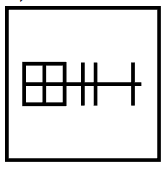
Solution-
The logic followed in the given options is as follows –
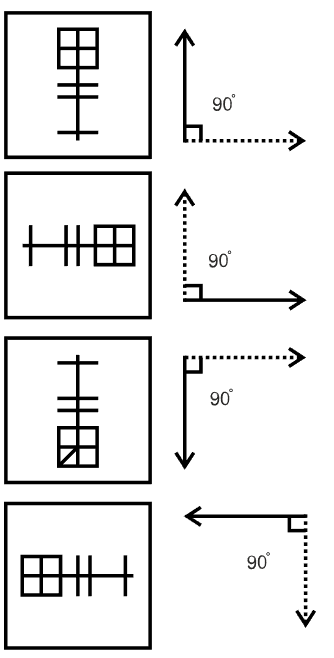
Here, all figures have the same number of squares, and the same number of horizontal and vertical lines, but only in the third option, a slant line is present in the square.
Hence, the third option is correct.
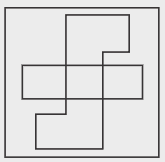
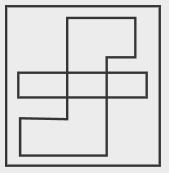
5. Directions: Select the answer figure which is the same as the question figure.
![Classification Figure]()
![Classification Figure]() (correct)
(correct)![Classification Figure]()
![Classification Figure]()
 (correct)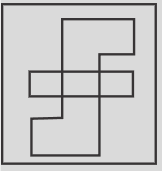
Solution-
Let’s check each option -
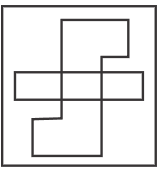
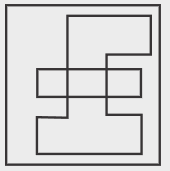
First option: In this figure, the bottom left part of S type image and the length of the rectangle are equal.
Second option: This figure is the same as the question figure.
Third option: In this figure, the bottom left part of S type image and the length of the rectangle are equal.
Fourth option: In this figure, the bottom part of the figure is different.
So, the figure in the second option is the same as the question figure. Hence, the second option is correct.
6. Directions: Find the odd figure from the given alternatives.
![Classification Figure]()
![Classification Figure]()
![Classification Figure]() (correct)
(correct)![Classification Figure]()
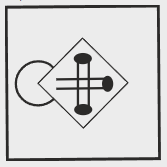
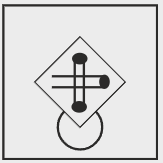 (correct)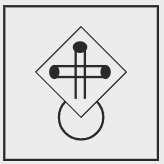
Solution-
Let's check each option –
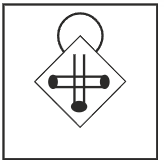
First option: The two parallel lines without shaded part and the circle which is at the back of the rhombus are inline.
Second option: The two parallel lines without shaded part and the circle which is at the back of the rhombus are inline.
Third option: The two parallel lines without shaded part and the circle which is at the back of the rhombus are not in line.
Fourth option: The two parallel lines without shaded part and the circle which is at the back of the rhombus are inline.
Therefore, the figure in the third option is different from the others. Hence, the third option is correct.
7. Directions: Find the odd figure from the given alternatives.
![Classification Figure]()
![Classification Figure]()
![Classification Figure]() (correct)
(correct)![Classification Figure]()
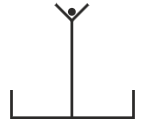
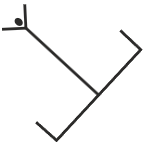
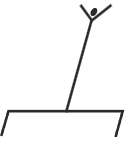 (correct)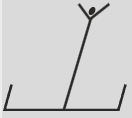
Solution-
Let's check each option –
First option: In this figure, the bottom two vertical lines are above the bottom horizontal line.
Second option: In this figure, the bottom two vertical lines are above the bottom horizontal line.
Third option: In this figure, the bottom two vertical lines are below the bottom horizontal line.
Fourth option: In this figure, the bottom two vertical lines are above the bottom horizontal line.
Therefore, the figure in the third option is different from the others. Hence, the third option is correct.
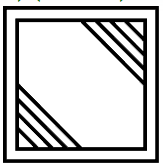
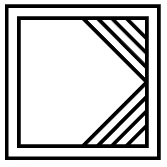
8. Directions: In the following question find the odd figure out from the given alternatives.
![Classification Figure]()
![Classification Figure]() (correct)
(correct)![Classification Figure]()
![Classification Figure]()
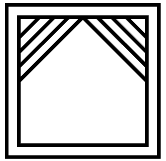
 (correct)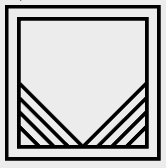
Solution-
On comparing all the figures given in the options we can observe that –
1. The two corners of the square have slanting lines.
2. The corners with slanting lines are adjacent to each other.
So, in the second option figure, the corners with slanting lines are not adjacent. Hence, the second option is correct.
9. Directions: In the following question find the odd figure out from the given alternatives.
![Classification Figure]() (correct)
(correct)![Classification Figure]()
![Classification Figure]()
![Classification Figure]()
 (correct)


Solution-
On comparing all the figures given in the options, we can observe that the centre circle in three of the four options is connected with all the four circles inside the four leaves.

So, in this figure, the centre circle is not joined with the circles inside each of the leaves with a line. Hence, the first option is correct.
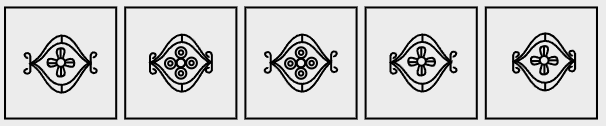
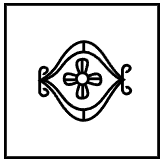
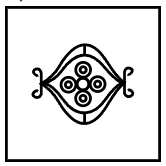
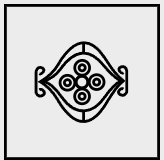
10. Directions: Out of the following five figures, four are alike in some manner and one differs from these in that manner. Select the odd figure.
![Classification Figure]() (correct)
(correct)![Classification Figure]()
![Classification Figure]()
![Classification Figure]()
 (correct)
Solution-
Let's check each option –
First option: The two small curved lines on the outer side of the figure are facing in the same direction.
Second option: The two small curved lines on the outer side of the figure face in opposite directions.
Third option: The two small curved lines on the outer side of the figure face in opposite directions.
Fourth option: The two small curved lines on the outer side of the figure face in opposite directions.
Therefore, the figure given in the first option is different from the others. Hence, the first option is correct.
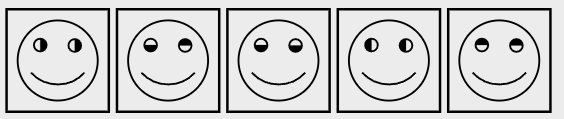
11. Directions: Out of the following five figures, four are alike in some manner and one differs from these in that manner. Select the odd figure.
![Classification Figure]() (correct)
(correct)![Classification Figure]()
![Classification Figure]()
![Classification Figure]()
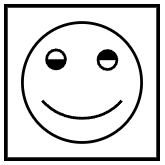 (correct)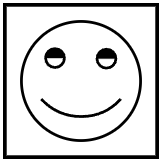
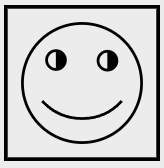
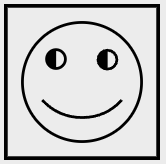
Solution-
Let's check each option –
First option: Here, the black parts given in the eyes of the smiley are in the opposite direction.
Second option: Here, the black parts given in the eyes of the smiley are in the same direction.
Third option: Here, the black parts given in the eyes of the smiley are in the same direction.
Fourth option: Here, the black parts given in the eyes of the smiley are in the same direction.
Therefore, the figure given in the first option is different from others. Hence, the first option is correct.
12. Directions: Out of the following five figures, four are alike in some manner and one differs from these in that manner. Select the odd figure.
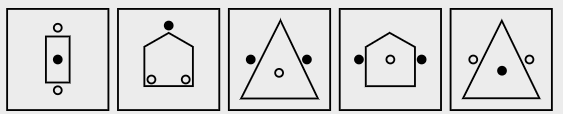
![Classification Figure]()
![Classification Figure]() (correct)
(correct)![Classification Figure]()
![Classification Figure]()
 (correct)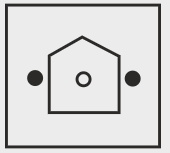
Solution-
Let's check each option –
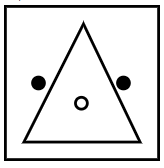
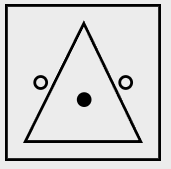
First option: Here, one circle is inside and two circles are outside the triangle.
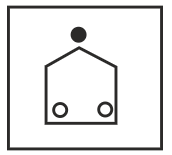
Second option: Here, two circles are inside and one circle is outside the pentagon.
Third option: Here, one circle is inside and two circles are outside the pentagon.
Fourth option: Here, one circle is inside and two circles are outside the triangle.
So, only the figure given in the second option is different from the others. Hence, the second option is correct.
13. Directions: Out of the following five figures, four are alike in some manner and one differs from these in that manner. Select the odd figure.
![Classification Figure]()
![Classification Figure]()
![Classification Figure]() (correct)
(correct)![Classification Figure]()
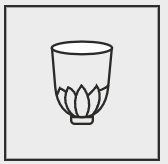 (correct)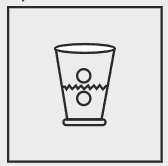
Solution-
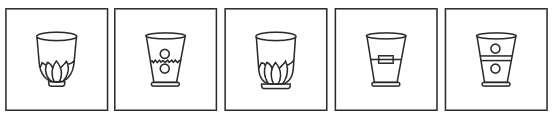
Let's check each option –
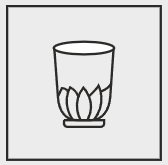
First option: In this figure, the two lines given in the figure are equal to the base of the glass.
Second option: In this figure, the two lines given in the figure are equal to the base of the glass.
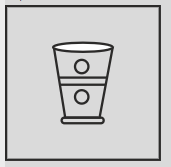
Third option: In this figure, the two lines given in the figure are smaller than the base of the glass.
Fourth option: In this figure, the two lines given in the figure are equal to the base of the glass.
Therefore, the figure in the third option is different from the others. Hence, the third option is correct.
14. Directions: Find the odd figure from the given alternatives.
![Classification Figure]()
![Classification Figure]()
![Classification Figure]() (correct)
(correct)![Classification Figure]()


 (correct)
Solution-
Let's check each option –
First option: The figure is formed with the help of three lines.
Second option: The figure is formed with the help of four lines.
Third option: No lines have been used for the formation of a circle.
Fourth option: The figure is formed with the help of four lines.
Therefore, the figure in the third option is different from the others. Hence, the third option is correct.
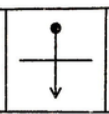
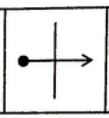
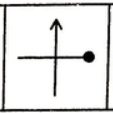
15. Directions: Out of the following five figures, four are alike in some manner and one differs from these in that manner. Select the odd figure.
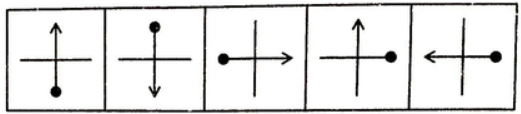
![Classification Figure]()
![Classification Figure]()
![Classification Figure]()
![Classification Figure]() (correct)
(correct)
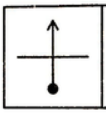
 (correct)
Solution-
Let's check each option –
First option: The circle and arrow form part of the same line.
Second option: The circle and arrow form part of the same line.
Third option: The circle and arrow form part of the same line.
Fourth option: The circle and arrow form part of two different lines.
So, only the figure given in the fourth option is different from the others. Hence, the fourth option is correct.
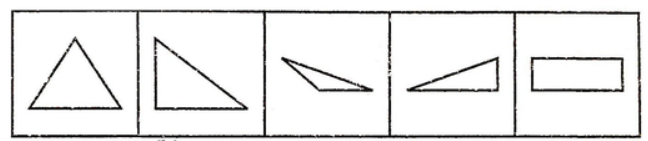
16. Directions: Out of the following five figures, four are alike in some manner and one differs from these in that manner. Select the odd figure.
![Classification Figure]()
![Classification Figure]()
![Classification Figure]()
![Classification Figure]() (correct)
(correct)
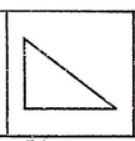
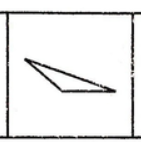
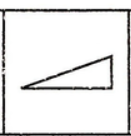
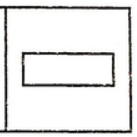 (correct)
Solution-
Let's check each option –
First option: The given figure has three sides.
Second option: The given figure has three sides.
Third option: The given figure has three sides.
Fourth option: The given figure has four sides.
So, only the figure given in the fourth option is different from the others. Hence, the fourth option is correct.
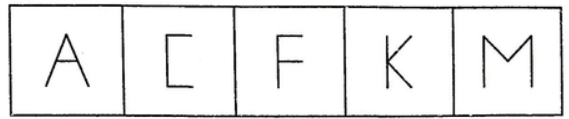
17. Directions: Out of the following five figures, four are alike in some manner and one differs from these in that manner. Select the odd figure.
![Classification Figure]()
![Classification Figure]()
![Classification Figure]()
![Classification Figure]() (correct)
(correct)
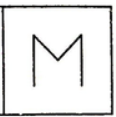 (correct)
Solution-
Let's check each option –
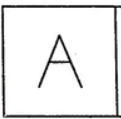
First option: The letter A is formed with the help of three lines.
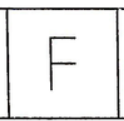
Second option: The letter F is formed with the help of three lines.
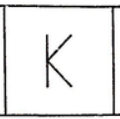
Third option: The letter K is formed with the help of three lines.
Fourth option: The letter M is formed with the help of four lines.
So, only the figure given in the fourth option is different from the others. Hence, the fourth option is correct.
18. Directions: Out of the following five figures, four are alike in some manner and one differs from these in that manner. Select the odd figure.
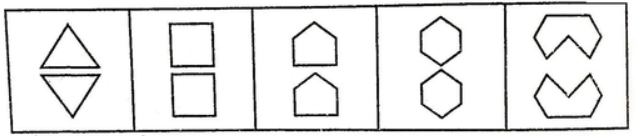
![Classification Figure]()
![Classification Figure]()
![Classification Figure]() (correct)
(correct)![Classification Figure]()
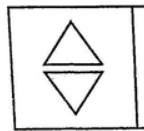
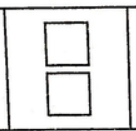
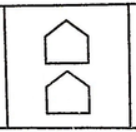 (correct)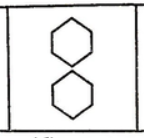
Solution-
Let's check each option –
First option: Here, the triangle at the bottom is the mirror image of the top.
Second option: Here, the triangle at the bottom is the mirror image of the top.
Third option: Here, the pentagon at the bottom is not the mirror image of the top.
Fourth option: Here, the hexagon at the bottom is the mirror image of the top.
So, only the figure given in the third option is different from the others. Hence, the third option is correct.
19. Directions: Out of the following five figures, four are alike in some manner and one differs from these in that manner. Select the odd figure.
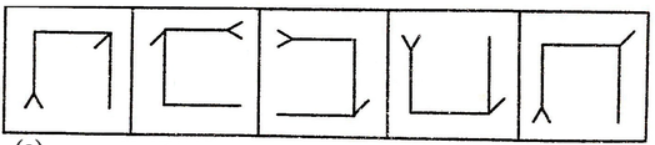
![Classification Figure]() (correct)
(correct)![Classification Figure]()
![Classification Figure]()
![Classification Figure]()
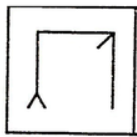 (correct)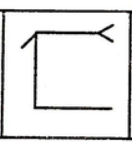
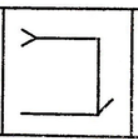
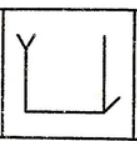
Solution-
Let's check each option –
First option: The small line attached to one of the corners of the figure is facing inside.
Second option: The small line attached to one of the corners of the figure is facing outside.
Third option: The small line attached to one of the corners of the figure is facing outside.
Fourth option: The small line attached to one of the corners of the figure is facing outside.
So, only the figure given in the first option is different from the others. Hence, the first option is correct.
20. Directions: Out of the following five figures, four are alike in some manner and one differs from these in that manner. Select the odd figure.
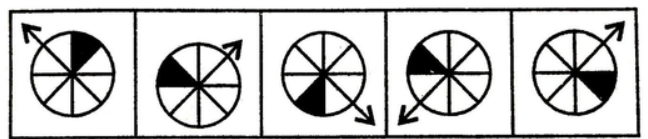
![Classification Figure]()
![Classification Figure]() (correct)
(correct)![Classification Figure]()
![Classification Figure]()
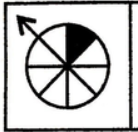
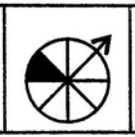 (correct)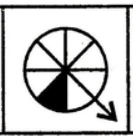
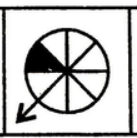
Solution-
Let's check each option –
First option: The arrow is one part away from the shaded area.
Second option: The arrow is two parts away from the shaded area.
Third option: The arrow is one part away from the shaded area.
Fourth option: The arrow is one part away from the shaded area.
So, only the figure given in the second option is different from the others. Hence, the second option is correct.
Important Rules and Concepts for Non-Verbal Reasoning Classification (Quick Revision Table)
Classification in non-verbal reasoning does not involve mathematical formulas, but it follows clear visual patterns and logical rules. Here is a quick-reference table to help you solve classification questions easily and accurately:
| Concept / Rule | Key Logic | Shortcut / Trick | Example Insight |
|---|---|---|---|
| Odd One Out Rule | One figure differs from others | Identify common pattern first | 3 similar, 1 different |
| Pattern Recognition | Find repeating rule | Look for sequence or consistency | Same shape or count |
| Shape-Based Logic | Compare shapes used | Check type of figures | Circle vs square |
| Number of Elements | Count parts in figures | Look for increase/decrease | 2, 3, 4 elements |
| Size Variation | Compare size differences | Identify larger/smaller shapes | One figure differs |
| Orientation | Direction of figure | Check left/right/up/down | Rotated shapes |
| Rotation Pattern | Figures rotate at angles | Identify degree change | 90°, 180° rotation |
| Reflection (Mirror) | Mirror image logic | Check reversed pattern | Left-right swap |
| Symmetry Rule | Balanced or equal halves | Identify symmetric shapes | One breaks symmetry |
| Shading/Color | Filled or hollow shapes | Compare shading pattern | One shaded differently |
| Line Pattern | Lines inside figures | Count or direction of lines | Horizontal vs vertical |
| Position Change | Element shifts position | Track movement inside figure | Top to bottom shift |
| Combination Rule | Mix of patterns | Check multiple changes | Shape + rotation |
| Elimination Technique | Remove matching options | Focus on odd figure | Saves time in MCQs |
Verbal Reasoning Topics
This section covers topics that involve understanding and analyzing relationships between words, sentences, and language-based patterns. It includes areas like analogy, classification, coding-decoding, series, and logical interpretation to test language and reasoning skills.
Frequently Asked Questions (FAQs)
The patterns of non-verbal reasoning classification questions are often based on shapes, symmetry, colour, size, increase or decrease in the number of elements present and rotation of figures to some extent.
Carefully observe all figures, identify the common pattern, compare differences, and eliminate incorrect options to find the odd one out.
Common types include odd one out, figure classification, pattern-based classification, and rotation or symmetry-based questions.
Common mistakes include ignoring small differences, overanalyzing patterns, and missing rotation or symmetry changes.
No, classification questions are based on visual patterns and logical rules rather than mathematical formulas.
Non-Verbal reasoning is defined as the ability to assess the visual information and solving the problem by applying logic and visual reasoning.
The list of the topics that come in non-verbal reasoning are as follows:
1) Non Verbal Analogy Reasoning
2) Figure Series Reasoning
3) Embedded figure
4) Cube Reasoning
5) Dice Reasoning
6) Figure Counting Reasoning
7) Completion of figure Reasoning
8) Paper cutting and folding Reasoning
9) Mirror and Water Image Reasoning
