


Non-Verbal Reasoning Analogy: Meaning, Questions, Examples, Tricks
Imagine you are shown two figures with a specific pattern between them, and then asked to find a similar relationship for another pair of figures. Recognising that connection is exactly what non-verbal analogy reasoning is all about. These questions test your ability to identify patterns, transformations, and relationships between shapes, symbols, or images without using words. Non-verbal analogy is an important topic in reasoning and is frequently asked in competitive exams like SSC, banking exams, MBA entrance tests, and defence exams. In this article, you will learn the meaning of non-verbal analogy, different types of questions, solving techniques, shortcut tricks, and examples to help you answer them quickly and accurately.
This Story also Contains
- What is Non-Verbal Analogy in Reasoning
- Patterns of Non-Verbal Reasoning: Analogy
- Tips to Deal With the Questions of the Non-Verbal Reasoning Analogy
- Step-by-Step Approach to Solve Non-Verbal Analogy Questions
- Questionwise Weightage of Non-Verbal Reasoning Analogy in Competitive Exams
- Non Verbal Reasoning Topics
- Practice Questions For Non-Verbal Reasoning: Analogy
- Non-Verbal Reasoning Analogy Questions for SSC CHSL/ SSC MTS/ SSC Stenographer/ CUET exams
- Tips to Master Non-Verbal Analogy Questions
- Best Books for Non-Verbal Reasoning Analogy Preparation
- Shortcut Tricks to Solve Non-Verbal Analogy Questions Quickly
- Important Rules and Concepts for Non-Verbal Analogy (Quick Revision Table)
- Verbal Reasoning Topics
What is Non-Verbal Analogy in Reasoning
Non-verbal analogy is an important topic in reasoning that focuses on identifying relationships between figures, shapes, or patterns without using words. In these questions, you are given a pair of figures that follow a specific pattern, and you must apply the same logic to another pair. These non-verbal analogy reasoning questions test your ability to observe, compare, and understand visual transformations quickly and accurately.
Definition of non-verbal analogy reasoning
Non-verbal analogy reasoning refers to a type of problem where the relationship between two figures is based on visual logic, and the same relationship must be applied to another set of figures.
- Questions are usually in the format A : B :: C : ?
- The relationship can involve shape, position, number of elements, or transformation
- It does not depend on language or vocabulary
- Common in non-verbal reasoning sections of competitive exams
Understanding this definition helps in solving non-verbal analogy questions with clarity.
Concept of visual relationships and patterns
The core idea behind non-verbal analogy is to recognize patterns and visual relationships.
- Figures may follow patterns like addition or removal of elements
- Changes can involve rotation, reflection, or shifting positions
- Some questions focus on symmetry or orientation changes
- Identifying the exact transformation is the key to solving the question
Strong observation skills are essential for solving figure-based analogy questions.
Importance in non-verbal reasoning section
Non-verbal analogy plays a significant role in the reasoning section of competitive exams.
- It tests visual intelligence and pattern recognition ability
- Helps improve logical thinking without relying on language
- Often appears as direct and scoring questions
- Strengthens overall performance in non-verbal reasoning
Because of its predictable patterns, it is considered an easy scoring topic with practice.
Why analogy questions are asked in competitive exams
Non-verbal analogy questions are included in exams to assess analytical and observation skills.
- They test how quickly you can identify patterns and relationships
- Measure your ability to apply logic under time pressure
- Evaluate attention to detail and accuracy
- Help assess reasoning ability without verbal dependency
These questions are commonly asked in SSC, banking, MBA, and defence exams, making them an important part of reasoning preparation.
Patterns of Non-Verbal Reasoning: Analogy
The following are the patterns based on the non-verbal reasoning analogy that we often see in the exams-
Five to six figures would be given, and the ones with similar relationships need to be grouped.
Figure pairs would be given with some common relationship, and based on the same relationship, another figure pair needs to be determined.
Tips to Deal With the Questions of the Non-Verbal Reasoning Analogy
To solve non-verbal reasoning analogy-based questions, an aspirant must have the following understanding-
An aspirant must be able to figure out the relation based on the addition or movement of elements in the given figure pairs.
An aspirant must be able to visualise the rotation of elements taking place in the given figures or the mirror image of the given figure.
Step-by-Step Approach to Solve Non-Verbal Analogy Questions
To solve non-verbal analogy questions effectively, the key is to identify the relationship between the given pair of figures and then apply the same logic to find the correct answer. These questions are based on visual patterns, so a clear and systematic approach helps in improving both speed and accuracy in competitive exams.
Analyze the first pair of figures carefully
The first step in solving non-verbal analogy reasoning questions is to observe the given pair closely.
- Focus on how the first figure changes into the second
- Look for visible transformations such as addition or removal of elements
- Check for changes in shape, size, or structure
- Avoid rushing and take time to understand the pattern
This step helps in identifying the base logic of the question.
Identify the relationship or transformation pattern
Once you observe the figures, determine the exact relationship between them.
- Check if elements are added, removed, or replaced
- Look for rotation, reflection, or shifting of parts
- Identify changes in position or orientation
- Observe if there is a sequence or pattern in the transformation
Understanding this relationship is the most important part of solving non-verbal analogy questions.
Apply the same logic to the next figure
After identifying the pattern, apply the same rule to the second pair.
- Use the same transformation on the given figure
- Maintain consistency with the identified pattern
- Do not introduce any new logic or assumption
- Ensure the transformation matches exactly
This step helps in finding the correct answer among the options.
Compare all answer options carefully
Before selecting the answer, analyze all given options.
- Check which option follows the exact same pattern
- Avoid selecting options that look similar but follow a different rule
- Focus on accuracy rather than guesswork
- Compare small details carefully
This ensures that the chosen answer is logically correct.
Select the correct analogy pair with confidence
After comparing options, choose the best match.
- Ensure the selected figure follows the same transformation
- Double-check the pattern before finalizing
- Avoid changing answers without valid reasoning
Questionwise Weightage of Non-Verbal Reasoning Analogy in Competitive Exams
In past years, a good number of questions were seen on this topic, but nowadays in various competitive exams like SSC, Railways, and CUET, an aspirant can hardly expect any questions from this topic. The weightage is 0 to 1 question.
Non Verbal Reasoning Topics
The candidates who are preparing for the upcoming entrance and Government exams can also refer to the links given below and master the non-verbal reasoning ability section:
Practice Questions For Non-Verbal Reasoning: Analogy
Q1. Directions: In the following questions, select the related figure from the given alternatives.

![Non Verbal Analogy Figure]()
![Non Verbal Analogy Figure]()
![Non Verbal Analogy Figure]() (Correct)
(Correct)![Non Verbal Analogy Figure]()


 (Correct)
Solution-
Here, the pattern is as follows –
Dots in the triangle zone of the figure and one centre element are added in the first figure to get the second figure.
The following figure will complete the given pattern –

Hence, the third option is correct.
Q2. Directions: In each of the following questions, select the related figure from the given alternatives.

![Non Verbal Analogy Figure]() (Correct)
(Correct)![Non Verbal Analogy Figure]()
![Non Verbal Analogy Figure]()
![Non Verbal Analogy Figure]()
 (Correct)

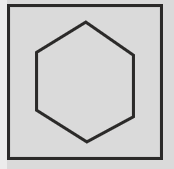
Solution-
The first figure is overlapped by itself with a 45° rotation.
By following the same pattern, the required missing figure is –

So, the figure in the first option is the required missing figure. Hence, the first option is correct.
Q3. Directions: In each of the following questions, select the related figure from the given alternatives.
![Non Verbal Analogy Figure]() (Correct)
(Correct)![Non Verbal Analogy Figure]()
![Non Verbal Analogy Figure]()
![Non Verbal Analogy Figure]()
 (Correct)
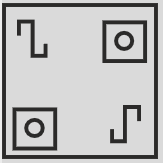
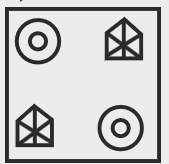
Solution-
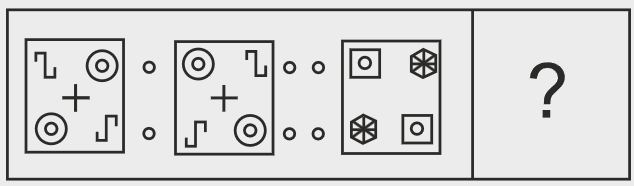
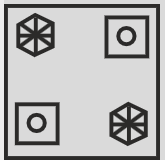
According to the question figure, the geometrical shape/ symbols are moved as follows –
From Figure One to Figure Two: Top left→Top right, Top right→Bottom right, Bottom right→Bottom left, Bottom left→Top left
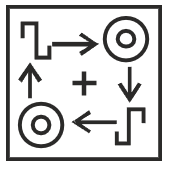
By following the same patter,n the required missing figure is –

So, the figure in the first option is the required missing figure. Hence, the first option is correct.
Q4. Directions: In each of the following questions, select the related figure from the given alternatives.
![Non Verbal Analogy Figure]()
![Non Verbal Analogy Figure]()
![Non Verbal Analogy Figure]()
![Non Verbal Analogy Figure]() (Correct)
(Correct)
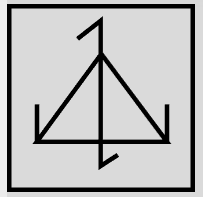
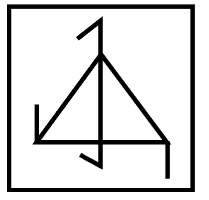
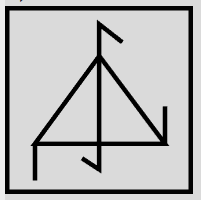
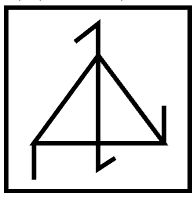 (Correct)
Solution-
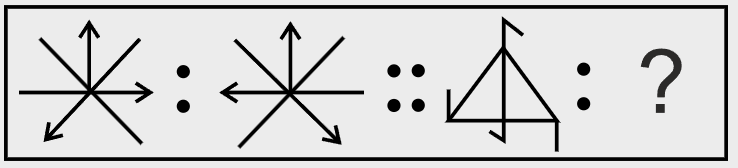
When we find the mirror image of the third figure, we will observe that the left side and the right side get interchanged, i.e., the left side becomes the right and the right side becomes the left. Whereas the top and bottom of the figure remain unchanged.
Thus, the correct mirror image of the given figure will be:
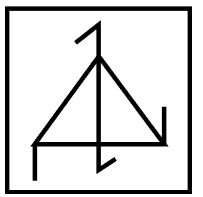
Hence, the fourth option is correct.
Q5. Directions: In each of the following questions, select the related words/letters/numbers/figures from the given alternatives.

![Non Verbal Analogy Figure]() (Correct)
(Correct)![Non Verbal Analogy Figure]()
![Non Verbal Analogy Figure]()
![Non Verbal Analogy Figure]()
 (Correct)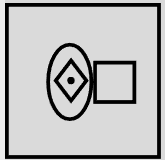
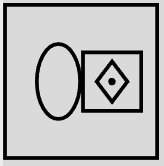
Solution-
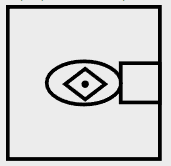
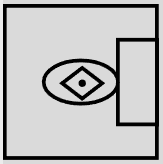
According to the given figures –
1. From Box 1 to Box 2, Box 1 is rotated by 90° in an anticlockwise direction.
2. The oval-shaped figure moves to the right corner, also the triangle with a dot is now inside the rhombus.
By following the same pattern, the required missing figure will be –
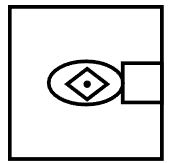
Therefore, the figure in the first option is the required missing figure. Hence, the first option is correct.
Q6. Directions: A series of figures is given, which can be grouped into classes. Select from the alternatives one set of groups into which the figures can be classified.
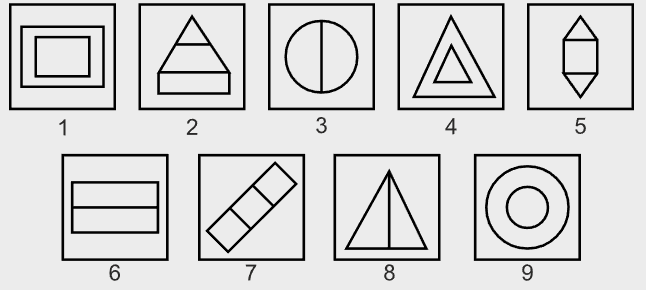
1, 3, 6; 2, 4, 6; 5, 7, 9
1, 4, 9; 3, 6, 8; 2, 5, 7 (Correct)
3, 4, 7; 9, 8, 7; 4, 3, 1
2, 3, 6; 9, 3, 4; 6, 3, 2
Solution-
According to the given question figures –
Group 1: (1,4,9): In box 1, box 4, and box 9 two concentric geometrical shapes are given.
Group 2: (3,6,8): In boxes 3, box 6, and box 8 geometrical shapes are divided into two equal parts.
Group 3: (2,5,7): In box 2, box 5, and box 7 geometrical shapes are divided into three parts.
So, the correct pair is 1, 4, 9; 3, 6, 8; 2, 5, 7. Hence, the second option is correct.
Q7. Directions: A series of figures are given which can be grouped into classes. Select the group into which the figures can be classified from the responses.
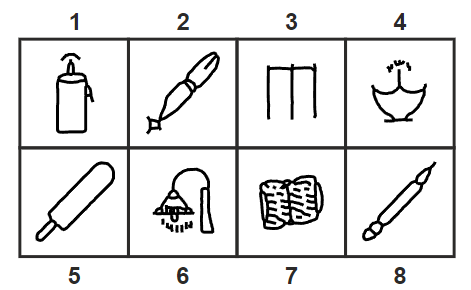
146, 35, 278 (Correct)
258, 138, 46
37, 145, 258
258, 16, 47
Solution-
Figures 1, 4, and 6 belong to the same group as they are the source of light.
Figures 2, 7, and 8 belong to the same group as they all are stationery items.
Figures 3 and 5 belong to the same group as these both belong to cricket sport.
So, (146), (278), and (35) form the groups. Hence, the first option is correct.
Q8. Directions: Select the related figure from the given alternatives.
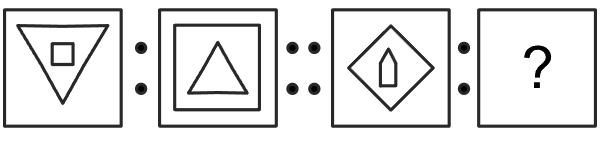
![Non Verbal Analogy Figure]() (Correct)
(Correct)![Non Verbal Analogy Figure]()
![Non Verbal Analogy Figure]()
![Non Verbal Analogy Figure]()
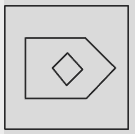 (Correct)


Solution-
According to the given question figure,
1. From Figure One to Figure Two, the outer image is rotated by 180° and the outer image becomes the inner image.
2. The inner image is rotated by 90° in a clockwise direction and becomes the outer image.
So, by following the same pattern the required figure is –
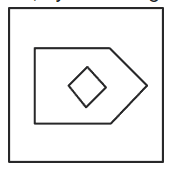
Therefore, the figure given in the first option is the correct missing image. Hence, the first option is correct.
Q9. Directions: Select the related figure from the given alternatives.
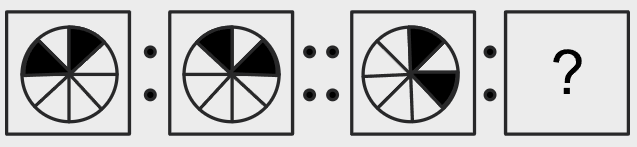
![Non Verbal Analogy Figure]()
![Non Verbal Analogy Figure]() (Correct)
(Correct)![Non Verbal Analogy Figure]()
![Non Verbal Analogy Figure]()

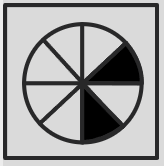 (Correct)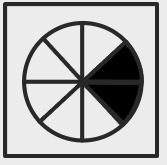

Solution-
Here, rotate the first figure by 45° to get the second missing figure.
So, by following the above pattern the missing figure is –
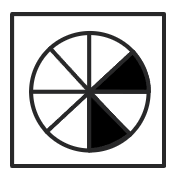
Therefore, the figure given in option two is the required missing figure. Hence, the second option is correct.
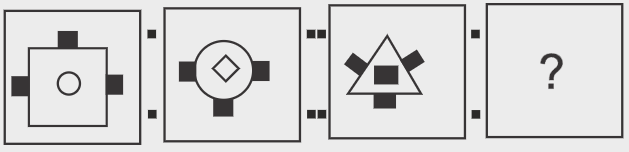
Q10. Directions: Find the missing figure of the series from the given responses:
![Non Verbal Analogy Figure]()
![Non Verbal Analogy Figure]()
![Non Verbal Analogy Figure]() (Correct)
(Correct)![Non Verbal Analogy Figure]()


 (Correct)
Solution-
According to the question figure –
In the first and second figures, the outer shape goes into the inner one and also rotates 45°. Also, the blocks on the edges flip in the second figure.
Similarly, for the third and fourth figures, the outer shape (triangle) shifts inside the square and rotates 45°. The square becomes the outer shape and the blocks are also flipped.
So, the required missing figure is –
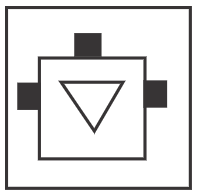
Hence, the third option is correct.
Q11. Directions: In each of the following questions select the related figure from the given alternatives.

![Non Verbal Analogy Figure]()
![Non Verbal Analogy Figure]()
![Non Verbal Analogy Figure]()
![Non Verbal Analogy Figure]() (Correct)
(Correct)
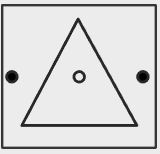 (Correct)
Solution-
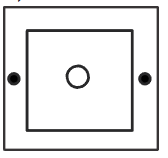
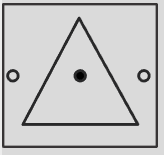
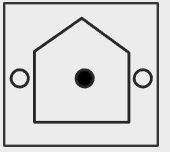
According to the given question figure –
1. From Figure 1 to Figure 2, the number of sides has been decreased by one.
2. From Figure 1 to Figure 2, two solid circles are now outside in Figure 2.
3. One more circle is now in the centre of Figure 2.
By following the above pattern the missing figure will be –
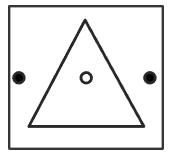
Hence, the fourth option is correct.
Q12. Directions: In each of the following questions select the related figure from the given alternatives.
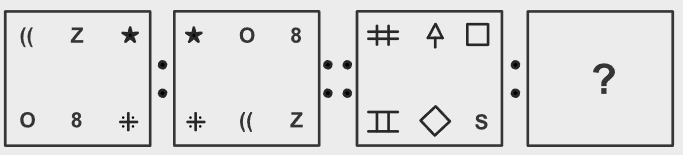
![Non Verbal Analogy Figure]()
![Non Verbal Analogy Figure]() (Correct)
(Correct)![Non Verbal Analogy Figure]()
![Non Verbal Analogy Figure]()
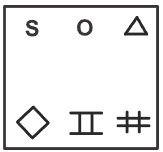
 (Correct)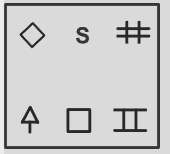
Solution-
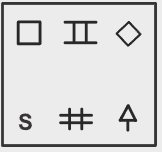
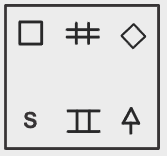
According to the given figure analogy, the geometrical figures/ numbers/ letters shift their position as follows –
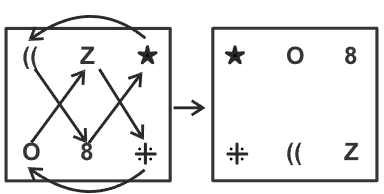
So, following the above pattern, the required figure will be as follows –
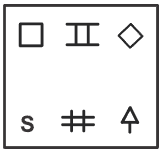
Therefore, the figure in the second option is the correct required missing figure. Hence, the second option is correct.
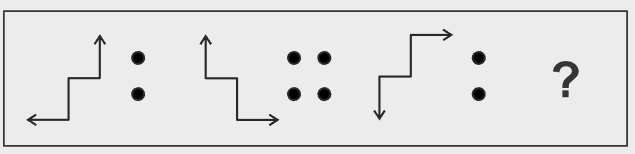
Q13. Directions: In the following questions select the related figure from the given alternatives.
![Non Verbal Analogy Figure]()
![Non Verbal Analogy Figure]() (Correct)
(Correct)![Non Verbal Analogy Figure]()
![Non Verbal Analogy Figure]()
 (Correct)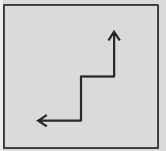
Solution-
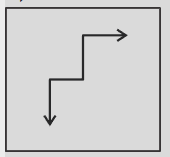
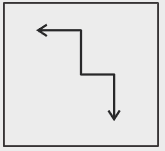
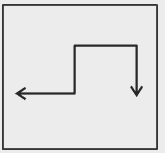
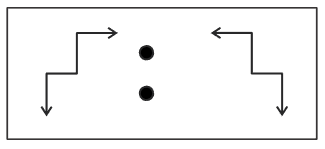
Here, the second image is the mirror image of the first image and as per the mirror image properties, the left side of the reflected image will appear as the right side and the right side will appear as the left side. However, the top and bottom of the reflected image will remain the same.
By following the same pattern the missing figure will be –
Hence, the second option is correct.
Q14. Directions: In the following questions select the related figure from the given alternatives.
![Analogy Answer Figure]()
![Analogy Answer Figure]()
![Analogy Answer Figure]() (Correct)
(Correct)![Analogy Answer Figure]()


 (Correct)
Solution-
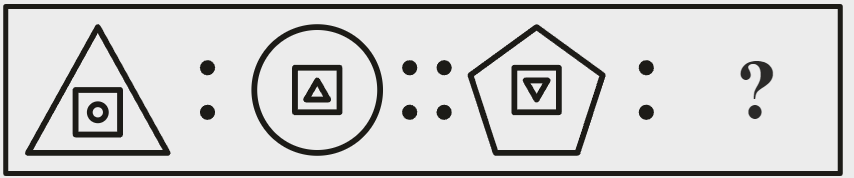
Here, reverse the order of the shapes to get the required missing figure.
In the first figure, the order of the shape from outside to inside is – Triangle→Square→Circle
After reversing the order of the shapes is – Circle→Square→Triangle
By following the same pattern the missing figure will be –

Hence, the third option is correct.
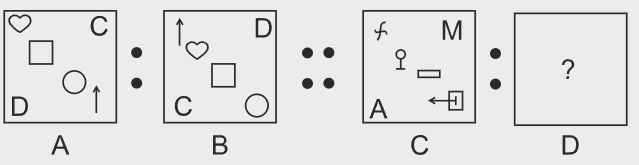
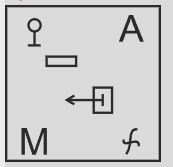
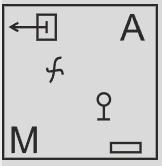
Q15. Directions: Figure A is related to B following a certain pattern. Following the same pattern, figure C is related to D. Study the pattern and select the figure that should be placed in place of D.
![Analogy Figure]()
![Analogy Figure]() (Correct)
(Correct)![Analogy Figure]()
![Analogy Figure]()
 (Correct)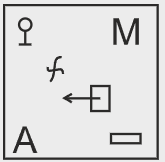
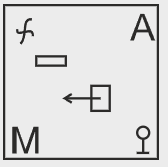
Solution-
Interchange the positions of the given symbols –
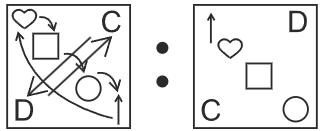
By following the same pattern the required figure is –
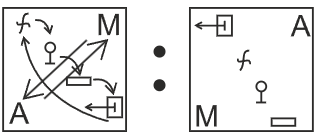
Hence, the second option is correct.
Non-Verbal Reasoning Analogy Questions for SSC CHSL/ SSC MTS/ SSC Stenographer/ CUET exams
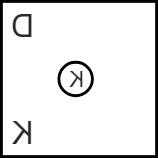
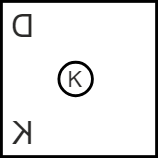
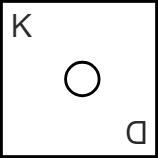
1) Directions: Figure A is related to B in a certain pattern. Following the same pattern, figure C is related to D. Study the pattern and select the figure that should be placed in place of (?).
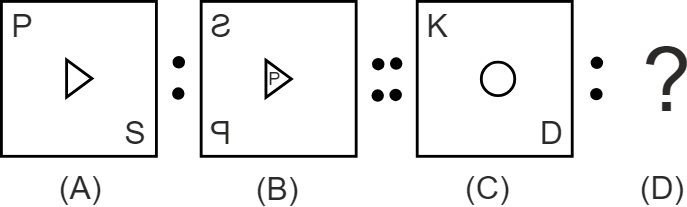
1)
2)
3)
4)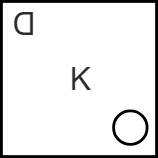
Hint: Observe the movement and mirror image of the letters.
Solution
According to the question figures –
1. From Figure One to Figure Two, P moves to the inside of the triangle.
2. The mirror image of P moves from the top left corner to the bottom left corner.
3. The mirror image of the letter S moves to the top left corner.
Therefore, by following the same pattern the required missing image is –
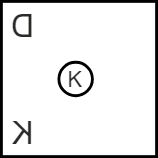
So, the figure given in the second option is the required missing figure. Hence, the second option is correct.
2) Directions: Figure A is related to B following a certain pattern. Following the same pattern, figure C is related to D. Study the pattern and select the figure that should be placed in place of D.
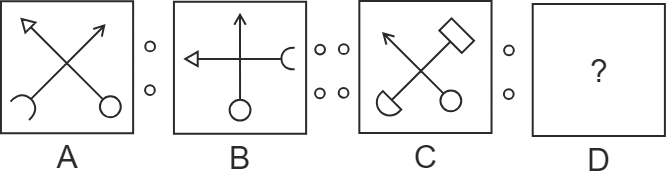
1)
2)
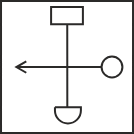
3)
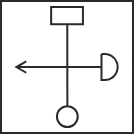
4)
Hint: Observe the rotation of the figure and the interchange of symbols given at the corner of the arrows.
Solution
According to the question figures –
1. From box one to box two, both the arrows are rotated by 45° in the anticlockwise direction.
2. The symbols located at the corners of the arrows have been swapped with each other.
So, following the same pattern, the required figure is –
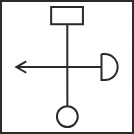
Hence, the fourth option is correct.
Tips to Master Non-Verbal Analogy Questions
To perform well in non-verbal analogy reasoning, it is important to build strong observation skills and practice regularly. These tips help you understand patterns faster and improve your accuracy in competitive exams.
Practice different types of figure-based analogy questions
Regular practice is the most effective way to master non-verbal analogy.
- Solve questions based on shapes, patterns, and transformations
- Practice rotation, reflection, and symmetry-based problems
- Try a mix of easy, moderate, and advanced level questions
- Exposure to different patterns improves problem-solving ability
This helps you become familiar with all types of non-verbal reasoning analogy questions.
Improve observation and visualization skills
Non-verbal analogy is all about how well you observe and interpret figures.
- Focus on small details such as lines, shapes, and positions
- Try to visualize changes mentally instead of drawing every time
- Compare figures side by side to spot differences
- Practice identifying patterns quickly
Strong observation skills are essential for solving figure-based reasoning questions.
Focus on speed and accuracy in exams
In competitive exams, both speed and accuracy are important.
- Avoid spending too much time on one question
- Practice solving questions within a time limit
- Maintain accuracy by double-checking patterns
- Balance speed with correct logic
Improving both aspects helps in scoring better in reasoning sections.
Solve previous year questions for better understanding
Practicing previous year questions is highly beneficial.
- Helps you understand exam patterns and difficulty level
- Improves confidence in solving real exam questions
- Exposes you to frequently asked question types
- Enhances speed and accuracy
This is one of the best ways to prepare for non-verbal analogy reasoning.
Best Books for Non-Verbal Reasoning Analogy Preparation
Here is a clean and exam-focused table of the most recommended books to master non-verbal analogy reasoning questions:
| Book Name | Author | Key Features | Best For |
|---|---|---|---|
| A Modern Approach to Verbal & Non-Verbal Reasoning | R.S. Aggarwal | Covers non-verbal analogy, classification, and all reasoning topics with detailed explanations and practice | Beginners and SSC aspirants |
| Analytical Reasoning | M.K. Pandey | Strong focus on logical thinking and advanced reasoning questions | Banking and MBA exams |
| A New Approach to Reasoning Verbal & Non-Verbal | B.S. Sijwali | Includes shortcut techniques, solved examples, and topic-wise practice | Beginners to intermediate level |
| Logical Reasoning | Arun Sharma | Concept-based learning with advanced level reasoning questions | MBA entrance exams |
| Magical Book on Puzzles | K. Kundan | Helps improve pattern recognition and speed through practice sets | Speed improvement |
| SSC Reasoning Chapterwise Solved Papers | Kiran Publications | Previous year non-verbal analogy questions with detailed solutions | SSC exam preparation |
| Logical and Analytical Reasoning | A.K. Gupta | Covers a wide range of reasoning topics with practice questions | All competitive exams |
Shortcut Tricks to Solve Non-Verbal Analogy Questions Quickly
Using shortcut techniques can help you solve questions faster and more efficiently in time-bound exams.
Focus on major visual changes first
Start by identifying the most noticeable differences.
- Look for changes in shape, number of elements, or structure
- Ignore minor details initially
- This helps in quickly identifying the pattern
This trick is useful for solving easy questions quickly.
Check rotation, reflection, and symmetry patterns
Many non-verbal analogy questions are based on transformations.
- Look for rotation of figures at different angles
- Identify mirror images or reflections
- Check if symmetry is maintained or broken
- Recognize consistent transformation patterns
Understanding these patterns helps in solving complex questions easily.
Use elimination technique for faster solving
Elimination is an effective strategy in multiple-choice questions.
- Remove options that clearly do not follow the pattern
- Focus only on the remaining choices
- Saves time and reduces confusion
- Increases chances of selecting the correct answer
This method is widely used in competitive exams.
Avoid overanalyzing simple patterns
Sometimes questions are easier than they appear.
- Do not apply complex logic unnecessarily
- Focus on simple and direct patterns first
- Avoid confusion by keeping the approach simple
- Trust your observation skills
Keeping the solution simple helps in solving questions faster.
Important Rules and Concepts for Non-Verbal Analogy (Quick Revision Table)
Non-verbal analogy does not involve direct mathematical formulas, but it follows clear visual patterns and transformation rules. Here is a quick-reference table to help you solve non-verbal analogy questions quickly and accurately:
| Concept / Rule | Key Logic | Shortcut / Trick | Example Insight |
|---|---|---|---|
| Basic Analogy Format | A : B :: C : ? | Find relation in first pair, apply to second | Same pattern logic |
| Pattern Recognition | Identify change between figures | Focus on major transformation first | Shape or element change |
| Addition of Elements | New parts added in second figure | Count added shapes or lines | Extra lines added |
| Removal of Elements | Parts removed in second figure | Identify missing components | Shape removed |
| Rotation Rule | Figure rotated at fixed angle | Check 90°, 180°, 270° rotation | Direction change |
| Reflection (Mirror) | Mirror image transformation | Check left-right or top-bottom flip | Reversed figure |
| Symmetry Rule | Balanced structure maintained | Identify symmetry line | Equal halves |
| Position Change | Elements shift position | Track movement inside figure | Top to bottom shift |
| Shape Transformation | Shape changes form | Compare before and after | Circle → square |
| Size Variation | Size increases or decreases | Identify scaling pattern | Small → large |
| Number of Elements | Count shapes or parts | Look for sequence (1,2,3…) | Increasing count |
| Orientation Change | Direction of figure changes | Check up/down/left/right | Tilted shapes |
| Combination Rule | Multiple changes together | Apply step-by-step logic | Rotation + addition |
| Elimination Technique | Remove incorrect options | Focus on matching pattern | Faster solving |
By following these tips and shortcut tricks, you can improve your performance in non-verbal analogy reasoning and solve questions with better speed and accuracy in competitive exams.
Verbal Reasoning Topics
For verbal reasoning, you can checkout the links provided below to help strengthen your understanding:
About the Faculty
Tanu Gupta, with over a decade of experience as a reasoning faculty, specializes in preparing students for various entrance examinations and career development. Her extensive work with multiple educational platforms and institutions has honed her expertise in logical and analytical thinking. Her dedication to innovative teaching methods ensures these articles provide practical insights and expert guidance.
Frequently Asked Questions (FAQs)
The patterns of non-verbal reasoning analogy questions are often based on shapes, symmetry, colour, size, increase or decrease in the number of elements present, mirror image and rotation of figures to some extent.
Observe the first pair carefully, identify the transformation such as rotation or addition, and apply the same pattern to find the correct answer.
The most important concept is identifying the exact relationship or transformation between the given figures, such as rotation, reflection, or change in elements.
Practice different types of questions regularly, focus on major visual changes, and use elimination techniques to solve questions faster.
Non-verbal analogy is a type of reasoning question where you identify relationships between figures, shapes, or patterns and apply the same logic to another set of figures.
