Symbiosis Online Programs
Online PG programs from Symbiosis Centre for Distance Learning


B. Tech in Ceramic Technology is the science and technology of creating objects from inorganic and non-metallic material through heat or at lower temperatures by precipitation method. B. Tech in Ceramic Technology is a new and very fascinating course of four years in ceramic engineering. Ceramic Technology deals with the detailed study, design, properties, manufacturing, designing, applications, and uses of ceramic materials.
This Story also Contains
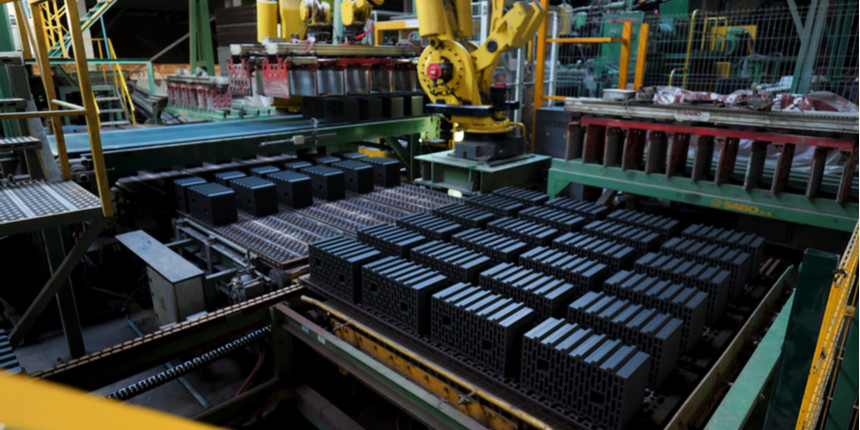
B.Tech in this specialisation is one of the most lucrative and sought-after courses by students who are interested in innovation and want to create something out of the box. JEE Main, KCET, WBJEE, and JEE Advanced are popular entrance exams that provide students with opportunities to be admitted to top engineering colleges.
The average B Tech in Ceramic Technology fees range between Rs. 23,000 to Rs. 3.0 lakhs, depending on the college. Candidates who have passed 10+2 with PCM subjects can apply for the B.Tech in Ceramic Technology course. Ceramic Technologist and Ceramic Designer are job profiles that graduates can opt for.
Particulars | Values |
|---|---|
Degree Name | B.Tech in Ceramic Technology |
Degree Type | Undergraduate |
Degree Duration | Four years |
Entrance Exams | JEE Main, KCET, WBJEE, and JEE Advanced |
Eligibility Criteria | 10+2 (with Physics, Mathematics, and Chemistry with minimum 50 per cent marks) |
Admission Process | Entrance Exam |
Average Fees | Rs. 23,000 to Rs. 3.0 lakhs |
Average Salary | Rs. 4.5 LPA |
Job Profiles | Ceramic Technologist, Ceramic Designer |
Top Recruiters | ISRO, Defence Metallurgical Research Laboratory (DMRL), BARC, Institute for Plasma Research (IPR) |
Eligibility is the minimum set of criteria that candidates must meet to gain admission. Below, we have listed the B. Tech in Ceramic Technology eligibility criteria considered by most engineering colleges in India.
The B Tech Ceramic Technology course has various entry requirements, depending on the college. Some B Tech Ceramic Technology colleges accept students based on their entrance exam performance and 10+2 results. Admission to other universities is based on the results of the admission exam. Following are some of the steps followed in B Tech Ceramic Technology admission.
Below is a list of exams that aspiring candidates can take to make a career in the field of Ceramics.
Exam Name | Exam Level | Conducting Body | Exam Schedule |
|---|---|---|---|
National | NTA | ||
| KCET | State | Karnataka Examinations Authority | |
State | Consortium of Medical Engineering and Dental Colleges of Karnataka | ||
State | West Bengal Joint Entrance Examinations Board |
A cut-off score for a B.Tech in Ceramic Technology is a set of criteria used to assess a student's merit or test performance. The qualifying examinations and the number of applicants who take the entrance exam, which varies by institution, decide the B.Tech in Ceramic Technology cutoff.
Candidates are expected to have some abilities that will allow them to make the most use of their time and get the most out of their B.Tech in Ceramic Technology courses. These abilities will not only improve a candidate's learning but will also assist them in being prosperous in their future employment.
Candidates should review the B.Tech Ceramic Technology syllabus before diving into the topic. Here, we have discussed the B.Tech Ceramic Technology subjects taught at Anna University, Chennai.
Semester 1 | |
Theory | |
Technical English | Engineering Mathematics I |
Engineering Physics | Engineering Chemistry |
Engineering Graphics | Problem Solving and Python Programming |
Practicals | |
Basic Sciences Laboratory | Problem-Solving and Python Programming Laboratory |
Semester 2 | |
Theory | |
Professional Communication | Engineering Mathematics II |
Engineering Mechanics | Basics of Mechanical and Civil Engineering |
Basics of Chemical Engineering | Elements of Ceramics |
Practicals | |
Workshop Practices Laboratory | Basic Chemical Engineering Laboratory |
Semester 3 | |
Theory | |
Probability and Statistics | Basics of Electrical and Electronics Engineering |
Engineering Ethics & Human Values | Processing of Ceramic Raw Materials |
Ceramic Raw Materials | Materials Science – I |
Practicals | |
Processing of Ceramic Raw Materials Laboratory | Ceramic Raw Materials Analysis Laboratory |
Semester 4 | |
Theory | |
Language and Communication | Environmental Sciences |
Audit Course - I | Traditional Ceramics |
Materials Science - II | Thermodynamics of Materials |
Ceramic Fabrication Processes | - |
Practicals | |
Traditional Ceramics Laboratory | Materials Science Laboratory |
Semester 5 | |
Theory | |
Total Quality Management | Audit Course - II* |
Refractory – I | Glass Engineering -I |
Professional Elective - I | Professional Elective - II |
Practicals | |
Glass and Coatings Laboratory | CAD Laboratory |
Creative and Innovative Project | - |
Semester 6 | |
Theory | |
Glass Engineering - II | Refractory – II |
Advanced Ceramic Processing | Professional Elective - III |
Open Elective– I | - |
Practicals | |
Refractory Laboratory | Advanced Ceramic Processing Laboratory |
Internship / Training (Minimum 4 Weeks)* | - |
Semester 7 | |
Theory | |
Ceramic Characterisation | Professional Elective - IV |
Professional Elective– V | Open Elective– II |
Practicals | |
Ceramic Characterization Laboratory | Comprehension |
Project I | Internship / Training (Minimum 4 Weeks) |
Semester 8 | |
Theory | |
Professional Elective - VI | Professional Elective - VII |
Practicals | |
Project II | - |
Professional Elective | |
Unshaped Refractories | Fuels and Energy Engineering |
Plant Equipment and Furnace Design | Cement Technology |
Abrasive Technology | Glass Ceramic Technology |
Electronic Ceramics | Fuel Cells and Sensors |
Materials for Energy Devices | Sol-Gel Science |
Nuclear and Space Ceramics | Thin Film Coating Technology |
Bio Ceramics | Nano Ceramics |
Functional Ceramics | Fiber and Composites |
Machining and Joining of Ceramics | Microwave processing of Ceramics |
Mechanical Behavior of Ceramics | Materials and Metallurgy |
Phase Equilibria of Ceramics | Sintering of Ceramics |
Ceramic Waste Recovery & Management | Glazing and Enameling |
The B Tech Ceramic Technology fees vary depending on the university you attend. Private colleges generally have higher course fees than public colleges. The average B. Tech in Ceramic Technology fee is anywhere around Rs. 23,000 to Rs. 3.0 lakhs.
Ceramic Technology's scope is vast, in terms of job opportunities as well as higher education. Strong theory foundation which will eventually help students to perform better experiments and implement theoretical knowledge in industries later on. B.Tech in Ceramic Technology provides hands-on training in technical details and information.
Practice-oriented approach with completely equipped laboratories where students can get a strong foundation in industrial aspects of ceramic engineering. Students are hired not only by private organisations but also by government agencies. If a student does not wish to participate in fieldwork as part of the course, they can apply for university teaching positions.
Students should have sound knowledge of analytics, and technical skills and should be creative in case of pursuing a career in ceramic design. Some of the B Tech Ceramic Technology career options are mentioned below:
Ceramic Technologist: Ceramic technologists comprehend scientific and technological principles related to ceramic materials. They also inspect product quality and specialise in the testing of novel manufacturing materials.
Ceramic Designer: Ceramic Designers create products such as cookware and flooring tiles using various ceramic materials such as porcelain and clay.
The ceramic technology field equips students with the necessary knowledge about the working nature of heavy machinery and tools. They design almost everything which forms a base for industries to work and move ahead. Athletic equipment, medical devices, automobile engines, aircraft engines, batteries, and air conditioners are just some of the products that are designed by Ceramic engineers.
There are numerous day to day using equipment designed by Ceramic engineers to help common men and their families live a great life with their inventions. The Indian ceramic sector generates billions of dollars in income each year, with the majority of that money going into developing ceramic engineering innovations and scientific research. Ceramic engineers are in high demand both in India and internationally.
The initial pay scale might be low in this new field of Ceramics as compared to other popular branches of engineering, however, with a gradual increase in work experience, it can go up to Rs. 50,000 to Rs. 60,000 per month. Below is a summary of salary trends in ceramic engineering.
| Job Position | Average Salary |
|---|---|
Ceramic Technologist | Rs. 3.7 LPA |
Ceramic Designer | Rs. 4.2 LPA |
Ceramic Engineer | Rs. 4.4 LPA |
Source: Ambition Box
B.Tech in Ceramic Technology is offered by several Indian institutes. Entrance is based on prior academic achievements and admission test scores. Below we have mentioned several ceramic engineering colleges in India along with their fees.
College | Total Fees |
|---|---|
- | |
Rs. 6.29 lakhs | |
Rs. 1.28 lakhs | |
- | |
- | |
- | |
- | |
- | |
- | |
Rs. 2.40 lakhs |
In India, numerous government colleges offer B.Tech in Ceramic Technology. The top government B Tech Ceramic Technology colleges in India are listed below with their fee structure.
| College | Total Fees |
|---|---|
IIT BHU | - |
NIT Rourkela | Rs. 6.29 lakhs |
Alagappa College of Technology, Chennai | Rs. 1.28 lakhs |
Raja Bazar Science College, University of Calcutta, Kolkata | - |
- | |
RTU Kota | - |
UCET Bikaner | - |
Bikaner Technical University, Bikaner | - |
Rs. 23,520 |
Those who are keenly interested in ceramic engineering must have a deep understanding of the technological process and must possess a detailed knowledge of various principles involved with ceramic materials. B Tech Ceramic Technology course is one of the most sought-after courses by students who prefer to be innovative and create something new in the field of ceramics.
Frequently Asked Questions (FAQs)
B.Tech in Ceramic Technology is the science and technology of creating objects from inorganic and non-metallic material by the action of heat or at lower temperatures by precipitation method.
The initial pay scale might be low in this new field of Ceramics as compared to other popular branches of engineering, however, with a gradual increase in work experience, it can go up to Rs. 50,000-60,000 per month.
The top engineering colleges to pursue B.Tech in ceramic technology are Andhra University College of Engineering, Visakhapatnam, IIT BHU, Alagappa College of Technology, Chennai, NIT Rourkela, University College of Engineering and Technology, Bikaner, and HKE Society's PDA College of Engineering, Gulbarga.
Students should pass 10+2 with Science (PCM) or its equivalent from any recognised board with at least 50 per cent marks.

On Question asked by student community
Hello, pursuing an M.Tech in Artificial Intelligence and Machine Learning after B.E. in AI and ML can help you gain advanced knowledge and specialise in the field. You can explore M.Tech AI and ML colleges and fees details here: https://engineering.careers360.com/colleges/list-of-artificial-intelligence-and-machine-learning-colleges-in-india?degree=6&stream=1&branch=588
You can pursue B.Tech in Robotics, Automation or Mechatronics after Class 12 with PCM. Admission depends on the university and may be through JEE Main or merit.
For example, Galgotias University offers B.Tech in Robotics and Mechatronics, so these can be good options to explore if you're interested in automation
Hi,
Yes, you can still join BE/BTech through KCET counselling. Since you officially discontinued your B.Sc Agriculture seat, submitted the discontinuation letter, and got your TC/documents back without penalty, you are generally eligible to participate in KCET counselling again.
KEA mainly creates issues when students block seats and do not
If you're specifically looking for B.E./ B. Tech in Aerospace Engineering (not Aeronautical Engineering) , it's worth considering LPU as well. Aerospace Engineering is a broader field that covers the design, development, testing, and maintenance of both aircraft and spacecraft , including satellites, rockets, and space exploration systems, whereas Aeronautical
Hello
If you are looking for the BE/B.Tech in Aerospace Engineering in Karnataka or Tamil Nadu States. There are some reputed colleges which offer this course with good academics and the best placement records.
Here are some colleges that offer BE/B.Tech in Aerospace Engineering -

Ranked #43 among Engineering colleges in India by NIRF | Get Upto 100% Scholarships
Apply for B.E at East Point College of Engineering and Technology | Affiliated to VTU | AICTE Approved | NBA Accredited | Highest CTC 33 LPA
100+ Recruiters | 100+ Placements of 2026 Batch | NBA & NAAC Accredited | Highest CTC 37 LPA
NBA Accredited | AICTE Approved | Affiliated to AKTU | Highest CTC 14.2 LPA | Accepts CUET Score
Ranked #45 Among Universities in India by NIRF | 1950+ Students Placed 91% Placement, 800+ Recruiters
Merit Scholarships | NAAC A+ Accredited | Top Recruiters : E&Y, CYENT, Nvidia, CISCO, Genpact, Amazon & many more