

Manipal Academy of Higher Education (MAHE)
- Fees: ₹ 837000
 Engineering


 Medicine
 Design
 Law
Law
 Management and Business Administration
 University
 School
 Certifications
 Hospitality
 Pharmacy
 Study Abroad
 Competition
 Others
Nuclear Medicine is a specialised medical field that focuses on using radioactive tracers, known as radiopharmaceuticals, to detect and treat different diseases. This course teaches students how to use advanced medical imaging equipment safely and effectively for the accurate diagnosis, monitoring, and treatment of conditions such as cancer and heart disease.
In India, Nuclear Medicine courses are offered by several government and private institutions at different academic levels. These programmes aim to prepare skilled professionals who can work with modern imaging systems and radioactive materials to assist in disease detection, medical research, and patient treatment planning.
To apply for an undergraduate Nuclear Medicine course in India, students must have completed Class 12 with Physics, Chemistry, and Biology from a recognised board with a minimum of 50–60 per cent. For postgraduate studies, candidates typically require a relevant bachelor’s degree in science or medicine from an accredited institution.
Nuclear Medicine is a specialised discipline that is concerned with diagnosing, treating, and monitoring different types of diseases such as cancers and heart diseases. Interested candidates can check the table below for important highlights of the Nuclear Medicine course.
Particulars | Values |
|---|---|
Branch Name | Nuclear Medicine |
Degree | |
Eligibility | UG: 12th Class in the science stream with PCB or PCM PG: Bachelor’s degree in a related discipline |
Admission Process | Merit-Based or Entrance Exam |
Entrance Exam | CUET UG, NEET UG, NEET PG, INI CET |
Course Fees | Rs. 2,700 - Rs.1.23 Cr |
Career Options | Radiopharmacist, Radiation Safety Officer, Research Assistant, Professor, Nuclear Medicine Technologist, CT Technologist |
Average Salary | Rs. 7.1 LPA (Nuclear Medicine Technologists) |
Recruiting Companies | AIIMS, Medanta, BARC, Nuclear Healthcare Ltd., Apollo, SGPGI, Fortis, Max Healthcare |
Nuclear Medicine is a multidisciplinary field that applies physics, chemistry, and medical science to diagnose and treat diseases using radioactive materials. Students can choose from various specialisations focusing on imaging, therapy, and research. Below are some key specialisations in Nuclear Medicine:
Diagnostic Nuclear Medicine | Therapeutic Nuclear Medicine |
Nuclear Cardiology | PET and SPECT Imaging |
Radiopharmacy | Radiation Safety and Protection |
Molecular Imaging | Nuclear Medicine Technology |
Clinical Research in Nuclear Medicine | Radiobiology |
Numerous private colleges in India offer Nuclear Medicine courses at the undergraduate, postgraduate, and doctoral levels. Students can visit the official website of the provider to learn important information concerning the course. In the table below, we have discussed the top private Nuclear Medicine colleges in India with their respective fee details.
| Top Colleges | Fees |
|---|---|
Rs. 6.85 Lakhs (MD in Nuclear Medicine) | |
Rs. 55,200 | |
- | |
Rs. 1.23 Cr (MD in Nuclear Medicine) | |
Rs. 2.8 Lakhs (Tuition Fee for BSc Nuclear Medicine Technology) | |
Rs. 24,130 | |
Rs. 9.24 Lakhs | |
Rs. 81 Lakhs | |
Rs. 1.40 Lakhs | |
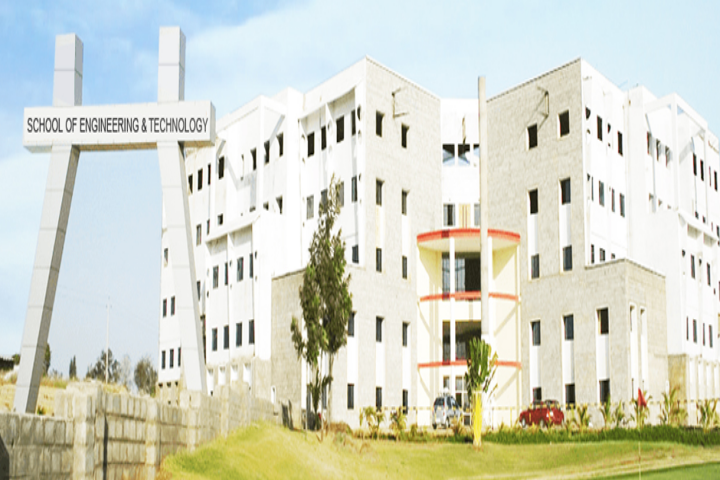
School of Engineering and Technology, Mody University of Science and Technology, Lakshmangarh | Rs. 3.18 Lakhs |
Note: The above fee structure can be for any particular Nuclear Medicine(Diploma/ Degree/PGD).
Apart from private colleges, various government institutes also offer Nuclear Medicine courses in India. In the table below, we have mentioned the top Nuclear Medicine colleges in India and their fees.
| Top Colleges | Fees |
|---|---|
Rs. 2,710 | |
Rs. 5,001 | |
SGPGIMS Lucknow | Rs. 1.15 Lakhs |
Rs. 1,200 | |
Rs. 1,200 | |
Rs. 99,800 | |
- | |
Rs. 1.28 Lakhs | |
Rs. 5.88 Lakhs | |
Rs. 12,410 |
The eligibility criteria for Nuclear Medicine courses differ across universities and institutions. These criteria define the minimum academic qualifications required for admission. Candidates meeting all conditions can apply and proceed with the selection process. Below are the eligibility requirements for both UG and PG courses in Nuclear Medicine.
To pursue an undergraduate degree in Nuclear Medicine, candidates must meet the basic educational qualifications set by recognised institutions. Admission is generally based on academic performance and entrance tests. The programme focuses on building foundational knowledge in medical imaging and radiopharmacy. The eligibility criteria are as follows:
The admission process for an undergraduate course in Nuclear Medicine Technology is based on either direct admission or an entrance exam. The entrance exam and counselling take place every year.
| Exam Name | Exam Level | Conducting Body | Exam Schedule |
|---|---|---|---|
University | MAHE | ||
University | Jain University | - | |
National | NTA | CUET UG Schedule |
Postgraduate programmes in Nuclear Medicine are designed for candidates who wish to gain advanced knowledge in medical imaging, radiopharmacy, and radiation safety. Admission to these courses is usually based on academic merit, entrance exams, and relevant undergraduate qualifications from recognised institutions.
Several national and university-level entrance exams are conducted for admission to postgraduate Nuclear Medicine courses in India. These exams evaluate a candidate’s knowledge in science and medical subjects, helping institutions shortlist qualified applicants. Below is a list of recognised entrance exams for Nuclear Medicine Technology.
| Exam Name | Exam Level | Conducting Body | Exam Schedule |
|---|---|---|---|
National | NBE | ||
National | AIIMS | ||
National | NTA | CUET PG Schedule |
The scope of Nuclear Medicine in India is expanding rapidly, with over 440 nuclear medicine centres, 359 PET-CT scanners, and 24 medical cyclotrons now operating nationwide. This growth reflects rising demand for advanced diagnostic and therapeutic services in healthcare. (Source: Indian Journal of Nuclear Medicine, 2023)
Graduates and postgraduates in Nuclear Medicine can build successful careers as technologists, physicians, researchers, or radiopharmacists. Opportunities are also available in the pharmaceutical industry, medical equipment manufacturing, and academic institutions. The field offers stable employment, attractive salaries, and continuous growth as medical imaging and radiation-based treatments continue to evolve worldwide.
| Minimum Fees | Maximum Fees | |||
|---|---|---|---|---|
| Private | Government | Private | Government | |
| UG |
72.45 K

B.Sc. in Nuclear Medicine at Global Open University, Dimapur
|
99.80 K
B.Sc. in Nuclear Medicine at All India Institute of Medical Sciences Rishikesh
|
12.81 Lakhs
B.Sc. in Nuclear Medicine at Amrita Vishwa Vidyapeetham, Kochi Campus
|
1.16 Lakhs
B.Sc. in Nuclear Medicine at Sri Venkateswara Institute of Medical Sciences, Tirupati
|
| PG |
55.20 K
M.Sc. in Nuclear Medicine at SunRise University, Alwar
|
1.20 K
M.D. in Nuclear Medicine at All India Institute of Medical Sciences New Delhi
|
1.23 Crores
M.D. in Nuclear Medicine at Amrita School of Medicine, Kochi
|
5.60 Lakhs
M.D. in Nuclear Medicine at Sri Venkateswara Institute of Medical Sciences, Tirupati
|
| DOCTORAL |
---
Data not available
|
3.57 K
D.M. in Nuclear Medicine at All India Institute of Medical Sciences New Delhi
|
---
Data not available
|
3.57 K
D.M. in Nuclear Medicine at All India Institute of Medical Sciences New Delhi
|
| DIPLOMA |
1.87 Lakhs
M.Sc. in Nuclear Medicine at Manipal Academy of Higher Education, Manipal
|
---
Data not available
|
3.82 Lakhs
M.Sc. in Nuclear Medicine at Manipal Academy of Higher Education, Manipal
|
---
Data not available
|
The syllabus of Nuclear Medicine courses covers essential areas such as anatomy, physiology, radiopharmacy, radiation physics, imaging techniques, and radiation safety. Both undergraduate and postgraduate programmes focus on practical training, clinical exposure, and research-based learning. Below are the detailed syllabi of both UG and PG courses in Nuclear Medicine.
The undergraduate syllabus in Nuclear Medicine covers anatomy, physiology, radiopharmacy, imaging techniques, and radiation protection through six semesters. The fourth year includes a 12-month compulsory rotational clinical posting, along with project submission, mid-term assessment, and final practical and viva. Mentioned below is a BSc in Nuclear Medicine Technology syllabus from Nagaland University:
Semester 1 | Semester 2 |
Human Anatomy & Physiology | Basic Radiological Physics |
Basic Sciences (Biochemistry, Microbiology, Pathology, Pharmacology) | Physics of Radiographic Equipment |
English, Computer, Ethics and Medical Terminology | Hospital Practice and Patient Care |
Biostatistics & Sociology | - |
Semester 3 | Semester 4 |
Computers and Image Processing Techniques in Nuclear Medicine | Patient Care Relevant to Nuclear Medicine |
Physics of Nuclear Medicine Instrumentation | Nuclear Medicine Techniques and Special Procedures - Part 1 |
Radiochemistry and Radiopharmacy | Recent Advances in Nuclear Medicine Techniques |
Semester 5 | Semester 6 |
Nuclear Medicine Techniques and Special Procedures - Part 2 | Radiobiology |
Research Methodology | Planning and Regulatory Requirements in Nuclear Medicine Facilities |
Quality Control in Nuclear Medicine | Radiation Protection |
The postgraduate syllabus in Nuclear Medicine focuses on radiation physics, radiopharmacy, imaging techniques, radiation safety, and therapeutic applications. It also includes practical training, viva sessions, and a dissertation in the final semester. Mentioned below is the MSc in Nuclear Medicine Technology syllabus from SGPGIMS.
Semester 1 | Semester 2 |
Fundamentals of Radiation Physics | Radioisotope Applications and Radiation Safety |
Human Anatomy & Physiology | Fundamentals of Biostatistics and Computer Applications |
Medical Ethics and General Principles of Hospital Practice and Care of Patients | Radiation Biology |
Practical (Experiment+Viva) | Practical (Experiment+Viva) |
Semester 3 | Semester 4 |
Nuclear Medicine Imaging Counting | Principles and Practice of Radiopharmacy |
Principles and Practice of Radiological Protection | Nuclear Medicine Therapy and Recent Advances |
PET Cyclotron and Allied Instrumentation | AI in Medical Imaging |
Practical 3(Experiment+Viva) | Dissertation (Thesis, Record, viva Voice) |
Graduates in Nuclear Medicine can explore various roles in hospitals, diagnostic centres, and research institutions. Professionals in this field are responsible for performing scans, handling radiopharmaceuticals, ensuring patient safety, and supporting medical research. Some of the prominent job roles include:
Job Roles | Description |
|---|---|
Nuclear Medicine Technologists | Nuclear Medicine Technologists operate imaging equipment and handle radiopharmaceuticals for diagnostic and therapeutic use. They ensure accurate imaging results and maintain patient safety during nuclear procedures. |
Nuclear Medicine Physicians | Nuclear Medicine Physicians diagnose and treat diseases using radioactive substances. They interpret imaging results and develop effective treatment plans based on nuclear scans. |
PET-CT Technologists | PET-CT Technologists manage PET-CT scanners and prepare patients for imaging sessions. They combine functional and structural imaging to deliver precise diagnostic information. |
Research Scientists in Nuclear Medicine study imaging processes, radiopharmaceuticals, and radiation protection. They contribute to scientific advancements and innovation in medical imaging techniques. | |
Radiologist Assistants | Radiologic assistants support radiologists in conducting imaging procedures and analysing results. They help with patient preparation, data collection, and report documentation. |
Nuclear Medicine Technology relies on advanced methods to create internal body images without pain or the need for anaesthesia. Positron Emission Tomography (PET), Single Photon Emission Computed Tomography (SPECT), and Nuclear Cardiology (NCT) are widely used techniques. Graduates can choose to specialise in any of these areas. The upcoming trends are as follows:
Professionals in Nuclear Medicine find employment in hospitals, diagnostic centres, research laboratories, and pharmaceutical companies. They work in roles related to imaging, radiopharmacy, and radiation safety across public and private healthcare sectors. Below are some top recruiters offering career opportunities in Nuclear Medicine.
The average salary in Nuclear Medicine varies depending on job role, location, experience, and skill level. Professionals working in large hospitals or research centres often earn higher packages compared to smaller setups. Below are some average salary details for careers in Nuclear Medicine.
| Job Roles | Average Salary (LPA) |
|---|---|
Nuclear Medicine Technologists | Rs. 7.2 LPA |
Nuclear Medicine Physicians | Rs. 30 LPA |
PET/CT Technologists | Rs. 5.3 LPA |
Research Scientists | Rs. 10.4 LPA |
Radiopharmacist | Rs. 6.8 LPA |
Source: AmbitionBox
As this field combines both medical science and technology, professionals should be confident in handling imaging systems, analysing data, and understanding patient anatomy. They must possess both technical and clinical abilities to ensure accurate diagnosis and safe use of radioactive materials.
The course curriculum in Nuclear Medicine includes a balanced mix of theoretical knowledge and practical training. Students learn about human anatomy, radiation physics, radiopharmacy, and imaging technology. The programme also focuses on radiation safety, patient care, and the use of advanced diagnostic equipment in medical imaging procedures.
During the course, students gain hands-on experience through laboratory sessions, clinical postings, and research projects. They learn to operate imaging systems such as PET and SPECT, analyse scan results, and assist in therapy procedures. This practical approach ensures strong technical and analytical skills in Nuclear Medicine practice.
Answer :
A Nuclear Medicine Technologist is a highly trained professional who treats patients using radioactive imaging. They prepare and induce a small amount of radioactive substance into the patient's body and diagnose the disease. The drugs they prepare are known as "Radiopharmaceuticals".
Answer :
Some of the highest-paying job profiles in Nuclear Medicine Technology include Nuclear Medicine Physicians, Research Scientists, Radiopharmacists, and PET-CT Technologists. Their salaries vary based on experience, skills, and workplace setting.
Answer :
A Nuclear Medicine Technologist is a physician who uses radioactive pharmaceuticals to treat and diagnose the diseases in the patients.
Answer :
The duration of the course varies from institute to institute. In India, it is 3 years, but it can also be extended to 4 years in some institutes.
The admission process for BSc Nuclear Medicine Technology varies. While some colleges enrol students on Class 12 scores and many instuties conduct their own entrance exams. Many central univesities accept CUET scores for admisison to BSc Nuclear Medicine Technology course.
Top government colleges :
Dear aspirant
Hope you are doing well !
Post graduate training programme in Nuclear Medicine consists of an integrated training course of three years duration and would enable the post graduate student to practice nuclear medicine safely.
The following college are there in India for this course
Hello aspirant
Bachelor of science in nuclear medicine is study of imaging internal organs of our body using radioactive isotopes.
Eligibility criteria for the course- The candidate must have passed class xii with minimum 50% marks in physics, chemistry and biology .
Institutes offering BSc in nuclear medicine
IIT ,
Nuclear medicine previous year question paper
Hello,
As you have told that you have done your BSc in Medical Imaging Technology and now you are interested in pursuing MSC for Nuclear Medicine, but unfortunately you are not eligible for it as the requirement for the MSC in Nuclear Medicine is that you should have passed in
Select your reason of reporting
| Microbiology and Virology Colleges in Kolkata | Pathology Colleges in Kolkata | Private Medical Colleges in Kolkata | Public/Government Medical Colleges in Kolkata |
| B.P.T. Colleges in Bangalore | Genetics Colleges in Bangalore | Physiotherapy Colleges in Bangalore | Private Medical Colleges in Bangalore | Public/Government Medical Colleges in Bangalore |
We endeavor to keep you informed and help you choose the right Career path. Sign in and access our resources on Exams, Study Material, Counseling, Colleges etc.

Regular Exam Updates
Best College Recommendations
College & Rank predictors
Detailed Books and Sample Papers
Question and Answers



OR


.jpg)

 Answer later