


Work Done Against Gravity
In our everyday lives, we frequently encounter situations where work is done against gravity, often without even realizing it. Whether lifting groceries into a car trunk or climbing stairs, these common activities involve exerting force to overcome gravity's pull. Understanding the concept of work done against gravity not only enriches our grasp of basic physics but also helps us appreciate the energy involved in our daily tasks. This article explores this fundamental concept, illustrated with real-life scenarios and a solved example to demonstrate how physics applies to everyday experiences. By delving into the mathematics and principles underlying such actions, we gain a clearer insight into the forces at play in our routine movements.
This Story also Contains
- Work Done Against Gravity
- Solved Examples Based on Work Done Against Gravity
- Summary

Work Done Against Gravity
The gravitational potential energy at height 'h' from the earth's surface Is given by
So at the surface of the earth put
We get
So if the body of mass m is moved from the surface of the earth to a point at height h from the earth's surface
Then there is a change in its potential energy.
This change in its potential energy is known as work done against gravity to move the body from the earth's surface to height h.
Where
Putting
So
when '
when '
But
If
Recommended Topic Video
Solved Examples Based on Work Done Against Gravity
Example 1: A satellite is revolving in a circular orbit at a height ‘h’ from the earth’s surface (radius of earth R; h<<R). The minimum increase in its orbital velocity required, so that the satellite could escape from the earth’s gravitational field, is close to : (Neglect the effect of atmosphere.
1)
2)
3)
4)
Solution:
Orbital velocity of the satellite
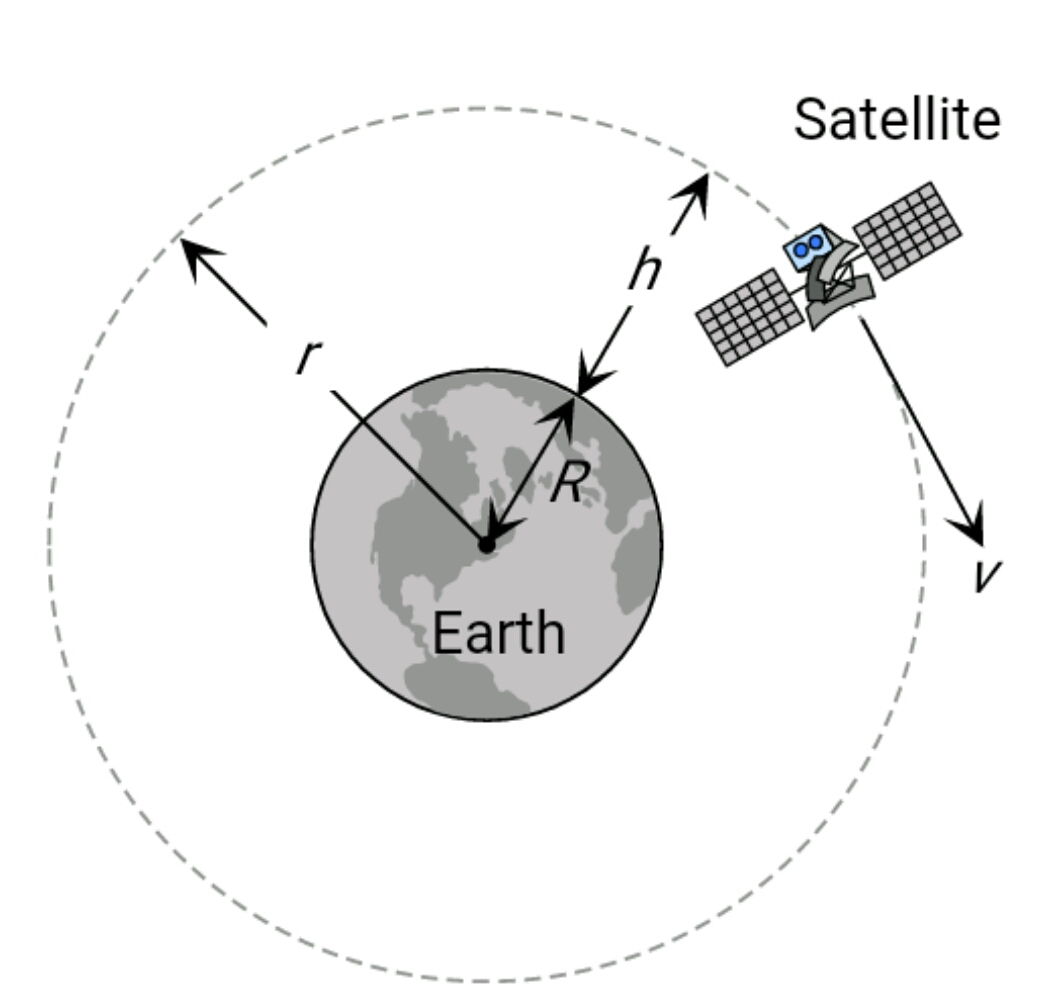
wherein
The velocity required to put the satellite into its orbit around the earth.
So
For escape velocity
Apply energy conservation
required increment in the orbital velocity
Example 2: The gravitational potential energy of a body of mass '
1)
2)
3)
4)
Solution:
Work done against gravity
wherein
If the body is moved from the surface of the earth to a point
Hence, the answer is the option 4.
Example 3: If
1)
2)
3)
4)
Solution:
Work done against gravity when '
if
So here
Hence, the answer is the option (2).
Example 4: If a body of mass m is moved from the earth's surface at height ‘h’ above the earth work is done against gravity. When (h<<<R) where R is the radius of the earth.
1) -mgR
2) -mgh
3) mgR
4) mgh
Solution:
Work done against gravity when '
W= work done
wherein
Work done against gravity
hence
Hence, the answer is the option 4.
Summary
This is how the work that the gravitational force does may be determined and calculated. To effectively apply the formula in the exercise questions, be aware of how it was developed. Make sure you utilise the units of these physical quantities appropriately as you practise applying this calculation.