


- Home
- Agricultural Scientist
Who is a Agricultural Scientist?
The farmer is the only man in our economy who buys everything at retail, sells everything at wholesale, and pays the freight both ways ~ John F. Kennedy
Agricultural scientists examine farming techniques to improve crop yields. They inspect crops, soil, insects, and the connection between plants, animals, and their environment. By using concepts from biology, chemistry, and related sciences, they try to solve agricultural challenges and also develop more efficient farming practices. Agricultural scientists also test tools, supervise production, and research effective methods for planting, cultivating, harvesting, storing, and transporting horticultural products.
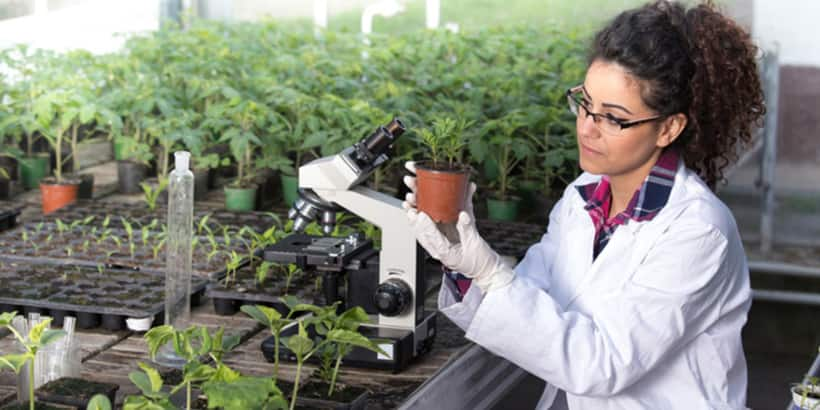
Agricultural Scientist in a Nutshell
One of the primary responsibilities of an agricultural scientist is to improve farming methods in order to improve the productivity, quality, and sustainability of crops and livestock. They are also responsible for developing new agricultural techniques and directing farmers on effective, science-based practices.
Quick Facts for Agricultural Scientist
-
Industry
Agriculture
-
Suitable for
Male, Female, Others
Individuals of any gender can become agricultural scientists. Gender has no influence when it comes to becoming an agricultural scientist, which makes it a great career option for all.
-
Any special needs
Yes
An agricultural scientist is such a profession where people with special needs can also pursue. It is suited to people with special needs, provided they have the determination and the will to pursue their goals and not let challenges hold them back.
Table of Contents for Agricultural Scientist
What is the role of Agricultural Scientist?
Developing methods for soil preservation and management, conducting experiments, and conducting research are some of the work activities that an agricultural scientist has to do. An agricultural scientist also reviews research proposals and collaborates with farmers and other stakeholders. Other job responsibilities also include supervision of lab and field activities, investigating soil and water issues and advising farmers. They also help design procedures and techniques to help solve agricultural and horticultural problems.
Assessment
Individuals who opt for a career as agricultural scientists are also involved in studying, assessing, and evaluating agriculture productivity to determine any shortcomings of any kind. They plan and administer programs for testing food, drug, and other products and also conducts tests on new designs and machines.
Develop scientific methods
The role of agricultural scientist is to develop various scientific methods to find solutions to agricultural problems and implement them in agricultural activities. He or she develops new or improved methods to control the crop diseases and insect pests.
Role as an educator
Agriculture scientists often do the role of educator and make the farmers aware of various farming techniques and methods that help them in sustainable production. They also recommend or suggest the farmers or landowners about various uses of land and how to protect it.
Collaboration
In order to come up with effective solutions, it is often required that individuals who opt for a career as agricultural scientists collaborate and coordinate with farmers, stakeholders, suppliers and landowners.
Understanding Farm Needs
Individuals who opt for a career as agricultural scientist should understand the needs of those who are farming. This is one of the most important aspects of being an agriculture scientists. People look up to them for solutions to various complex problems. Hence, it is important that they keep developing and foreseeing solutions and problems in the agriculture industry.
Conduct research
The major agricultural scientist roles and responsibilities are to conduct scientific research on food, plants, animals, and various other aspects that are associated with agriculture. He or she can conduct basic research in laboratories or in the field as well to improve the farming techniques and to enhance the efficiency and farm business.
Types of a Agricultural Scientist
We have provided here the details of various types of Agriculture Scientist or careers relevant to it. The field of Agriculture Science offers numerous career opportunities with varying job titles and work responsibilities.
Agriculture Engineer: An Agriculture Engineer is a professional who applies and uses the principles of agriculture and engineering to come up with solutions in the agriculture sector. Agriculture engineers design and develop new farming techniques and equipment that helps in making farming more efficient in terms of sustainability, safety, and environment-friendly.
Agricultural Inspector: The Agriculture Inspector is someone who works to prevent food-borne diseases and provide healthy food to everyone. The agriculture inspector does inspections on a daily basis to ensure that the food processed from the crops of the farm or raw meat of the processing facility is healthy for consumption.
Agricultural Manager: An individual who pursues an Agricultural Manager oversees all aspects of running farms and other facilities that produce crops. The duties of an agricultural manager include planning, supervising, and sometimes participating in the planting, fertilisation, and harvesting process.
What is the workplace/work environment of Agricultural Scientist like?
Agricultural scientists work in field as well as office settings or in research labs; it all depends on their assignments. They are also required to travel to collect soil samples, crops, and other materials. In certain cases, the work environment can change based on the nature of the research project.
Does Agricultural Scientist require travelling?
Likely
Agriculture Scientists spend the majority of their work hours in laboratories and offices. At times, these scientists may be required to perform fieldwork that requires them to travel to a farm or food processing plant. Agricultural Scientists are also required to go to agricultural fields to collect samples of soil, groundwater, and sometimes the crop.
Time Pressure
Not Likely
There is not a significant amount of time pressure, and most of the time is spent working in labs or in the field. There can be instances where the individual is required to visit agricultural sites in order to gather samples; in this case, there can be deadlines. In the overall scheme of things, time pressure is relatively low.
How to become a Agricultural Scientist?
Steps to become a Agricultural Scientist
An agricultural scientist studies farming and food production methods in order to improve crop yield and also to ensure the safety of the crop as well as the soil. If you are keen to work in the agricultural sector, then this is an excellent career choice. Here we have given a step-by-step guide on how to become an agricultural scientist in India.
What are the skills and qualities required to become a/an Agricultural Scientist?
An aspirant who wants to become an Agricultural scientist is required to acquire a specific skill set. We have provided here the details of Agricultural Scientist skills. These skills are crucial to perform efficiently in the work environment.
Adaptability: Individuals who opt for a career as Agricultural Scientists must be able to adequately address these new obstacles by quickly adopting new methods and advanced technological innovation, in addition to predicting what new challenges lie ahead. Adaptability skills are particularly important for anyone considering a career in agriculture.
Interpersonal Management: For Agriculture professionals working in supply chain management, interpersonal skills are incredibly important. They are routinely required to interact with farmers who produce raw materials and deliver these goods to other firms. The ability to negotiate is incredibly important in the agriculture industry.
Time Management and Organisation Skills: For individuals who opt for a career as Agricultural Scientists working in logistics, organisation skills are a must. These professionals are tasked with ensuring that raw materials are properly transported, stored, and delivered from the producer to the wholesaler, to the consumer.
It is not unusual for agriculture professionals to work with a variety of products, as well as a variety of farmers and numerous clients. Strong organisational skills may be a strong determining factor in one’s success in this role. Time management and organisation are also important for those in the field – including labourers, farmers, and machine operators.
Tech-Savvy: The knowledge of where technology is going in terms of new techniques and advancements, particularly in terms of agriculture practices, is incredibly important. This includes a focus on things such as irrigation, pesticide use, and improving methods and techniques of cultivation, harvest, storage, and transport.
Also read: A Career as Farm Manager
Which certifications and internships can be helpful in becoming Agricultural Scientist?
We have provided below a list of certification courses that an aspiring individual may opt to upgrade his or her knowledge and skills to become an Agricultural Scientist.
Free Agriculture Business Management Courses & Certifications
Coursera Agriculture, Nutrition And Food Courses & Certifications
Free Agricultural And Food Engineering Courses & Certifications
Free Agriculture Nutrition And Food Courses & Certifications
Shaw Academy Agriculture, Nutrition And Food Courses & Certifications
Internship Availability
Agricultural Science interns can gain experience by analysing the impact of farming practices and help to implement new, more sustainable, and cost-effective models. This often includes analysing the business, environmental, and social impact of farming practices, developing crop optimisation models, inspecting animals for diseases and pests, and creating analyses and reports on crops.
Individuals who opt for a career as an Agricultural Scientist must develop good communication skills and have a strong background of basic agriculture practices. In addition, interns should be flexible in their work sphere as they may be expected to assist with planting crops, work with livestock, or hold panels to discuss agriculture practices.
What is the job outlook for Agricultural Scientist?
The agricultural sector is one of the largest contributors to the Indian economy, and as such, there is a huge scope for growth in this field. There has also been an increased focus on agriculture by the government, and there is a shortage of skilled professionals. Opportunities and salaries in this field continue to rise. As agricultural scientists work across diverse roles and organisations, their demand is expected to grow,
Frequently Asked Questions for Agricultural Scientist
Que. What is the most important agriculture scientist qualification?
Ans.The most important agriculture scientist qualification for an agriculture scientist is a bachelor's or a master's degree in Agriculture.
Que. Is agriculture a good career?
Ans.Agriculture is one of the largest industries and a good source of employment across the country. Agriculture also plays a vital role in the Indian economy. It promotes the efficient production of quality food in the agriculture-food industry and on the farm linked to farming.
Que. What is agricultural science?
Ans.Agriculture Science deals with the production and processing of food and fibre. It include various technologies for soil cultivation, crop cultivation and harvesting, animal production, and the processing of plant and animal products for human consumption.
Que. What is the role of Agricultural Engineer?
Ans.Agricultural Engineers are involved in a variety of activities related to farming and the agricultural industry in general. These activities range from aquaculture (breeding, raising, and harvesting fish, shellfish, and aquatic plants) to land farming and forestry.
Que. What are top Agricultural Scientist colleges?
Ans.The top Agricultural Scientist colleges are IIT Kharagpur, IUL, Lucknow, Tamilnadu Agricultural University,Parul University, Vadodara, and SET, CUTM, Paralakhemundi.
Que. What is the qualification for an ARS scientist?
Ans.The qualification for an ARS scientist is a master's or PhD in Agriculture or a related field.To get qualified for the ARS exam you are required to have at least a master's or a PhD degree.
Que. How can I become a researcher after BSc Agriculture?
Ans.To become a researcher after BSc Agriculture, you are required to appear for an ARS exam conducted by the Agricultural Scientist Recruitment Board (ASRB) under ICAR. Once you have qualified this exam, you are recruited to the post of Junior Scientist after the training period.
You might also be interested in
Questions related to Agricultural Scientist
Can you please inform me about IARI ,ICAR ,etc the agricultural scientist fields

Hi Aspirant,
ICAR is an ALL India Examination conducted in order to shortlist candidates for admission in various courses related to agricultural and allied science. The exam is conducted to fill 15% of seats in Bachelor's degree programmes. It gives admission to undergraduate, postgraduate and doctoral programmes.
Hope it helps!!
 Answer later
What course should I do to become agricultural scientist after bsc agriculture???
Hello aspirant!
Hope you are doing well!
You can opt for examinations such as JRF, state examinations for masters in agriculture.
The process of choosing a course depends entirely upon your interest.
You can opt from so many fields
Entomology
Horticulture
Pathology
Soil science
Plant genetics
Food technology
etc
It
Select your reason of reporting
Explore Related Careers


Did you know?
Fact 1
Norman Borlaug’s work during the Green Revolution saved millions, earning him the 1970 Nobel Peace Prize.
Fact 2
India’s agricultural productivity grew fivefold post-Green Revolution through crop innovations.
Fact 3
Agricultural scientists contributed 35% to global economic growth in the last 50 years (FAO).
Fact 4
Over 1,500 agricultural scientists drive innovations in India’s farming sector.
Fact 5
Demand for agricultural scientists is expected to grow by 7% in the next decade.