
Search Colleges, Exams, Schools & more


Login
"Only 5% institutes doing 70% research"
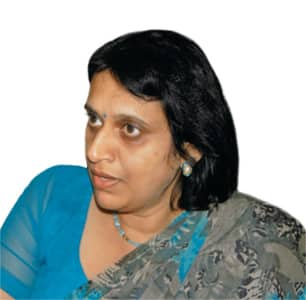
National Science & Technology Entrepreneurship Development Board (NSTEDB), Department of Science and Technology (DST), Ministry of Science and Technology (MST) encourages entrepreneurship spirit by promoting over 72 Technology Business Incubators (TBIs) and Science and Technology Entrepreneurs Parks (STEPs) across the country. Its Director Dr Anita Gupta says,“ In India, entrepreneurship is not considered as embedded and integral part of the institution.” She tells Shiphony Pavithran Suri that many academic institutes ignore it, as they think they are not mandated to promote business activities. Dr Gupta feels students should connect to societal issues. She says, “They must go back to their communities, receive their problems, solve and market them.”
Q. How does DST differentiate Technology Business Incubators (TBI) from Science Technology Entrepreneurs Park (STEP)?
A. Our primary mandate is to build the right kind of innovation ecosystem, which fosters entrepreneurship within the academic institution. We support STEP & TBI which enjoy the status of the separate legal entity, because speed is vital in entrepreneurial decision-making. We supplement institutes in terms of giving essential facilities if they have identified technology for the incubation. Since incubation has to be done in a self-sustainable mode, competent managers run it and guide and help promising start-ups to grow as fast possible.
Of late we don’t get proposal for STEP, as DST only gets proposals for TBI. Most institutes are orienting towards the TBI model. STEP was conceived and developed way back in 1980s, to provide space and promote engineering and manufacturing enterprise. It was more hardware-driven where the role of holistic mentorship was missing. With the age of information and communication technology, TBI approach is more conducive. TBI focuses more on critical business idea services – it offers resources, mentors, and all kinds of legal and business guidance. The TBI model is open for all, not just for budding student entrepreneurs from colleges, but also for those who have long work experience, an idea, which has commercial feasibility, matters to us. The standard support inclusive of capital and operational cost on an average is Rs. 3 to 4 crores per institute. The cost varies from proposals across institutes.
Q. Where does India stand in terms of gaining IP rights?
A. Indian intellectual properties are well recognized globally, but when we draw a matrix and see how we fair vis-à-vis other global counterparts, then we are not able to make an impact in terms of tangibles. We cannot have 5 percent institutions doing 70% of research. It should be equitable distribution across various geographies, so everything needs to be scaled up and sensitized. We are developing, but our pace of improvement is not in line with other global players. It’s a collective responsibility. We have to change institutes’ mindset. The qualitative projects with good market connect and translation would help us set new benchmarks.
|
Q. How do you assess the role of institutes contributing meaningfully towards incubation?
A. Generally, all top league institutes enjoy a better success rate. By design incubator takes forward research from parent institute to marketplace. Barring IITs and NITs, there are many institutes that still do not have inherent research base, which caters to industrial requirement. If you have a patent then that is another success indicator. If there is a patent, then the institute must find out whether it has been monetized. Ultimately, it is for specific industry, so we must know whether it is being applied. If it is used then what is the ultimate impact? So institutes must closely monitor the stages of evaluating a company. Only DST support is not enough, in real sense entrepreneurship is all about networking with the right set of people and taking forward your ideas to the market. So institutes with good alumni base do well.
The problem that tier 2, 3 institutes face is not having a good faculty and research. Poor faculties come as a stop-gap arrangement, and fail to develop a good entrepreneurial ecosystem on campus.
Q. Why do Indian academic institutes lag behind other countries when it comes to entrepreneurship?
A. In India, entrepreneurship is not considered as embedded and integral part of the institution. Typically, academicians say that it is not our forte. They feel their role is to just teach and confine themselves to respective curriculum. Sadly, we had problems selling our DST-initiated programmes and concepts to the country’s top institutes. They are not able to appreciate it well. Our model will help the local economy and national output in the long run.
I have observed all developed countries across the world, like the US, UK, Germany, and China. The economy is well- driven by innovation and entrepreneurship. Japan has a concept of innovation centre; China has a different strategy, the TORCH programme, giving rise to high tech cities strengthening manufacturing at affordable prices. There you will find a strong connect between university and incubation centre. This connect is missing largely in India, with a presence only in isolated pockets. The profiles of developed countries’ institutes include entrepreneurship, creativity, ideation and technology commercialization, which need to be embedded within our institutional framework. Indian students are not linked well with the community. They must go back to their communities, receive their problems and solve them.
|
Q. How can institutes create conducive entrepreneurial atmosphere?
A. Encouragement to work on projects helps in the long run. It helps students to exhibit their creativity and bring out new products or services. Also, ECell is the baby step, which institutes have started taking towards entrepreneurship. These are the basic instruments for entrepreneurship in an academic environment. Once they are confident, they can go to TBI and lead on with their idea for commercial use.
Q. Innovation is the need of the hour. Can other authorities intervene?
A. Students must be instilled interest in innovative activities right from school. For instance, INSPIRE programme is one good model. All regulatory authorities like CBSE, AICTE, UGC should work on how to build a good system of knowledge creation and knowledge transfer. Apart from just creating a good number of PhDs, the institute must know what’s the ultimate impact of their PhDs on the market?
Q. The fear of failure blocks many brilliant ideas to flourish. Your take?
A. Certainly, entrepreneurship is inherently a risky proposition and far more challenging. DST is here to propagate and motivate students who wish to pursue entrepreneurship. Since government funding procedures and sanctions are relatively slow in nature, many entrepreneurs lose interest and at times their business suffers. My advice is to be patient as there is a whole array of funding available. Sadly, students are not aware of bilateral and multilateral funds, schemes that are in place, like funds from scheme of DST, CSIR, BIRAC, government cooperative banks etc.
Q. Message for new entrepreneurs?
A. If you plan to pursue an idea, then you must give 100 percent effort. Your passion will open all doors, as government of India has so many schemes. Perseverance is a trait, which you must imbibe. A single player entrepreneur is good in software business; you need just a laptop to start a business with minimal cost. If planning to start a company, then think of a driving team in order to lead the business.
Upcoming Exams

Certifications By Top Providers
Explore Top Universities Across Globe

Applications for Admissions are open.
UG & PG Scholars’ Round Deadline: 14th Nov’26 | Earn upto 50% merit Scholarship + 10% for top performers | EFMD Accredited | AACSB (USA) & AMDISA Member | Highest CTC 28 LPA
Dr Vishwanath Karad MIT World Peace University, Pune
ApplyHighest CTC 30 LPA | #9 in Management Category by Times B-School | Merit-Based Scholarship Upto - 50 Crores
News and Notifications
Never miss update
Get timely updates directly to your inbox. Stay informed!