


Embryology: Definition, Steps, Types and Examples
Embryology is the branch of biology that studies the formation and development of an embryo. It explains how a single-cell zygote changes into a complex organism through various stages of cell division. Embryo development begins from fertilisation to birth. Human embryology studies human embryo growth. Embryology is importance lin medicine, evolution, and developmental biology. Students must learn embryology meaning commonly asked in Class 12 Biology and the NEET exam.
This Story also Contains
- Embryology Definition
- What is Embryogenesis?
- Steps of Embryology
- Fertilisation: Definition and Process
- Cleavage and Blastulation in Embryology
- Types of Embryology with Example
- Stages of Pregnancy
- MCQs on Embryology
- Recommended Video for Embryology
Embryology helps us understand life’s beginning. It shows how organs are developed through organogenesis. The stages of the embryo show body formation. Embryology examples include human embryology, chick embryology, frog embryology, and plant embryogenesis. In this article, embryology, embryogenesis, fertilisation, cleavage and blastulation, human development, and stages of pregnancy are discussed.
Embryology Definition
Embryology is the branch of science that explains how life begins and grows after fertilisation in humans and implantation. It shows how a single fertilised egg develops into a complex organism consisting of trillions of cells, each specialised to perform programmed functions.
The process, in general, has fascinated scientists and other medical professionals. At the same time, it has changed countless lives in the form of advancements in health care, reproduction, prenatal care, and developmental biology.
What is Embryogenesis?
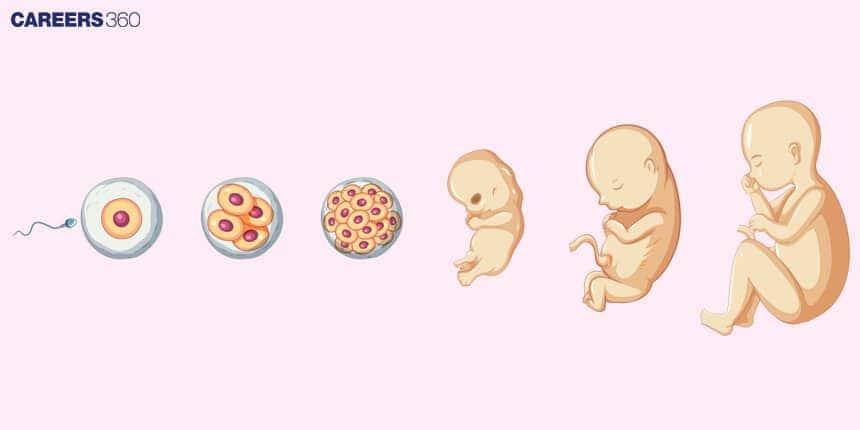
Embryogenesis is the process by which a zygote (fertilised egg) develops into a complete embryo. It undergoes several cell divisions, growth, and differentiation to develop into a fully formed embryo.
This complex process consists of many stages of development, namely cleavage, blastulation, gastrulation, and organogenesis, to finally form tissues, organs, and structures of the body that are necessary to sustain life. Embryogenesis is essential for the correct development and establishment of the overall plan of an organism's body.
Steps of Embryology
Human Embryology development starts with fertilisation. A zygote forms after a sperm meets an egg. The zygote divides to form a blastocyst. It implants in the uterus and grows. Gastrulation and organ formation follow. The process ends with childbirth.
Fertilisation: The union of sperm and ovum forms a zygote.
Cleavage: Rapid mitotic divisions increase cell number.
Blastulation: Formation of a hollow blastocyst.
Implantation: The blastocyst attaches to the uterine wall.
Gastrulation: Formation of three germ layers.
Organogenesis: Formation of organs from germ layers.
Growth and differentiation: Tissues mature and specialise.
Parturition: The baby is delivered at the end of pregnancy.
Fertilisation: Definition and Process
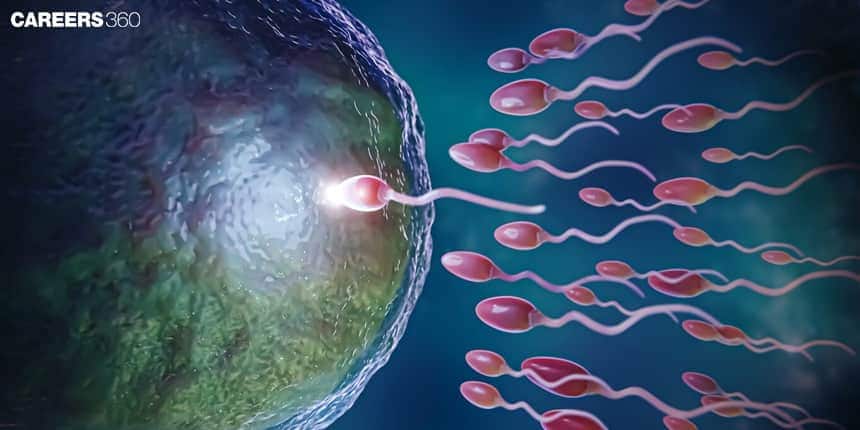
Fertilisation is the process of the union of structure of sperm and egg structures. It initiates embryonic development to form a zygote. It involves the fusion of genetic material from both gametes. This results in a diploid zygote that has the complete set of chromosomes (one set from each parent).
Significance of Fertilisation
Fertilisation restores the diploid number of chromosomes It starts embryonic development. It is the first step in forming a new life. Fertilisation ensures genetic variation and proper growth of the embryo.
Cleavage and Blastulation in Embryology
Cleavage is the first stage after fertilisation. It involves a series of rapid cell divisions. During cleavage, the zygote divides into many smaller cells called blastomeres. There is no increase in total size. Only the number of cells increases, not the size. Cleavage can be of two types:
Holoblastic cleavage – complete division of the egg
Meroblastic cleavage – partial division of the egg
Cleavage sets the base for the blastulation stage.
Formation of the Blastula
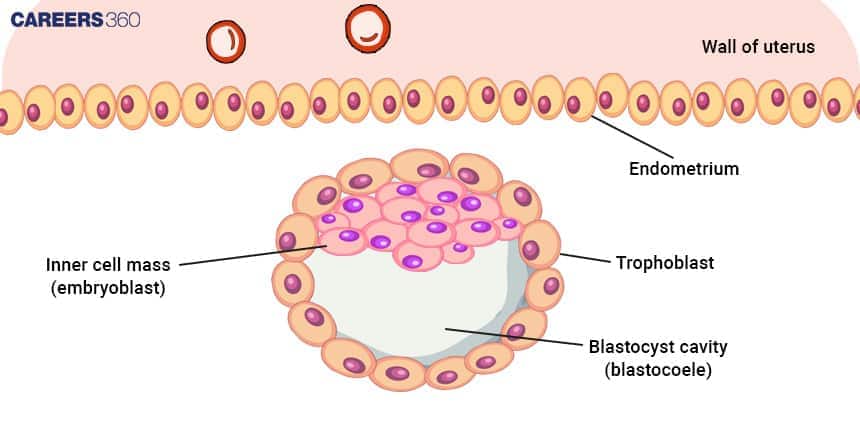
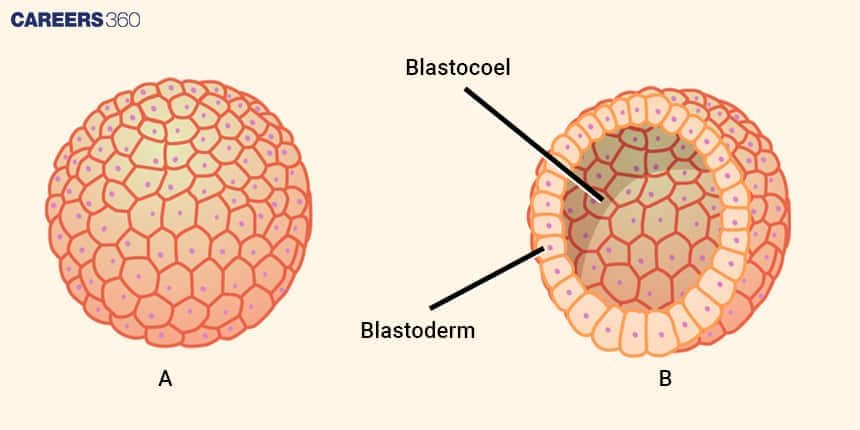
After cleavage, the embryo becomes a blastula—a hollow ball of cells. It is filled with the cavity fluid called the blastocoel (Blastocyst cavity) . This phase of development follows cleavage immediately; therefore, according to order, it is the next stage of development in a developing organism. It is very essential since it lays the foundation for gastrulation upon it sit all future developmental events.
Gastrulation
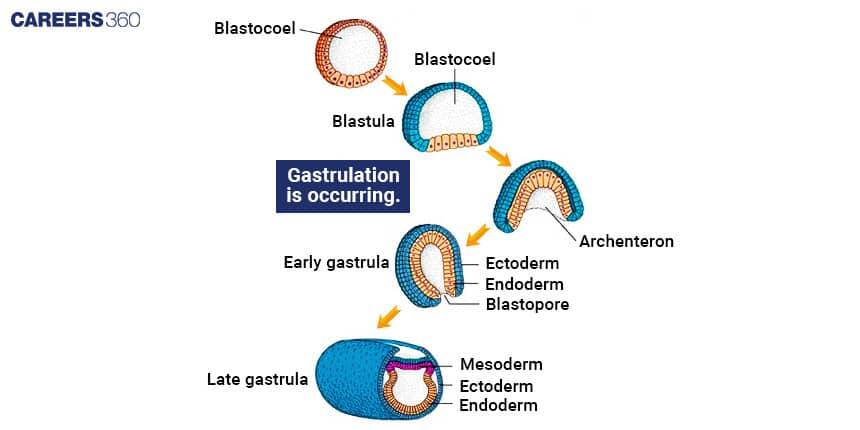
Gastrulation is the next key stage of embryogenesis. The blastula transforms into a gastrula, a structure with multiple layers. Cell movement and differentiation occur in this phase. The fate of germ layers is formed:
Ectoderm (forms skin, nervous system)
Mesoderm (forms muscles, bones, blood)
Endoderm (forms gut, liver, lungs)
Gastrulation sets the foundation for organogenesis and complete body formation.
Types of Embryology with Example
Embryology types explain different ways of studying embryo development. Each type of embryology focuses on a unique approach to understand growth, structure, and genetics. It helps students see how embryos develop and how science explains reproduction and evolution.
Descriptive Embryology
Descriptive embryology explains the stages of embryo development from fertilisation to organ formation.
Example: Human embryology describing zygote, cleavage, blastula, gastrula, and organogenesis.
Comparative Embryology
Comparative embryology studies embryos of different species to find similarities and differences.
Example: Chick embryo compared with human embryo to show evolutionary relationships.
Experimental Embryology
Experimental embryology uses experiments to understand how embryos grow and respond to changes.
Example: Spemann’s experiment on frog embryos showing the role of organiser tissue.
Molecular Embryology
Molecular embryology studies genes, proteins, and molecular signals that control embryo development.
Example: Study of Hox genes in the fruit fly (Drosophila) controlling body plan formation
Stages of Pregnancy
Human development begins with fertilisation. A single zygote forms and starts dividing. Each week brings important changes. Organs, limbs, and systems start developing. Tracking stages helps monitor fetal health. This timeline shows growth from week 3 to 8.
Weeks after Fertilisation | Embryonic Development |
Week 3 | Formation of the three germ layers, the neural tube and notochord start forming. |
Week 4 | The heart starts beating, arm buds and eye pits are visible. |
Week 5 | Size ~ 4 mm, and embryo development becomes the C-shaped inner ear and pharyngeal arches form liver, pancreas, spleen, and gall bladder. |
Week 6 | Size ~ 8 mm. The eyes and nose form, and leg buds and hand paddles appear. The stomach and kidneys start developing. |
Week 7 | Size ~ 13 mm. The respiratory system, lymphatic system, and sex organs start developing; arms and legs grow, and fingers and toes appear. |
Week 8 | Size ~ 20 mm. The external ears, nipples, and hair follicles start developing, and most organs are formed. |
MCQs on Embryology
Q1. Ontogeny repeats phylogeny was stated by
S.Fox
A.Wallace
C.Darwin
E.Haeckel
Correct answer: 4) E. Haeckel
Explanation:
Ernst Haeckel proposed the biogenetic law, which states that "ontogeny repeats phylogeny." This means that the development of an organism (ontogeny) reflects the evolutionary history of its species. Regardless, this concept is not entirely accurate, as modern evolutionary biology recognizes that embryonic stages are influenced by both ancestral traits and adaptations to current developmental needs.
Hence, the correct answer is option 4) E. Haeckel.
Q2. In the following questions, a statement of assertion (A) is followed by a statement of reason (R)
(A) If both Assertion & Reason are true and the reason is the correct explanation of the assertion, then mark A
(B) If both Assertion & Reason are true but the reason is not the correct explanation of the assertion, then mark B
(C) If Assertion is true statement but Reason is false, then mark C
(D) If both Assertion and Reason are false statements, then mark D
Assertion: Even though two animal species' adults may not resemble one another very much, their embryos often do.
Reason: For instance, young chicks and young rabbits are nearly indistinguishable from one another, yet adults may be easily told apart.
A
B
C
D
Correct answer: 1) A
Explanation:
Studying an individual plant or animal's developmental history provides strong support for the hypothesis of evolution. Every organism replicates the evolutionary history of its predecessors during the course of its own development. Even though two animal species' adults may not resemble one another very much, their embryos often do. For instance, young chicks and young rabbits are nearly indistinguishable from one another, yet adults may be easily told apart.
Hence, the correct answer is Option 1) A.
Q3. Which of the following statements are correct?
Statement 1: Unborn or unhatched organisms that are in the early stages of development are called embryos.
Statement 2: The growth and development of embryos happens in stages. The physical characteristics of an embryo change during its growth. Some features become more focused. Some features vanish.
Statement 3: In general, the early stages of development in related species' embryos share more characteristics than the later stages.
Statement 4: There may be similarities between the embryos of different species that are not apparent when the organisms are completely developed. Numerous of these resemblances are homologous traits. These characteristics demonstrate the species' evolutionary relationships.
Statements 1 and 2 are correct but statements 3 and 4 are incorrect.
Statements 1 and 3 are correct but statements 2 and 4are incorrect.
Statements 1, 2 and 3 are correct but statement 4 is incorrect.
All the statements 1,2,3 and 4 are correct.
Correct answer: 4) All the statements 1,2,3 and 4 are correct.
Explanation:
Unborn or unhatched organisms that are in the early stages of development are called embryos. The growth and development of embryos happen in stages. The physical characteristics of an embryo change during its growth. Some features become more focused. Some features vanish. There may be similarities between the embryos of different species that are not apparent when the organisms are completely developed. Numerous of these resemblances are homologous traits. These characteristics demonstrate the species' evolutionary relationships. For instance, pharyngeal arches, also known as gill arches, are homologous features found in all embryos. These arches grow into gill-related structures in fish. These arches grow into the components of the ears and mouth in animals. Typically, at earlier stages of development, related species' embryos share more characteristics than they do at later stages.
Hence the correct answer is option 4) All the statements 1,2,3 and 4 are correct.
Recommended Video for Embryology
Frequently Asked Questions (FAQs)
Embryology is the branch of biology that studies the development of embryos from fertilisation to organ formation.
The main steps are fertilisation, cleavage, blastulation, gastrulation, and organogenesis.
The types are descriptive embryology, comparative embryology, experimental embryology, and molecular embryology.
Examples include human embryology, chick embryology, frog embryology, and plant embryogenesis.
Embryology is important because it explains reproduction, growth, genetics, and evolutionary relationships.
