KCC Institute of Legal and Higher Education, Greater Noida
Law Admissions 2026 Open | Avail Merit-Based Scholarships


Anther is dithecous or not? The answer is yes, anther is dithecous. It means the structure of anther has two thecae. It has four pollen sacs. This bilobed structure is the main part of the male reproductive organ, the androecium structure. In the transverse section of a bilobed anther, the tapetum layer surrounds the microsporangia. The structure of an anther with two thecae is frequently asked in NEET and other competitive exams. The difference between monothecous and dithecous anther is based on the number of thecae, monothecous anthers have one and dithecous anther have two thecae.
This Story also Contains
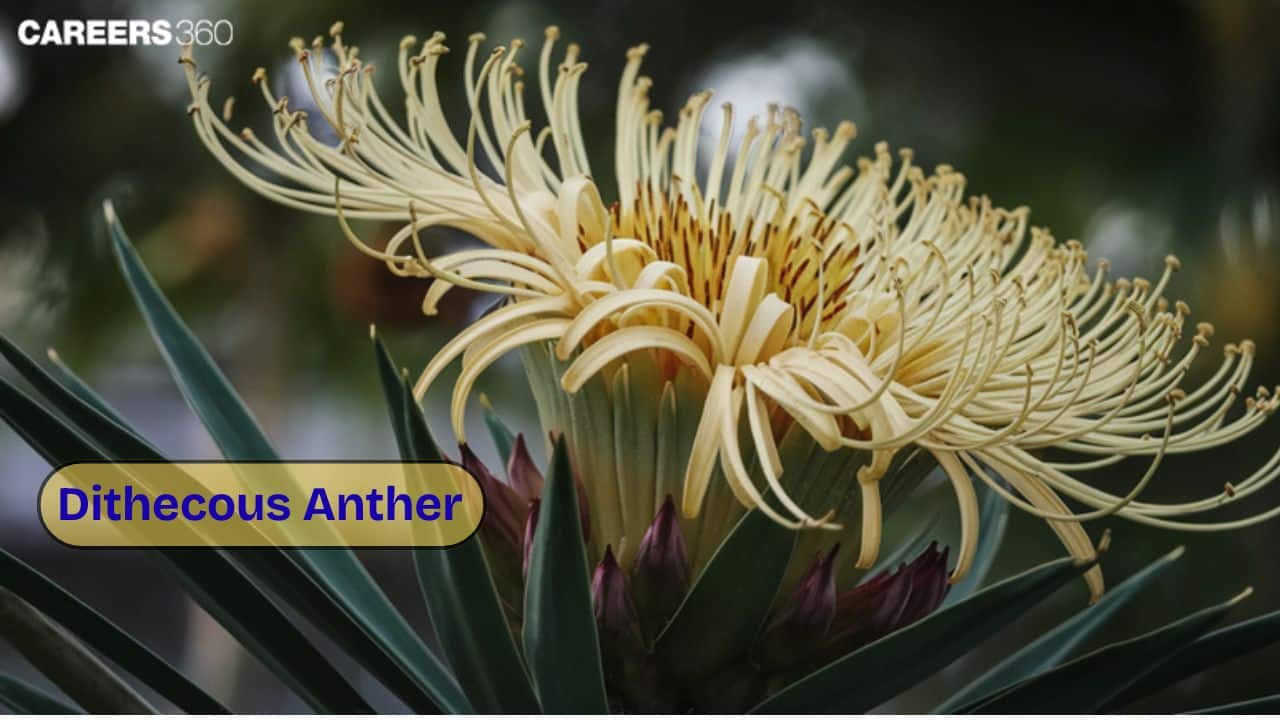
Dithecous means - two thecae. This means the structure of the anther is bi-lobed. It shows clear theca formation with microsporangia. In total, a dithecous anther has four pollen sacs. At maturity, the dithecous anther undergoes anther dehiscence and releases pollen. These pollen grains play a major role in fertilisation in angiosperms. The structure of the dithecous anther is highly specialised. It consists of layers, such as the epidermis, endothecium, middle layers and tapetum. Dithecous anther produces and releases the pollen grains important for Sexual Reproduction In Flowering Plants. A detailed study of the bilobed anther and the structure of dithecous anther is important in understanding plant reproduction, with the difference between monothecous and dithecous anther.
Dithecous means - two thecae. This means dithecous anther is a bilobed anther with two thecae. Each lobe consists of two microsporangia, making a total of four pollen sacs. The structure of anther produces pollen grains, stores pollen grains and releases them for fertilisation in plants. The theca protects the developing pollen.
Law Admissions 2026 Open | Avail Merit-Based Scholarships
BBA/MBA/PGDM Early Bird Applications Deadline 19th Oct '26. Apply now using coupon code CAREER250 and get ₹250 off the application fee
Example - Plants like mustard and solanum have dithecous anthers.
The dithecous anther is that part of the stamen, the male reproductive part. The structure of anther consists of -
Bilobed: Two lobes, called thecae.
Four pollen sacs: Two in each theca.
Tapetum: Inner layer that nourishes pollen.
Other layers: Epidermis, endothecium, and middle layers.
Connective tissue: Joins the two thecae and carries nutrients.
The structure of anther varies in angiosperms. Based on the number of thecae present, anthers are classified into monothecous anthers and dithecous anthers. This difference is important in understanding pollen sacs, microsporangia, and the efficiency of pollen development and anther dehiscence.
Feature | Monothecous Anther | Dithecous Anther |
|---|---|---|
Number of Thecae | One theca present | Two thecae present |
Pollen Sacs | Fewer pollen sacs | Four pollen sacs |
Structure of anther | Simple structure, less efficient | Specialised structure, highly efficient |
Pollen Development | Reduced pollen development | Tapetum supports pollen development |
The transverse section of a dithecous anther reveals the detailed structure of the anther, showing its specialised layers and organisation in the androecium. This section highlights how the epidermis, endothecium, middle layers, and tapetum work together to support pollen development inside the pollen sacs.
The key features of the Transverse Section of Dithecous Anther :
Epidermis: It is the outermost protective layer of the anther.
Endothecium: It lies just beneath the epidermis and helps in the dehiscence of the anther by developing fibrous thickening.
Middle Layer: There are 1-3 layers beneath the endothecium. It degenerates during pollen maturation.
Tapetum: It is the innermost nutritive layer surrounding the microsporangia. The cells of the tapetum layer are rich in cytoplasm. These provide nourishment to developing pollen.
Microporangia: The microspore has four pollen sacs, two in each theca, where microspore mother cells undergo microsporogenesis to form microspores.
Connective Tissue: The central sterile tissue joins the two thecae and contains vascular bundles for nutrient supply.
The dithecous anther plays a vital role in the structure of the anther and overall angiosperm reproduction. Its specialised organisation of pollen sacs, microsporangia, tapetum and tissues provides efficient pollen development, storage, maturation and release. The functions are given below:
Pollen Production: Each theca contains two microsporangia that produce microspore mother cells, which undergo meiosis to form pollen grains.
Pollen Storage: The theca serves as a protective chamber where developing and mature pollen grains are stored until they are released.
Pollen Maturation: The internal environment of the theca, which has a layer of tapetum, helps in the nourishment and maturation of pollen.
Pollen Release (Dehiscence): The theca participates in anther dehiscence, where the walls split open to release pollen grains for pollination.
Reproductive Role: The theca ensures the successful transfer of male gametes (via pollen) to the female part of the flower during fertilisation.
The process of formation of theca in dithecous anther is an important step in the development of the structure of anther for reproduction in plants. Thecae are the lobes of anther having microsporangia and pollen sacs.
The formation of theca in dithecous anther highlights the specialised structure of anther, ensuring efficient pollen production, storage, and release in flowering plants. The formation of the structure of an anther is given below-
The anther starts development from a mass of meristematic tissue surrounded by an epidermis. It becomes bilobed as it matures.
As the development continues, each lobe or theca is separated by connective tissue and contains vascular bundles for nutrient transport.
The two microsporangia are formed inside each theca. It is the site where pollen (microspores) will later develop through meiosis.
Each microsporangium is formed by four layers. These walls are the epidermis, the endothecium, the middle layers, and the tapetum. Together, they support pollen development.
In the mature dithecous anther, the two thecae lie side by side. Anther dehiscence occurs along the line of junction to release pollen grains.
The theca structure of a dithecous anther is described below-
A dithecous anther is bilobed, meaning it has two thecae or lobes. It is also called a bilobed anther.
Each theca contains two microsporangia. So a dithecous anther has four pollen sacs in total.
The theca are separated by connective tissue, which is a part of the filament and contains vascular bundles.
The two theace are usually parallel and symmetrical.
The dehiscence of the theca occurs through longitudinal slits. It allows the pollen grain to be released.
Question 1: Which of the following statements is incorrect?
The endothecium, which has thin walls and creates the stomium or line of dehiscence of the anther, is situated between the two microsporangia in one anther lobe.
The pollen grains and growing microspore mother cells are fed by the tapetum.
Nutrients and thick protoplasm are both present in the tapetum's cells.
The epidermal cells become thicker and more fibrous.
Correct Answer: 4) The epidermal cells become thicker and more fibrous
Explanation:
The correct statement is that endothecium cells become thicker and more fibrous. The epidermis, which has a single layer of cells, is the top layer of an anther from a flowering plant. The epidermis is in charge of guarding the anther's internal tissues. The epidermal cells do not, however, thicken and grow more fibrous as the anther develops.
Option 1 is incorrect because, in one anther lobe, there is a layer of cells called the endothecium that is situated between the two microsporangia. It produces the stomium, or line of anther dehiscence, and has thin walls.
Option 2 is incorrect because the tapetum provides food for the pollen grains and developing microspore mother cells. The growing pollen grains receive nourishment from the tapetum, a layer of cells that surrounds the microsporangia.
Option 3 is incorrect because the growth of the pollen grains depends on the presence of nutrients and thick protoplasm in the tapetum's cells.
Hence, the correct answer is option 4) The epidermal cells become thicker and more fibrous.
Question 2: The embryo sac is to ovule as _______ is to an anther.
Stamen
Filament
Pollen grain
Androecium
Correct Answer: 3) Pollen Grain
Explanation:
The embryo sac, found within the ovule, is analogous to the pollen grain situated in the anther, as both are crucial for plant sexual reproduction. The embryo sac houses the egg cell and partakes in fertilisation, while the pollen grain contains sperm cells, which will fertilize the egg in the embryo sac. Both entities are essential for gametogenesis and successful reproduction.
Hence, the correct answer is option 3) Pollen grains.
Question 3: The layers of the microsporangium are in the correct order from inside to outside.
Endothecium, Tapetum, Middle layer, Epidermis
Epidermis, Endothecium, Middle layer, Tapetum
Tapetum, Middle layer, Endothecium, Epidermis
Tapetum, Endothecium, Middle layer, Epidermis
Correct Answer: 3)Tapetum, Middle layer, Endothecium, Epidermis
Explanation:
The layers of a microsporangium are sequentially arranged as follows:
1. Tapetum: It is the primary nourishing layer for the developing pollen grains. Highly metabolically active with multiple nuclei.
2. Middle Layers: Composed of 2-3 parenchymatous cell layers that degrade with microsporangium maturation.
3. Endothecium: Positioned outside the middle layers, it assists in anther dehiscence. Characterised by fibrous reinforcements.
4. Epidermis: The protective outermost layer. Generally persists as a covering on the anther.
Hence, the correct answer is option 3) Tapetum, Middle layer, Endothecium, Epidermis
Frequently Asked Questions (FAQs)
Yes, anther is dithecous. It has two thecae and four pollen sacs. This bilobed structure is the standard type in most angiosperms.
Anther is dithecous because it develops two thecae, each with two microsporangia. This ensures efficient pollen production, storage, and release.
The dithecous anther produces, stores, and releases pollen grains. It plays a vital role in fertilisation and sexual reproduction in flowering plants.

Law Admissions 2026 Open | Avail Merit-Based Scholarships
BBA/MBA/PGDM Early Bird Applications Deadline 19th Oct '26. Apply now using coupon code CAREER250 and get ₹250 off the application fee
Ranked #36 amongst institutions in Management by NIRF | 100% Placement
Globally Recognized by AACSB (US) & AMBA (UK) | 18 LPA Avg. CTC for PGPM 2026
Leading Design College | 95% Placement Record | Merit-cum-Means Scholarships for Deserving Students
NEET PG All India & State College Predictor with Admission Process Guide