KCC Institute of Legal and Higher Education, Greater Noida
Law Admissions 2026 Open | Avail Merit-Based Scholarships


Osteichthyes or bony fishes are the largest and most diverse class of vertebrates on Earth. It involves over 30,000 species in the Animal Kingdom. These fish have jaws, differentiating them from jawless fishes (Agnatha) and cartilaginous fishes (Chondrichthyes) in the Animal Kingdom. They have four pairs of gills, each covered by an operculum.
This Story also Contains
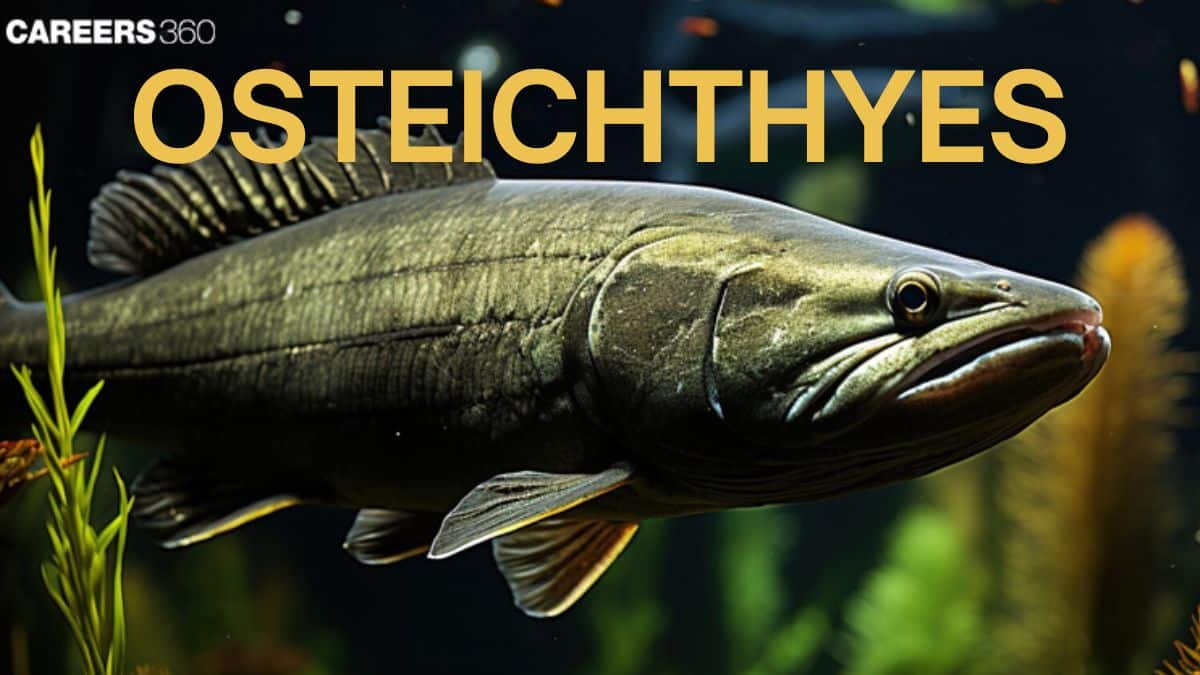
Osteichthyes live in both marine and freshwater habitats. These bony fishes are an ecologically important class of vertebrates and have a vast distribution across the globe. Learn about Osteichthyes (bony fishes)—the largest and most diverse vertebrate class with over 30,000 species in the Animal Kingdom. Includes classification, features, morphology, anatomy, life cycle, examples, and conservation notes. NEET-ready notes, diagrams, and MCQs for Class 11–12 biology.
Osteichthyes or bony fishes are a major class of vertebrates within the division Gnathostomata. Gnathostomata includes all vertebrates possessing jaws, making Osteichthyes (bony fishes) distinct from jawless fishes (Agnatha) and cartilaginous fishes (Chondrichthyes). They are classified under vertebrata, having a notochord only in the embryonic stage, and later replaced by a vertebral column in adults.
Law Admissions 2026 Open | Avail Merit-Based Scholarships
BBA/MBA/PGDM Early Bird Applications Deadline 06th Nov'26. Apply now using coupon code CAREER250 and get ₹250 off the application fee
| Taxonomic Rank | Taxon Name |
|---|---|
Kingdom | |
Phylum | |
Subphylum | |
Division | Gnathostomata (jawed vertebrates) |
Superclass | Pisces |
Class | Osteichthyes (bony fishes) |
This class is further divided into two major subclasses:
Actinopterygii are the largest subclass of Osteichthyes, containing modern bony fishes. They have fins supported by long, thin, bony rays. Their gills are covered by an operculum. Examples include Carassius auratus (goldfish), Catla, Rohu, and Hilsa
Sarcopterygii are a small subclass with paired fins that are fleshy and lobed. These fins are considered ancestral to the limbs of amphibians. They have a bony skeleton, cosmoid scales, and internal nostrils. Examples include Latimeria (Coelacanth) and lungfishes like Neoceratodus (Australian lungfish).
Osteichthyes or bony fishes are defined by a skeleton made of bone, unlike cartilaginous fish, which have cartilage-based skeletons. The bony skeleton provides strength, rigidity, and protection. All types of fish, as well as recent tetrapods, are of common ancestry and thus display the typical vertebrate body plan.
| Characteristic Features | Description |
|---|---|
Bony Skeleton | The skeleton is composed of bone, providing structural support and rigidity. |
Paired Fins | They possess paired pectoral and pelvic fins, helping in balanced swimming |
Cycloid/Ctenoid Scales | Most have scales on their skin, giving protection and reducing water resistance. |
Gills covered by Operculum | The gills are located in gill chambers and are protected by a bony plate called the operculum. |
Swim Bladder | It is an internal gas-filled organ that helps in buoyancy control |
Osteichthyes or bony fishes show diverse morphology and anatomy. Their body forms vary from streamlined shapes in fast swimmers to flattened shapes in bottom dwellers.
The body shape of Osteichthyes ranges from streamlined forms in fast swimmers to flattened shapes in bottom dwellers. Different types of scales, ctenoid and cycloid, protect and reduce friction against the passage of water.
Their fins - all dorsal, pectoral, pelvic, ventral, and caudal - are each specialised to help the fish stay balanced, turn, and move forward.
The endoskeleton of osteichthyes is made mostly of bone, used for the protection and structural support of internal organs. This also features specialised muscles that enable efficient swimming, whether in red muscle used for sustained swimming or white muscle that provides the burst movements.
It has a mouth, oesophagus, stomach, and intestine in the digestive system for digestion.
The organism respires through the removal of oxygen from water using gills and gives out carbon dioxide, which is the byproduct formed during cellular respiration.
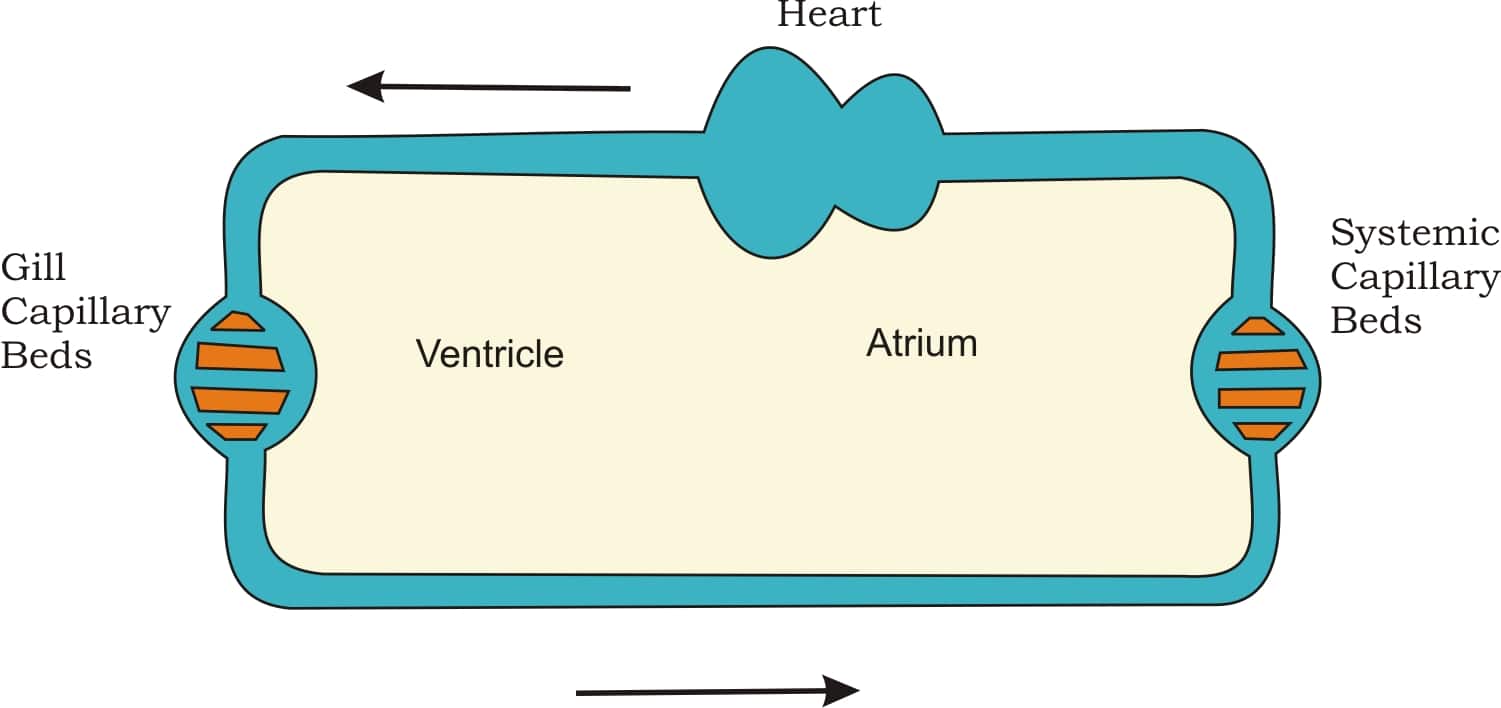
The circulatory system is a closed-loop system with a two-chambered heart (one atrium and one ventricle) that ensures the proper functioning of body processes by delivering oxygenated blood throughout the body.
The bony fishes have a simple life cycle. They grow from eggs (oviparous) into young fish and then into adults. Most Osteichthyes lay eggs in water, and the baby fish look like small adults.
Actinopterygii (ray-finned bony fishes) often practice external fertilisation, where eggs and sperm are released into water.
Sarcopterygii (lobe-finned bony fishes) generally exhibit internal fertilisation, with the transfer of sperm directly into the female's body.
Osteichthyes eggs are laid in water. Eggs have protective coatings to prevent desiccation. Most species show direct development, and hatchlings look like tiny adults. There is no true metamorphosis that occurs in bony fishes.
Osteichthyes live in marine as well as freshwater habitats. Some of them live in aquariums. Examples of bony fishes in different habitats are:
Exocoetus (Flying Fish): It is known for its ability to glide above the water's surface.
Hippocampus (Seahorse): These are unique for their upright posture and unique reproductive behaviour.
Labeo rohita (Rohu): A popular fish in South Asian aquaculture.
Catla catla: A large freshwater fish native to the Indian subcontinent.
Clarias batrachus (Magur): A species of catfish found in freshwater habitats.
Betta splendens (Fighting Fish): These are known for their vibrant colours and territorial behaviour.
Pterophyllum scalare (Angelfish): They are recognised for their graceful swimming and distinctive body shape.
Osteichthyes or bony fishes are under great threat from overfishing, habitat destruction, and pollution. All these factors contribute to the decline in fish populations and loss of biodiversity in aquatic ecosystems. These pressures disrupt the ecological balance that impacts not only fish species but also the larger environments in which they live.
To protect them, various conservation efforts have been made. For example, fishing quotas, marine reserves, and other sustainable ways of catching fish. In the same way, habitat restorations render damaged ecosystems safe again. These actions aim to conserve fish populations and protect their habitats for the future.
Q1. Which is not the feature of Osteicthyes ?
Swim bladder present
Gill slits show presence of Operculum
Placoid scales are present
Endoskeleton is made up of Bone
Correct answer: 3) Placoid scales are present
Explanation:
Osteichthyes are a class of fish characterized by having an endoskeleton made of bone rather than cartilage, as seen in cartilaginous fish (Chondrichthyes). Osteichthyes include a wide variety of species, with two major groups: ray-finned fish (Actinopterygii) and lobe-finned fish (Sarcopterygii). Examples of Osteichthyes include species like the hippocampus (seahorse) and the betta (betta fish). These fish possess a bony skeleton, and a swim bladder for buoyancy, and are found in diverse aquatic environments around the world.
Hence the correct answer is option 3) Placoid scales are present.
Q2. Osteichthyes are cold blooded , that is they are
Homiotherms
Poikilotherms
Heat escape from body and then remain cold
They live in water
Correct answer: 3) Poikilotherms
Explanation:
Osteichthyes, usually called bony fish, are cold-blooded or poikilothermic animals. Their body temperature, therefore, depends on environmental conditions rather than physiological processes. Metabolic rates and activity levels vary according to water temperatures in such organisms. This makes them perfect for all kinds of aquatic habitats, but they are also sensitive to temperature changes, which affect their survival and distribution in several ecosystems.
Hence the correct answer is Option 2) Poikilotherms.
Q3. Which of the following animals has a two-chambered heart?
Labeo rohita
Salamander
Chelone
All of these
Correct answer: 1) Labeo rohita
Explanation:
Salamander and Chelone (commonly called Lizard) belong to the group Amphibia and Reptiles, which shows 3 chambered hearts (two auricles and one ventricle).
Labeo rohita is a true fish and fishes have a two-chambered heart.
Hence, the correct answer is option 1) Labeo rohita.
Also Read:
Frequently Asked Questions (FAQs)
Class Osteichthyes (bony fishes) examples include Rohu, Catla, Salmon, Tuna, Trout, Goldfish, Sturgeon, Lungfish, and Coelacanth.
Yes, air bladder is present in Osteichthyes (bony fishes). It helps in buoyancy regulation and sometimes in respiration, making fishes like Rohu, Catla, and Goldfish efficient swimmers.
Osteichthyes live in a wide variety of aquatic habitats, including marine and freshwater environments.


Law Admissions 2026 Open | Avail Merit-Based Scholarships
BBA/MBA/PGDM Early Bird Applications Deadline 06th Nov'26. Apply now using coupon code CAREER250 and get ₹250 off the application fee
Ranked #36 amongst institutions in Management by NIRF | 100% Placement
Globally Recognized by AACSB (US) & AMBA (UK) | 18 LPA Avg. CTC for PGPM 2026
NEET PG All India & State College Predictor with Admission Process Guide
Top B-School: Ranked #9 in NIRF Management Rankings 2025.