


Abiotic Agents Of Pollination: Meaning, Types, Advantages, Examples
Abiotic pollination is the transfer of pollen through non-living agents such as wind (anemophily) and water (hydrophily). Plants relying on abiotic pollination evolve distinct adaptations including lightweight pollen, reduced petals, and specialized reproductive structures. This guide covers mechanisms of anemophily & hydrophily, adaptations, examples, ecological importance, diagrams, FAQs, and NEET MCQs.
This Story also Contains
- What Is Pollination?
- What Are Abiotic Agents Of Pollination?
- Characteristics Of Abiotic Pollination
- Types Of Abiotic Pollination
- Importance Of Abiotic Pollination
- Abiotic Agents of Pollination NEET MCQs (With Answers & Explanations)
- Recommended video on Abiotic Agents Of Pollination
What Is Pollination?
Pollination may occur through various agents, including abiotic factors such as wind and water. These abiotic agents play a significant role in facilitating the transfer of pollen in many plant species. Understanding the mechanisms of abiotic pollination allows for an appreciation of plant reproductive strategies.
What Are Abiotic Agents Of Pollination?
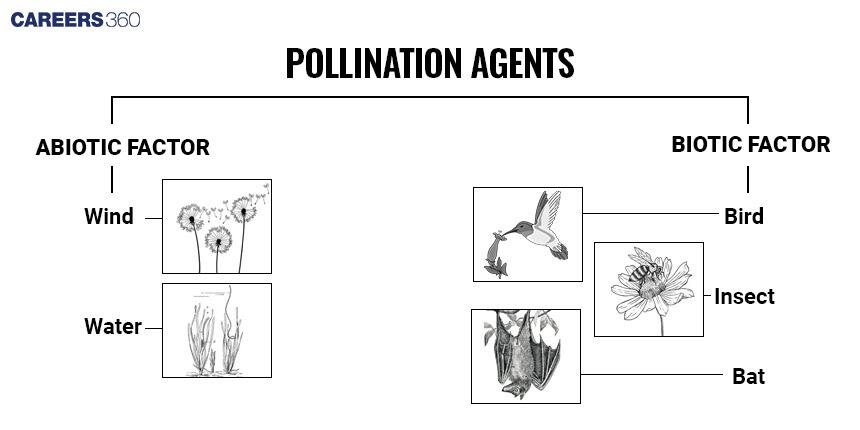
Abiotic agents of pollination are the non-living causes for the transfer of pollen from the male reproductive structures to the female reproductive structures in plants. Wind and water are the two major abiotic agents of pollination.
Characteristics Of Abiotic Pollination
Abiotic pollination uses non-living agents like wind or water and does not require insects or animals for pollen transfer.
Feature | Description |
Pollination agent | Non-living factors such as wind or water |
Small flowers without bright colours or fragrance | |
Pollen | Large quantities of light and non-sticky pollen |
Stigma adaptation | Large, feathery or sticky stigma to trap pollen. |
Dependence on climate | Influenced by humidity, wind speed and water currents |
Energy investment | Low energy spent on attracting pollinators since no animals are involved |
Types Of Abiotic Pollination
There are two major types of abiotic pollination:
Anemophily (Wind Pollination)
Anemophily is the process of pollination in which the pollen is dispersed by wind. It is a common mechanism in many plants and mostly occurs in grasses and trees.
Features Of Anemophilous Flowers
Light Weight Pollen: Plants pollinated by wind produce a high amount of light-weight pollen grains.
Flower Structure: Flowers of wind-pollinated plants are usually small, inconspicuous, and without showy petals because they do not rely on visual attraction to their pollinators.
Examples
Grasses, pine trees, and dandelions are perhaps the most common examples of wind-pollinated plants.
Hydrophily (Water Pollination)
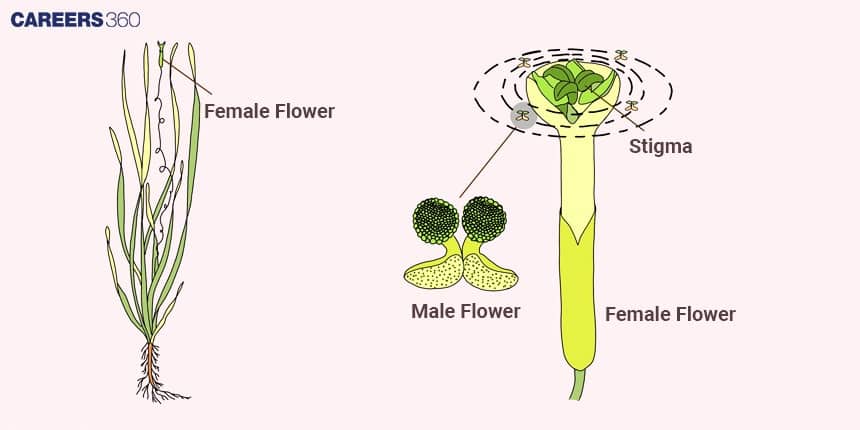
Hydrophily is a relatively rare mode of pollination occurring in aquatic plants, in which pollen is transported using water currents.
Characteristics of Hydrophilous Flowers
Pollen Adaptation: The pollen grains of water pollinated plants are mainly adapted to float on water. They may be carried on the surface of water to the stigma of another flower.
Aquatic Environment: This pollination process takes place in some aquatic plants. The water here becomes the medium for pollen transfer.
Examples
Examples of plants that involve hydrophily are some species of pondweeds and water lilies.
Importance Of Abiotic Pollination
Importance of abiotic pollination are:
Enhances Genetic Diversity
Abiotic pollination, more specifically anemophily, cross-pollinates different plant populations, thereby increasing genetic diversity.
Adaptation to Environments Without Pollinators
Plants adapted to abiotic pollination generally thrive in conditions where there is a lack of biotic pollinators.
Ecosystem Stability
The ability of plant to reproduce abiotically adds to ecosystem stability and resilience.
Abiotic Agents of Pollination NEET MCQs (With Answers & Explanations)
Important questions asked in NEET from this topic are:
Characteristics of abiotic pollination
Types of abiotic pollination
Practice Questions for NEET
Q1. Which of the following have sticky stigmas?
Vallisneria
Hydrilla
Zostera
All of the above
Correct answer: 4) All of the above
Explanation:
The stigma is the sticky top portion of the pistil that traps and holds pollen. The flower is responsible for sexual reproduction in flowering plants. The essential floral parts are the male stamens and the female pistil. Vallisneria, Hydrilla, and Zostera have lengthy and sticky stigmas.
Hence, the correct answer is option 2) Entonomophily.
Q2. The pedicel of the female flower coils after pollination in
Viola
Centaurea
Silence
Vallisneria
Correct answer: 4) Vallisneria
Explanation:
Vallisneria is a genus of aquatic plants commonly known as eelgrass or tape grass. It is dioecious, meaning that male and female flowers are produced on separate plants. In the case of Vallisneria, the female flowers are typically found on long stalks called pedicels, which emerge from the underwater rosette of leaves.
After pollination occurs in Vallisneria, a fascinating phenomenon takes place. The pedicel of the female flower undergoes coiling or spiraling. This coiling action is an adaptive mechanism that aids in the dispersion of the fertilized seeds, or achenes, produced by the plant.
The coiling of the pedicel causes the fertilized flower to detach from the parent plant and float upwards toward the water's surface. This process helps to facilitate the dispersal of the seeds, allowing them to reach new areas where they can establish new plants.
The coiled pedicel acts like a spring, storing potential energy as it coils tightly. Eventually, when the tension in the pedicel becomes too great, it snaps, releasing the seeds into the water. The buoyancy of the seeds, combined with water currents, helps to carry them away from the parent plant and increases the chances of successful colonization in different areas. This coiling and subsequent seed dispersal mechanism in Vallisneria is an example of an evolutionary adaptation that enhances the plant's reproductive success in aquatic environments.
Hence, the correct answer is option 4) Vallisneria.
Q3. Plants with ovaries having only one or a few ovules, are generally pollinated by:
Butterflies
Birds
Wind
Bees
Correct answer: 3) Wind
Explanation:
The wind is mostly responsible for pollinating plants with a single or small number of ovules in their ovaries. These plants typically have simple or tiny flowers and do not need to use nectar, colors, or fragrances to draw in animals. Rather, their pollen is light and wind-transportable. Conifers and a variety of grasses are examples of such plants. Because these plants only need a small amount of pollen to fertilize their few ovules, wind pollination works effectively for them.
Hence, the correct answer is option 3) Wind.
Also Read:
Recommended video on Abiotic Agents Of Pollination
Frequently Asked Questions (FAQs)
Abiotic agents of pollination are nonliving factors that help in pollination in plants, such as wind and water.
Anemophily refers to the process of pollination by wind.
In hydrophily, the type of pollination occurring in aqua plants, pollen is transferred by water currents.
Abiotic pollination allows genetic diversity, adjustment to environmental surroundings, and stability of ecosystems.
No, not all plants are capable of abiotic pollination. Many plants need biotic agents like insects and birds as vectors for effective pollination.
