KCC Institute of Legal and Higher Education, Greater Noida
Law Admissions 2026 Open | Avail Merit-Based Scholarships


Recombinant DNA technology is one of the key foundations of modern biotechnology and has utterly transformed medicine, agriculture, and industrial processes. It is the technology of joining DNA molecules from two species to yield a recombinant with a useful scientific investigation or practical application.
This Story also Contains
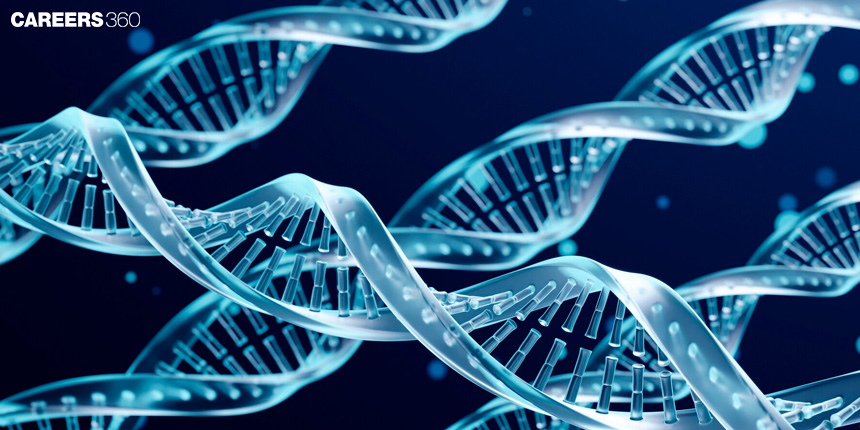
Recombinant DNA technology is the set of methods used for joining together DNA segments from two or more different sources. Recombinant DNA molecules are inserted into an organism to produce new genetic combinations that lead to practical applications in medicine, agriculture, and biotechnology.
The technology of recombinant DNA was founded in the 1970s by efforts through the laboratories of such pioneers as Paul Berg, Herbert Boyer, and Stanley Cohen. These seminal experiments proved that DNA from different sources can be spliced together and replicated in bacterial cells, a key basic principle of genetic engineering.
Recombinant DNA technology is very important in several scientific and industrial sectors. It allows for the production of valuable pharmaceuticals, the development of genetically modified organisms for better agriculture, and enzymes for industrial processes. Equally important is its ability to help push medical research and treatment in new directions.
Law Admissions 2026 Open | Avail Merit-Based Scholarships
BBA/MBA/PGDM Early Bird Applications Deadline 06th Nov'26. Apply now using coupon code CAREER250 and get ₹250 off the application fee
Recombinant DNA technology is the general technique used to cut, join, and clone DNA fragments into host organisms. To alter the DNA of an organism by putting new genetic material into its cell, the source of this new genetic material has to be recombined DNA from two different sources, and then the recombinant DNA is put into the recipient host cell to reproduce and express.
The normal steps involved in recombinant DNA technology include isolation of genetic material, restriction enzyme digestion, amplification of the gene of interest, ligation into the vector, transformation or transfection to the recipient, and expression of the recombinant gene. All these steps involve very specific tools and techniques to realize a particular genetically modified state.
Table: Key Tools and Their Functions in Recombinant DNA Technology
Tool | Functions | Example |
Restriction Enzymes | Cut DNA at specific sequences | EcoRI, HindIII |
DNA Ligase | Joins DNA fragments together | T4 DNA Ligase |
Vectors | Carry foreign DNA into host cells | Plasmids (pBR322), Bacteriophages |
Host Cells | Replicate and express recombinant DNA | E. coli, Yeast |
Polymerase Chain Reaction (PCR) | Amplifies DNA fragments | Taq Polymerase |
Restriction enzymes are molecular scissors, cleaving DNA at specific sequences known as restriction sites. Different enzymes recognize and cut specific sequences, facilitating the precise manipulation of DNA.
An enzyme that joins DNA fragments through the formation of covalent bonds between them is DNA ligase. This enzyme is needed to seal the gaps that result from the insertion of a gene into vector DNA, to give a continuous DNA molecule.
Vectors are DNA molecules responsible for transporting foreign genetic material into a host cell. Common vectors are plasmids, bacteriophages, cosmids, bacterial artificial chromosomes, and yeast artificial chromosomes. Every single one of the above-mentioned vectors finds application based on its unique features.
Host cells are the organisms into which recombinant DNA is introduced. Common hosts include bacteria, yeast, and mammalian cells, which offer a variety of advantages for the manipulation and expression of genes in these systems.
The steps for Recombinant DNA Technology are mentioned below:
Sources of DNA: It is possible to isolate genetic material from sources such as genomic DNA, cDNA, and synthetic DNA.
Methods of Extraction: The most common are cell lysis followed by membrane disruption and DNA purification, both by chemical reagents and kits specifically designed for a high yield and purity.
These restriction enzymes cut the DNA at particular positions where the DNA sequences are recognized, thereby generating DNA fragments that could be manipulated for cloning.
There are numerous such enzymes with diverse specificities towards DNA sequence recognition and cleavage. Among these are EcoRI and HindIII.
PCR is a laboratory process that amplifies selected segments of DNA to make several million copies of a particular fragment of DNA.
PCR is a process during which repeated cycles of denaturation, which is the separation of DNA strands, take place; annealing, the binding of primers to the DNA, and extension: synthesizing new DNA strands.
Examples of vectors that are included in recombinant DNA technology are plasmid, bacteriophage, cosmid, BAC, YAC, and the qualities and uses of each.
A ligation is the process of attaching the amplified gene to a vector with the help of DNA ligase.
Some methods of introduction are as follows:
Some methods that are used to introduce recombinant DNA into host cells include transformation; in bacteria, it is transfection; in eukaryotic cells and electroporation.
The next step is to examine transformed cells to ensure the host's uptake of recombinant DNA with the help of selectable markers and reporter genes.
The host cell expresses the recombinant gene resulting in the production of a protein or gene product of the desired type.
Extraction and purification of proteins are carried out with the help of various biochemical techniques in the host cells.
Human insulin, growth hormones, and vaccines have been created using recombinant DNA technology in medical science which has become a blessing for human beings suffering from diseases.
Genetically engineered crops that are modified for good traits in recombinant DNA technology include pest resistance, increased yield, enhanced nutrition, etc.
Enzymes for industrial processes are produced using recombinant DNA technology and bio-fuels from renewable resources.
Bioremediation is also accomplished with the help of recombinant DNA technology by using genetically modified organisms to clean up environmental pollutants and waste.
DNA cloning is the production of the identical copies of a DNA fragment. The process is composed of three steps: isolation of a fragment of DNA, insertion of the isolated DNA fragment into the vector, and introduction of the vector into the host cell.
Other vectors in common use are plasmids, bacteriophages, cosmids, bacterial artificial chromosomes (BACs), and yeast artificial chromosomes (YACs).
The DNA cloning technique is applied in the study of genes, used in medicine for the production of therapeutic proteins, and applied in agriculture for developing genetically modified crops.
Future trends are advances in personalized medicine, gene therapy, and the development of novel biotechnological applications.
Recombinant DNA technology has had an amazing impact on science and society. Its applications in medicine, agriculture, and industry have meant an upsurge in the relevance of these fields and promise further innovations. With technology growing rapidly, it is bound to bring discoveries and advancements that will shape the future of biotechnology.
Frequently Asked Questions (FAQs)
Recombinant DNA technology is a set of techniques used to manipulate and combine DNA from different sources to create new genetic combinations. It involves isolating, modifying, and transferring DNA sequences between organisms, allowing scientists to create novel genetic combinations not found in nature.
Applications include insulin production, GM crop development, enzyme production, and bioremediation.
DNA cloning is the process of making numerous, identical copies of a DNA segment for various research, medical, and biotechnological uses.
Among the ethical considerations are impacts on health and the environment, genetic material patenting, and misuse of the technology.
The steps are isolation of DNA, cutting of DNA using restriction enzymes, amplification with PCR, insertion into vectors, transformation into host cells, and obtaining the gene product.

Law Admissions 2026 Open | Avail Merit-Based Scholarships
BBA/MBA/PGDM Early Bird Applications Deadline 06th Nov'26. Apply now using coupon code CAREER250 and get ₹250 off the application fee
Ranked #36 amongst institutions in Management by NIRF | 100% Placement
Globally Recognized by AACSB (US) & AMBA (UK) | 18 LPA Avg. CTC for PGPM 2026
NEET PG All India & State College Predictor with Admission Process Guide
Top B-School: Ranked #9 in NIRF Management Rankings 2025.