


Shubhra aced the civil services exam
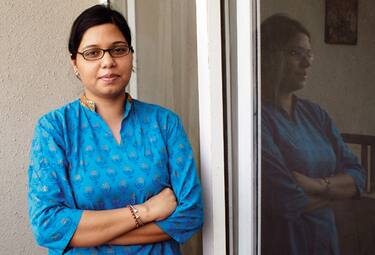
Shubhra Saxena worked in an IT company, got married and efficiently managed a home. All this, till she could not bear the nagging dissatisfaction of the corporate world.
It was then that she decided to resign from her job, bought a mountain of books and began cramming for the civil services examination.
Of course, this was not without her husband doubting if she could manage. But she proved him and several others wrong, when she topped the examination this year.
Q. How difficult was it to let go of a well-paying job and sit and study for over a year?
A. It was not easy. I was earning well and working in the IT industry for about six years. My lifestyle changed when I stopped working, but I was motivated to see this through.
In fact, when I started in the IT industry, I was convinced that it was a great career. But after a while, I realised that it was just a job and that I was not contributing to the society. The sense of dissatisfaction began to grow. It was difficult to convince my family that I could do it.
Q. Does the quality of the time spent studying matter more than the quantity? Did you have daily targets to meet?
A. Sure. I had very little time for the exam, so I did not have the luxury of time. Most people take about one to two years for the exam. I had to be very clear and focused. In all, it took me fourteen months to clear the exam.
Q. You were clear that you were writing this exam for 'social good'. How do you intend to put this into practice?
A. Yes, I do. I have certain priority areas: rural development, SC/ST, women and children. I grew up in Jharkhand and am aware of the impact of rural backwardness. Jharkhand is rich in minerals and forest areas, and still is backward. So yes, that affected me. It has been stagnant for 30 years. Bringing about change in such places is imperative.
Q. What were your optional subjects for the exam? How did you choose your subjects?
A. I picked Public administration because I thought I should know the basics of administration. And psychology, because I had very little time. I attended Mr Mukul Pathaks' excellent classes at the coaching centre in Vajiram and completed the syllabus in three months. Psychology is suited for my interests and attitude.
Q. Do you think your work experience helped in facing the board?
A. It did. The fact that I had professional experience may have had an impact on the board. Working instilled in me greater time management skills. I was used to deadlines and managing with less time and resources.
Q. How are you dealing with the euphoria of success? How are you coping with the attention from the press?
A. I am superstitious. Last year, when I was waiting for the results, I was with friends and family. I did not clear the exam. So this year, I told everyone I wished to be alone and I cleared! I did not expect to top though! It was only when I scrolled up that I saw my name in the number one position.
Shubhra's recommended reading for General Studies
a) History: Struggle for Independent India, Spectrum Modern Indian History - Bipan Chandra
b) Economics: Dutt and Sundaram, EPW, NCERT, Penguin Dictionary of Economics
c) For International Issues: World Focus
d) Polity: D D Basu
e) General reading: Yojna, Frontline, Hindu and TOI
General Guidelines
i) For the Prelims: Do not study exclusively for the prelims. Study in depth. Grasp concepts. Recent trends in Prelims are more conceptual than factual. Allot at least three months for prelim exam preparation. Make synoptic notes.
ii) For the Mains: Synoptic notes again. Practise writing answers. Enroll in a test series centre. Focus on the word and time limit. Work on your handwriting - don't scribble. Cover the entire syllabus first and then make a list of key issues after going through previous question papers.
iii) For the Interview: Be yourself and be natural. Be updated about the world and India. Do not lie in your bio-data because the interview board will sniff a liar in a minute
