


Who is a Carpenter?
 Every moment I shape my destiny with a chisel - I am the carpenter of my own soul~Rumi

A carpenter is a skilled professional who shapes wood and other materials to create structures and furniture. From custom kitchens and detailed wood panelling to building frameworks, carpenters bring designs to life using a variety of tools. Carpenters do not just work with wood—they often use metal, glass, and other materials too. They also collaborate closely with clients, suppliers, and construction teams to complete projects like buildings, bridges, and even ships.
If you enjoy working with your hands and creating lasting structures, a career in carpentry could be your perfect fit.
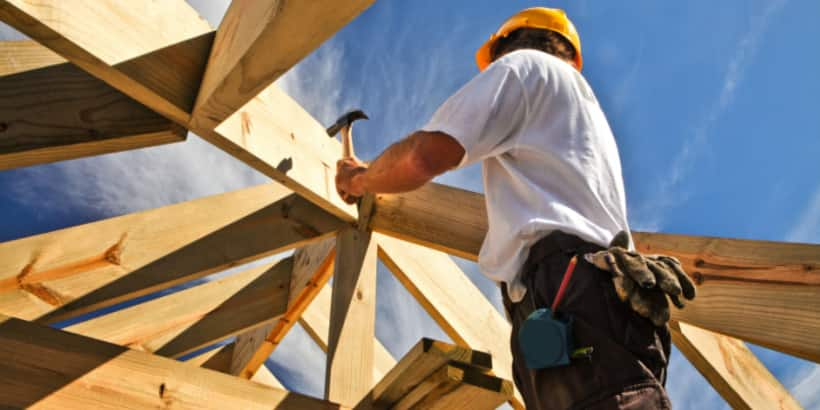
Carpenter in a Nutshell
A carpenter is a skilled tradesperson who builds, installs, and repairs wooden structures like frameworks, doors, and furniture. They use hand and power tools, read blueprints, and ensure safety compliance. Key skills include precision, math, and problem-solving. Career opportunities exist in construction, with potential growth into supervisory or specialised roles like cabinetmaking.
Quick Facts for Carpenter
Industry
ConstructionAny Special Needs
NoSuitable for
Male, Female, OthersSuitable for - Male, Female, Others
Men are likely to dominate in this career. The career as a carpenter demands sharpening and cutting skills along with a strong grip. A woman can also take up the role after acquiring a certain set of skills.
Any Special Needs - No
A career as a carpenter is not suitable for candidates with special needs. It demands constant movement and an eye for detail. A candidate with special needs cannot perform well in this career as a carpenter and may often get hurt due to special needs.
Table of Contents
Carpenter
- What is the role of Carpenter?
- Types of a Carpenter
- What is the workplace/work environment of Carpenter like?
- How to become a Carpenter?
- What are the skills and qualities required to become a/an Carpenter?
- Which certifications and internships can be helpful in becoming Carpenter?
- What is the job outlook for Carpenter?
What is the role of Carpenter?
A carpenter is responsible for constructing furniture from wood and other materials. An individual in the carpenter career path may erect, install and repair fixtures and other structures. A carpenter cut fits and joins various materials. Those who work for a contractor may only prepare moulds of concrete or build a frame.
A carpenter may put in doors, and windows, hang kitchen cabinets and install tile ceilings. Before construction or preparation, he or she has to plan and provide the design ideas to clients or consider their suggestions. A carpenter studies the blueprints and sketches and executes the measuring activities. He or she lays out flooring and roofing.
A carpenter's first and most essential step before constructing any piece of furniture or fixture is designing. He or she is required to measure, mark and arrange materials to bring it to a perfect cut and shape.
He or she uses various equipment such as chisels, saws and drills to construct the desired object. He or she joins the items by nailing, applying glue or stapling it.
A carpenter provides support to interior designers or clients in renovation work. It includes replacing old furniture including glass, ceiling tiles, doors, old frames and other things.
He or she changes locks and repairs broken furniture. He or she may also provide support in installing the machinery.
Types of a Carpenter
There are several types of carpenters depending on their everyday responsibilities and specialisations. In this section we have described some of the major types of carpenters.
Journeyman Carpenter: A journeyman carpenter is a professional carpenter responsible for repairing foundations and structures. He or she builds framing, staircases, cabinets, doors, exterior sidings, hanging drywall and installing carpet, wood flooring and laying tiles.
Rough Carpenter: A rough carpenter is responsible for construction, repair and other maintenance work. He or she uses materials such as nails, bolts and steel cables for joining or holding wooden structures in place. A rough carpenter may build and assemble temporary equipment such as scaffolds, roof supports and frameworks.
Finish Carpenter: A finish carpenter is responsible for the complete finishing of the structure after it is built, insulated, plumbed and wired. He or she performs several tasks before or other tasks after the homeowner moves into the home.
What is the workplace/work environment of Carpenter like?
A carpenter may work in indoor as well as outdoor locations. He or she may build highways and bridges also. Indoor projects include the construction, repair and installation of doors, windows, kitchen cabinets and other items.
Individuals in the carpenter career path are required to stand for long hours climbing, kneeling or bending. There is a constant risk of getting hurt by falling or slipping while working with sharp and rough tools.
Travel Dependency - Likely
A carpenter travels work often requires travelling to arrange the material for construction such as wood, glue, nails, saws and numerous other equipment. Depending on the location of the project he or she is assigned the carpenter may require to travel regularly to reach the construction site.
Employment Shifts - Full Time, Part Time
Individuals in the carpenter career path usually work on a full-time basis. Most carpenters are self-employed, they take up little assignments or sometimes major projects from clients and after finishing it they get back to their usual self-employed role and wait for other clients to reach out to them.
Employment Nature - Contractual, Permanent
Carpenters usually work on a contractual basis. They take up a project and finish it and then bid for the next. Several carpenters may get employed by bigger construction firms furniture studios, and stores permanently.
Work Place - Workshop
The workplace of a carpenter may vary depending on the requirements of the clients. For big projects, he or she usually works at the client location to construct, replace, repair and install the items that enhance the interior of the space such as doors, windows, closets, kitchen cabinets and other items. For outdoor projects, he may construct bridges and highways.
Geographical Area - Rural, Semi-urban, Urban
Most furniture studios and construction firms are located in Urban and Semi-Urban areas. New Delhi provides flourishing opportunities to carpenters.
Time Pressure - Likely
Yes, a carpenter career usually involves working under frequent time pressure to meet deadlines. Individuals in the carpenter career path who are self-employed can take up new projects after finishing the prior ones, therefore they are under frequent time pressure.
Overtime
A carpenter is required to work overtime to meet the deadlines given by the employer or client. On several occasions, he or she may be required to work extended hours to fulfil the promise he or she made to the client to deliver the item with the finishing as early as possible.
Work Hours - 35
The work hours may vary depending on the functioning of the organisation or clients they are working for. A carpenter usually works seven hours a day. Carpenter works in daylight as their work demands eye-to-detail and hand-eye coordination.
How to become a Carpenter?
A Carpenter is a professional who constructs, installs and repairs various structures and fixtures of wood, steel and concrete. If you are passionate about learning this skill then a career as a Carpenter is the best profession for you. If you are willing to learn this trade and looking for the details on how to become a Carpenter in India then we have provided below step-by-step guidance.
As we know, working as a carpenter requires practical skills. To become a Carpenter you must possess some of the skills. In this section, we have provided Carpenter skills, including soft and hard skills.
Soft Skills
Communication Skills
Attention to Detail
Negotiation Skills
Time Management Skills
Organisational Skills
Problem-Solving Skills
Critical Thinking
Hard Skills
Blueprint Drafting and Drawing
Power Tools and Computer Skills
Math Skills and Customer Service
Physical Strength and Dexterity
Correct Mapping and Measurements
Cutting Straight Pieces
Furnishing and Finishing
Knowledge of Angles and Joinery
What are the skills and qualities required to become a/an Carpenter?
There are several requirements to become a carpenter. Possessing a specific skill set to perform everyday tasks is a major requirement for this career. We have provided below a description of carpenter skills that may help you to understand the carpenter's role in society. Here, in this article, we will discuss how to become a carpenter in India.
Hand-Eye Coordination: Hand-eye coordination is crucial for the role of a carpenter. Individuals in the carpenter career path are required to cut, mark, join, remove, repair, and construct furniture and other items carefully using hand-eye coordination.
Designing Skills: Before taking on any construction or repairing work, the first thing a carpenter is required to do is determine the design as per the client’s suggestions, take the measurements of the material and mark it to further construct the item to give it finishing.
Mathematical Skills: Individuals must be able to do hands-on calculations and measure the material accurately concerning the dimensions of the desired product. Mathematical skills are essential to take up the role of a carpenter. A little mistake in the calculation may negatively affect the entire measurement of the product.
Which certifications and internships can be helpful in becoming Carpenter?
Internship Availability - No
What is the job outlook for Carpenter?
The carpenter career path is based on an unorganised sector. India is a rapidly developing country with constantly ongoing construction projects. Furnishing activities are never at rest. Whether it is festivals, events, weddings or the setup of the new office, everyone wants to refurbish their place to enhance its looks and add more functionality.
It seems an impossible task without the contribution of the carpenter in it. A career as a carpenter demands high skills. The pay is expected to be constant in the carpenter job for the next ten years without any further increase or growth. It is primarily a more skills oriented job and hence one must gain experience to be proficient in this career.
Frequently Asked Questions for Carpenter
CarpenterTo become a carpenter with no experience, you are required to have a high school diploma or a certification course. You can start an apprenticeship, take training with a senior professional or pursue a certification course and then apply for the carpenter jobs.
The average salary of a carpenter in India is Rs. 300,770 per annum, according to payscale.com.
The average ITI course fee in India ranges from Rs. 5000 to Rs. 50,000 per annum.
The duration of the ITI course ranges from one year to two years.
Candidates must have passed class 8 and he or she must not be less than 14 years of age.
The top ITI colleges in India are Government Industrial Training Institute, Jawhar, Aryabhatta ITC, Malwa Industrial Training Centre, Baba Kharak Singh Baba Darshan Singh ITI, Charutar Vidya Mandal SM Patel College Of Home Science, and Government ITI Patiala.
You might also be interested in
Questions related to Carpenter
On Question asked by student community
Correct Answer: who
Solution : The correct choice will be the first option.
The sentence structure suggests that the missing word should introduce additional information about Joachim Martin, specifying his role in the context. Who is the correct option in this case, as it is a relative pronoun used to
Correct Answer: Fisherman : Net
Solution : Given:
Carpenter : Hammer (This depicts the relation between the person/professional and the tool used by them.)
First option: Fisherman : Net; A net is a tool that is used by fishermen.
Second option: Butcher : Meat; Butchers sell meat but meat is
Correct Answer: Only conclusions II and III follow
Solution : The possible Venn diagram according to the given statements is as follows –

Let's analyse the conclusions –
Conclusion (I): No doctor is a carpenter – From the given Venn diagram, there is no negative relation between a doctor and
Correct Answer: Surgeon : Forceps
Solution :
Given:
Blacksmith : Hammer :: ? : ? (This depicts the relation between the professional and the tools used by him in his profession.)
Let's check the options –
First option: Cloth : Tailor; Cloth is not a tool used by a tailor.
Correct Answer: life
Solution : The correct choice will be the third option.
In this context, the word that fits best is life. The sentence is likely to describe Joachim Martin's daily life, thoughts, emotions, and feelings documented in the diary.
Therefore, the completed sentence would read: "His messages were