KCC Institute of Legal and Higher Education, Greater Noida
Law Admissions 2026 Open | Avail Merit-Based Scholarships


Protozoa are single‑celled organisms found in water, soil, and inside hosts. The definition of protozoa explains their unicellular structure and diverse characteristics. Protozoa classification is based on locomotory organs like pseudopodia, flagella, cilia, and spores. The overview of protozoa highlights their role in ecosystems and human health. Students often study protozoa, meaning, examples, and topics in NEET biology and board exams for quick understanding and exam preparation.
This Story also Contains
The structure of protozoa includes a cell membrane, cytoplasm, nucleus, and organelles. Their growth and development occur through asexual and sexual reproduction. Protozoa examples such as Amoeba, Paramecium, Plasmodium, and Trypanosoma are frequently asked in MCQs. The meaning of protozoa in biology connects to productivity in the ecosystem and biomass. Protozoa characteristics are important for diseases like malaria and amoebiasis. For NEET and board exams, protozoa overview and classification are high-yield topics.
Protozoa are unicellular, eukaryotic organisms that belong to the kingdom Protista. They are microscopic and show diverse structures, classifications, growth, development, and characteristics. Protozoa live in water, soil, and inside hosts, where they may act as free-living organisms or parasites.
Protozoa are a broad class of microorganisms that are of great importance in the biosphere, both on land and in water. These microorganisms possess movement organelles such as cilia, flagella or pseudopodia and have diverse nutritional criteria, and they are predators, parasites or symbiotes. Thus, a further focus on protozoa is essential due to their services as decomposers and primary consumer organisms involved in the nutrient cycling and setting of trophic chains or webs.
Law Admissions 2026 Open | Avail Merit-Based Scholarships
BBA/MBA/PGDM Early Bird Applications Deadline 19th Oct '26. Apply now using coupon code CAREER250 and get ₹250 off the application fee
Furthermore, protozoa are also recognised to be largely pathogenic. They cause diseases such as malaria and giardiasis in humans and are also used as model organisms for studying human health and disease mechanisms in biomedicine. Protozoa include a variety of different parasites with different life cycles and consequent evolutionary characteristics. This makes them interesting objects to ecological and medical researchers now, as well as to evolutionary research.
The structure of Protozoa is simple and highly organised. Each protozoan cell has a plasma membrane, cytoplasm, nucleus, and specialised organelles. These structures help in nutrition, locomotion, reproduction, and survival. Each structure part is listed below-
The first layer to be described is outlined by the cell membrane or plasma membrane, which enshrouds the protozoan cell and acts as a barrier that controls the passage of material to and from the cell.
Cytoplasm occupies the inner space of the cell. It is full of various structures floating in the gel-like substance called cytosol.
They give an anchor to cellular structures and also act as a base for metabolic activities to occur.
One of the main characteristics of protozoa is the presence of a definite nuclear area containing the genetic material of the cell, DNA.
The nucleus controls the cellular action, and it harbours chromosomes, which have a filamentous structure known as chromatin.
Protozoan cells contain specialised organelles that perform specific functions:
Mitochondria:
Structures involved in the oxidative processes and cellular food and energy processing through oxygen.
Endoplasmic Reticulum (ER):
They are involved in protein and lipid synthesis and transportation in the cell organelles.
Retrieves remodels, and packages proteins and lipids for transport or delivery to the other organelles.
Small sacs filled with food, water or waste products that have been transported to their destination.
Contractile Vacuole:
It is identified in some especially freshwater protozoa, it also regulates the balance of water and removes excess water from the cell.
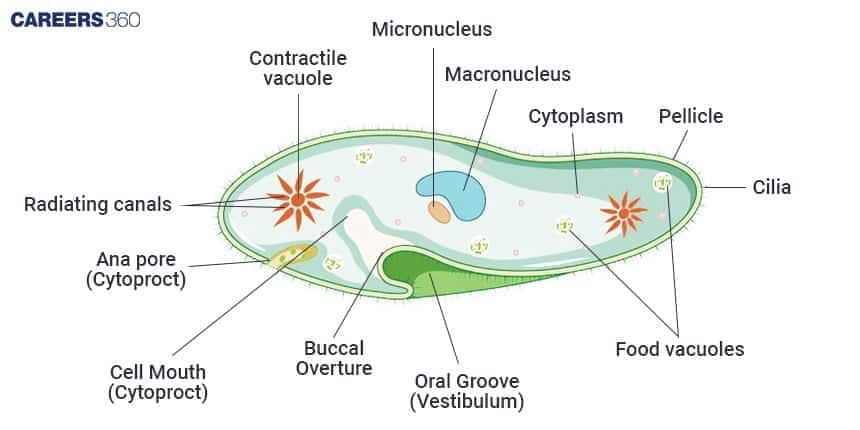
Protozoa are unicellular eukaryotic cell organisms with diverse structures and functions. They show different modes of locomotion, nutrition, and reproduction. Their characteristics explain how they survive in varied environments and cause diseases in humans. The following are the characteristics of Protozoa:-
Protozoa exhibit diverse mechanisms of locomotion, allowing them to move efficiently through various environments:
Amoeba-like protozoa or others moves with the help of pseudopodia, which are protrusions of cytoplasm only.
They use and pull back pseudopodia to move on surfaces and capture their food.
Trypanosoma and Euglena move through one or several whip-like flagella, also called undulating membranes.
Flagella are supplied with the movement in a coordinated way to drive the organism through liquid media.
Some of the protozoa with locomotion organelles include Paramecium and Stentor; they use numerous short processes known as cilia.
Hair-like structures called cilia form in rows, thus making this organism have movement and swim in water through bending.
Plasmodium, which is a malaria parasite; these creatures exhibits locomotion through gliding on structures or mechanisms.
Sailing motion enables organisms to manoeuvre their surroundings well.
Protozoa exhibit various modes of nutrition to obtain energy and nutrients from their environment:
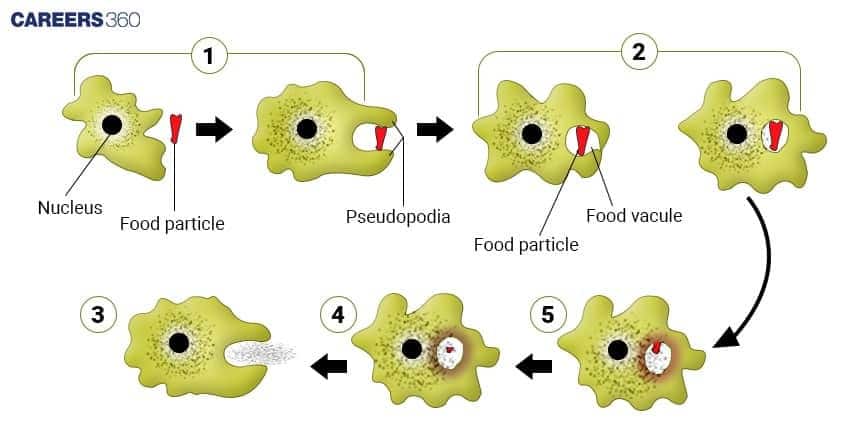
Most protozoa feed holozoically; they, therefore, take in whole food through a process called phagocytosis or phagocytosis.
For example, some single-celled organisms, such as amoebas, namely Amoeba, efficiently engulf their prey or organic material through their pseudopodia.
Saprozoic protozoa are those that feed by surface collection, trapping dissolved organic matter or particulate substances.
Being detritivores, they play an essential role as decomposers and nutrient recyclers in various systems.
Protozoa are single-celled organisms that are parasitic and are found either on or in a host organism, which derives nutrients from the host tissues or body fluids.
Examples include Plasmodium spp. , which results in malaria in humans, are normally conveyed by mosquitoes.
These are nutrition that is the combination of both heterotrophic and autotrophic, which is common with some of the protozoa.
They can make their food, from light when conditions are favourable or they feed on other organic matter or real prey.
Process of phagocytosis illustrated with a diagram:
Protozoa reproduce through both asexual and sexual reproduction mechanisms, adapting their reproductive strategies to environmental conditions and life cycle stages:
Asexual Reproduction
Binary fission: Most of the protozoa undergo a form of asexual reproduction known as binary fission; this is where a parent cell divides directly into two daughter cells.
This process is typical for the movement of amoeboid and flagellated protozoa, which guarantee rapid population growth in a comfortable environment.
Budding: Some protozoa undergo budding, for example, the yeast-like fungi.
From the parent cell, a small shoot or a bud is produced, and just when it comes to independence, it separates itself to form a new being.
Multiple fission: In multiple fission, both the parent and the new cells are produced at the same time.
This process occurs in some parasitic free-living protozoa at the reproductive stage to ensure the production of many offspring.
Sexual Reproduction
Conjugation: The process of sexual reproduction in protozoa entails the exchange of individuals in a species.
In conjugation, two cells or two organisms become united for a while and exchange nucleation material, which increases the variation of the offspring.
Conjugation is found in ciliated protozoa such as Paramecium.
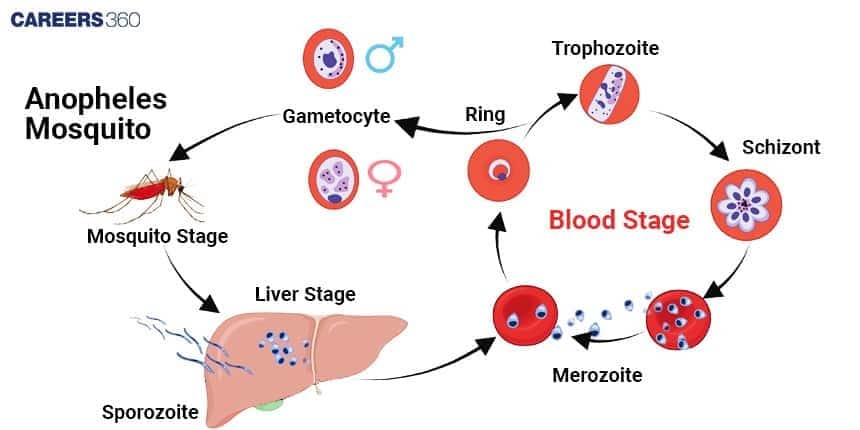
Notable protozoans like Plasmodium Life Cycle malaria with diagrams:
Protozoa are classified into groups based on morphology, locomotion, and life cycle characteristics. This classification helps in understanding their diversity, ecological roles, and medical importance.
Locomotion and swallowing in the large group of amoeboid protozoa occur using the projections of the cytoplasm, pseudopodia.
Some of them are: Amoeba and Entamoeba histolytica, which are characterised by their mode of movement, which is called amoebic motion and their mode of living, which is parasitic.
Flagellated protozoa are the ones that move through whip-like structures known as flagella, which push the organisms into their respective habitats.
Some of them are Trypanosoma, which causes diseases such as sleeping sickness in human beings, and Euglena, which is photosynthetic and heterotrophic.
Ciliated protozoa use many hair-like structures called cilia on their cell body, and the cilia move in a rhythmical wave-like fashion.
Paramecium and Stentor are two familiar ciliates with many elaborate activities and foraging methods.
Sporozoans are typically parasitic protozoa with an apical complex, an organelle that plays a role in host cell penetration.
Both sexual and asexual reproduction occur in their life cycles, perhaps as a means of adaptation.
Some parasitic genera include Plasmodium, causing malaria and Toxoplasma gondii causing toxoplasmosis.
Protozoa are diverse unicellular organisms found in water, soil, and inside hosts. Their examples are important for NEET and board exams because they show different structures, modes of nutrition, and medical importance.
Protozoa Example | Mode of Locomotion | Biological Importance |
Amoeba | Pseudopodia | Free-living and a model organism for phagocytosis |
Paramecium | Cilia | Freshwater ciliate and used in biology studies |
Plasmodium | Gliding | Causes malaria in humans |
Trypanosoma | Flagella | Causes sleeping sickness |
Entamoeba histolytica | Pseudopodia | Causes amoebic dysentery |
Protozoa cause several important human diseases. These pathogenic protozoan diseases affect millions worldwide, especially in tropical and sub-tropical regions. Some pathogenic Protozoa are -
When passed on through the bite of infected Anopheles mosquitoes, Plasmodium is responsible for malaria, a severe illness that exhibits features close to flu, albeit accompanied by fever and chills.
It impacts several million people, especially those who live in tropical and sub-tropical areas.
Entamoeba histolytica infects the large intestine and may lead to amoebic dysentery and liver abscesses.
People can become infected with the disease by ingesting food or water that has cysts of the parasite.
Giardia lamblia inhabits the small intestine and leads to giardiasis, which has symptoms like diarrhoea, abdominal pain and weight reduction.
It is acquired orally by consuming food, water or manipulating mediately contaminated surfaces bearing the cystic form.
It primarily invades humans through the ingestion of tissue cysts in raw or undercooked meat products or through the consumption of foodstuffs or water that had been contaminated with oocysts from stercoral forms in feline faeces.
These diseases are usually mild and do not manifest symptoms. However, they are fatal for the immunocompromised and cause congenital malformations if the mother contracts the diseases during pregnancy.
Preventive measures for protozoal diseases focus on key strategies to reduce transmission and infection:
Personal hygiene: Hence, washing hands with soap and avoiding the consumption of contaminated food and water are some of the ways of preventing the intake of protozoal cysts or oocysts.
Vector control: Mosquito control that involves the use of insecticide-treated bed nets, indoors, and spraying also plays a significant role in controlling mosquito & Malaria transmission.
Vaccination and prophylactic drugs: The search for more malaria vaccines goes on, although the travellers to the malaria areas take preventive drugs like chloroquine. Prophylaxis also works for such diseases as toxoplasmosis in immunocompromised patients.
Question: Ciliates differ from all other protozoans in
Having pseudopodia for capturing prey
Having a contractile vacuole for removing excess water
Using flagella for locomotion
Having two types of nuclei
Correct Answer: 4) Having two types of nuclei.
Explanation: Simple organisms, or living things, are protozoa. They are not plants or animals, but rather members of a class of creatures known as protists. The majority of protozoans are so small that only a microscope can see them. Protozoa include paramecia and amoebae. Actively moving due to the presence of cilia. Eg. Paramecium. Ciliates differ from other protozoans in having two types of nuclei. Eg, Paramoecium has two types of nuclei, i.e., macronucleus & micronucleus.
Hence, the correct answer is Option 4) having two types of nuclei.
Question: Sleeping sickness is caused by _____ and is spread by ______
Trypanosoma gambiense; Tsetse fly
Trypanosoma gambiense; Anopheles
Trypanosoma gambiense; House fly
None of these
Correct Answer: 1) Trypanosoma gambiense; Tsetse fly
Explanation: Trypanosoma gambiense is the cause of sleeping sickness, which is contracted through tsetse fly bites.
Known by another name - African trypanosomiasis, it is a parasite disease that affects the central nervous system and causes symptoms including fever, headaches, and exhaustion. Eventually, it can cause significant neurological problems, including disruptions in the sleep-wake cycle, which is why it is called sleeping sickness.
Hence, the correct answer is option 1) Trypanosoma gambiense; Tsetse fly
Question: When a freshwater protozoan is placed in marine water
Contractile vacuoles become bigger in size.
The number of contractile vacuoles increases
Contractile vacuoles disappear
Contractile vacuoles remain unchanged.
Correct Answer: 3) Contractile vacuoles disappear.
Explanation: The function of the contractile vacuole is to remove excess water outside by the process of osmoregulation. When a freshwater protozoan is placed in marine water, which is denser (hypertonic) than its cytoplasmic medium, then the organism tends to lose water. So the contractile vacuole disappears to prevent the dehydration of cells. This adjustment helps the protozoan maintain osmotic balance by preventing further loss of water from its cytoplasm. In such hypertonic environments, the protozoan relies on other mechanisms, like regulating ion concentrations, to survive.
Hence, the correct answer is option 3) Contractile vacuoles disappear.
Frequently Asked Questions (FAQs)
Protozoa are unicellular, eukaryotic organisms belonging to the kingdom Protista. They live in water, soil, or inside hosts and may be free-living or parasitic.
Protozoa are microscopic, single-celled, show locomotion by pseudopodia, cilia, or flagella, and reproduce both asexually and sexually.
Examples include Amoeba, Paramecium, Plasmodium, Trypanosoma, and Entamoeba histolytica.
Protozoa cause malaria (Plasmodium), amoebiasis (Entamoeba histolytica), giardiasis (Giardia lamblia), and toxoplasmosis (Toxoplasma gondii).

Law Admissions 2026 Open | Avail Merit-Based Scholarships
BBA/MBA/PGDM Early Bird Applications Deadline 19th Oct '26. Apply now using coupon code CAREER250 and get ₹250 off the application fee
Ranked #36 amongst institutions in Management by NIRF | 100% Placement
Globally Recognized by AACSB (US) & AMBA (UK) | 18 LPA Avg. CTC for PGPM 2026
Leading Design College | 95% Placement Record | Merit-cum-Means Scholarships for Deserving Students
NEET PG All India & State College Predictor with Admission Process Guide