


Who is a Wildlife Enforcement Officer?
 No one in the world needs a Rhino horn but a Rhino ~ Paul Oxton

The wildlife enforcement officer is a professional who is responsible for enforcing laws on matters of wildlife and natural resources. A wildlife enforcement officer works in a less populated area, unlike other law enforcement officers who work in populated areas. A wildlife enforcement officer is required to be equipped with both skills and equipment.
A wildlife enforcement officer is often required to deal with hunters, poachers, trappers, hikers and several others involved in illegal activity. A wildlife enforcement officer’s work responsibility requires him or her to survey and keep a watch over natural assets.
In this article, we will discuss how to become a wildlife enforcement officer in India, his or her skills, roles and responsibilities, qualifications, career path and wildlife enforcement officer eligibility.
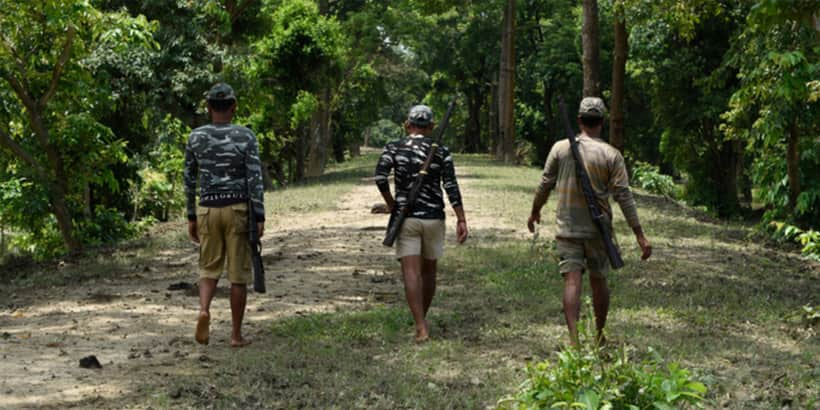
Wildlife Enforcement Officer in a Nutshell
A wildlife enforcement officer is a professional responsible for enforcing laws in the areas of wilderness populations such as national parks, forests, and conservation areas. He or she spends most of the time patrolling to prevent illegal activity such as hunting and poaching in the conservation areas.
A wildlife enforcement officer's roles and responsibilities include providing assistance and help to other individuals in odd situations in dense forests.
Quick Facts for Wildlife Enforcement Officer
Industry
EnvironmentAny Special Needs
NoSuitable for
Male, FemaleSuitable for - Male, Female
A career as a wildlife enforcement officer is suitable for everyone regardless of gender identity. It is a myth that a wildlife enforcement officer is not suitable for women. The candidate who is passionate and curious about wildlife conservation can establish a successful career as a wildlife enforcement officer whether it is a man or woman.
Any Special Needs - No
We would say a career as a wildlife enforcement officer is not suitable for candidates with special needs. It requires staying outdoors and patrolling in forests in various weather conditions. A wildlife enforcement officer spends most of his or her time in the field. Candidates with special needs find it difficult to travel for hours daily.
Table of Contents
Wildlife Enforcement Officer
- What is the role of Wildlife Enforcement Officer?
- Types of a Wildlife Enforcement Officer
- What is the workplace/work environment of Wildlife Enforcement Officer like?
- How to become a Wildlife Enforcement Officer?
- What are the skills and qualities required to become a/an Wildlife Enforcement Officer?
- Which certifications and internships can be helpful in becoming Wildlife Enforcement Officer?
- What is the job outlook for Wildlife Enforcement Officer?
What is the role of Wildlife Enforcement Officer?
A wildlife enforcement officer enforces laws in conservation areas, nature reserves, and parks. He or she assists and helps visitors in odd or unlikely situations.
A wildlife enforcement officer saves animals found in traps. He or she spends most of his or her working hours in patrolling the conservation areas. A wildlife enforcement officer keeps a count on wildlife. He or she may be involved in conducting surveys of the area, documentation of the wilderness population, and developing policies.
A wildlife officer checks the hunting licenses of individuals. He or she is required to ensure the protection of wildlife, proper administration, and land management of the conservation area, nature reserves, and parks.
Patroling
The Wildlife Enforcement Officer roles and responsibilities are to patrol the nature reserves, national parks, forests and sanctuaries to conduct a survey of wildlife, oversee the activities in areas, and prevent hunters, poachers and other visitors from moving freely in the area.
Enforcement of laws
A wildlife enforcement officer is responsible for ensuring that rules and regulations are followed in compliance with the standards of the forestry department. He or she enforces conservation laws. A wildlife enforcement officer checks hunting, fishing and other conservation licenses.
The Wildlife Enforcement Officer is responsible for setting the measures for hunting and fishing in the conservation area. A wildlife enforcement officer enforces limits for hunting and fishing.
Investigation
The Wildlife Enforcement Officer roles and responsibilities include investigating and gathering evidence on wildlife crimes. He or she conducts inspections of the property to identify possible wildlife infractions. A wildlife enforcement officer is responsible for identifying and arresting individuals who committed wildlife crimes in the protected areas.
Types of a Wildlife Enforcement Officer
Marine Patrol Officer: A marine patrol officer is responsible for ensuring the safety of boaters and other individuals. The individuals come to enjoy water skiing, jet skiing, rafting, swimming and fishing in lakes, ponds and seas. A marine patrol officer helps in enforcing conservation laws related to fishing and licensure of boater safety.
Wildlife Educator: A wildlife educator is a professional involved in teaching wildlife conservation in high schools and colleges. He or she is responsible for teaching major subjects such as environmental science, biology, behaviour, ecology, disease, toxicology, conservation strategies and numerous other related subjects.
Wildlife Biologist: A wildlife biologist is a science professional involved in the observation and study of animal behaviour. He or she observes the features of wildlife to determine their role in the ecosystem. A wildlife biologist is responsible for performing experiments on wildlife species to feed their appetite of curiosity.
What is the workplace/work environment of Wildlife Enforcement Officer like?
A career as a wildlife enforcement officer requires them to spend most of their working hours patrolling forests, wooded areas, and other nature conservation areas. He or she is involved in fieldwork.
A Wildlife enforcement officer is required to work in a variety of environments such as inclement weather, undesirable conditions, and extreme cold. Several wildlife enforcement officers can also serve dual roles as marine patrol officers and woods patrol officers.
Travel Dependency - Likely
A career as a wildlife enforcement officer requires them to spend most of their work hours travelling. They are involved in fieldwork. Wildlife enforcement officers work outside in various environments.
Employment Shifts - Full Time
A career as a wildlife enforcement officer requires working full-time. Part-time, hourly basis, on-call or work-from-home employment is not available in this career. No, the career as a wildlife enforcement officer does not fall into a certain shift.
Wildlife enforcement officer usually works from early morning to late evening. He or she is often required to stay outside at night while patrolling as traveling in the dark could be harmful.
Employment Nature - Contractual, Permanent
A career as a wildlife enforcement officer has opportunities for employment on both a contractual as well as permanent basis. The contractual term entirely depends on the requirement of the organisation. The duration of the contractual term could get extended depending on the work performance of the wildlife enforcement officer.
Work Place - On-Field
A career as a wildlife enforcement officer requires working in the field. He or she patrols in the forest. A wildlife enforcement officer spends most of the working hours supervising the wild population in the forest area.
A wildlife enforcement officer is responsible for enforcing the conservation and environmental law to protect wildlife from illegal hunting, and poaching and keeping track of activities in the areas reserved for fauna and flora species.
Geographical Area - Rural
Nature reserves with forests and wildlife provide promising opportunities for a career as a wildlife enforcement officer. Uttarakhand, Gujarat, West Bengal has tracts of forest lands and national parks thus the state government appoints wildlife enforcement officers to oversee the land management to avoid exploitation of natural resources, wildlife and plants.
Time Pressure - Likely
Wildlife officers make sure to come back before it gets dark, once it gets dark during patrolling they are required to stay outside. Travelling in the dark is not safe in forests.
Overtime
Wildlife enforcement officers work more than standard hours. While they survey wildlife in forests, nature reserves and parks, it may require them to stay outside for a longer period.
Work Hours - 40
There are not any fixed hours in a career as a wildlife enforcement officer. They usually work a minimum of 40 hours per week. A wildlife enforcement officer may be required to stay outside in the field if it gets darker while patrolling in the woods.
How to become a Wildlife Enforcement Officer?
If you are someone who loves wildlife and wants to be around the forest or wildlife and want to do something for nature or the environment then a career as a Wildlife Enforcement Officer can be one of the best career options.
If you are looking for details on how to become a Wildlife Enforcement Officer in India then we have provided step-by-step guidance for you.
To become a Wildlife Enforcement Officer you are required to possess some of the related skills. In this section, we have provided Wildlife Enforcement Officer skills, including soft and hard skills.
Communication Skills
Attention to Detail
Proper Safety
Law Enforcement
Leadership Training
Public Speaking
Knowledge of State Laws
Physical Fitness
Problem-Solving Skills
Passion for Nature
Patrol
What are the skills and qualities required to become a/an Wildlife Enforcement Officer?
When it comes to how to become a wildlife enforcement officer in India, the first thing a candidate should know about is the skills required to become a wildlife enforcement officer. Some of the essential skills we have mentioned below.
Interpersonal skills: A wildlife enforcement officer has to deal with numerous individuals daily to enforce laws. He or she has to confront encounters that are required to de-escalate. It is a job that requires assisting and helping others who might be in dangerous circumstances and have forgotten the path.
Problem-Solving Skills: Wildlife, visitors, and hunters may find themselves caught in dangerous circumstances or odd situations. A wildlife enforcement officer is responsible for rectifying his or her problems by analysing options for solutions. He or she is responsible for resolving their queries and problems with an accurate and efficient solution.
Physical Fitness: A wildlife enforcement officer must be physically fit and active. He or she should be able to walk, climb and swim for extended periods.
A wildlife enforcement officer is often required to deal with odd situations while patrolling in the parks, and protected areas. He or she is required to be equipped with skills and equipment as they are likely to confront illegal hunters and poachers.
Passion for Nature: A wildlife enforcement officer has to spend most of the time patrolling in the woods. Being an admirer of nature makes him or her do well in the job. A curiosity to explore nature makes a wildlife enforcement officer patrol in the dense forests.
Also Read: Career as forester
Which certifications and internships can be helpful in becoming Wildlife Enforcement Officer?
We have mentioned below certifications that individuals may opt for who want to establish a career as a Wildlife Enforcement Officer.
Internship Availability - Yes
Internship plays a crucial role as it builds the ground for individuals to establish a successful career. Candidates can get industry insights and learn about the functioning of the industry through internships. A wildlife enforcement intern gets practical exposure through internships.
He or she receives practical training and experience in conservation laws. The intern is required to assist the law enforcement division with boat patrolling duties, pre-launch of safety checks, and administrative and educating duties. An intern is responsible for assisting in the areas of public safety, wildlife conservation, and boat and safari patrolling.
What is the job outlook for Wildlife Enforcement Officer?
There is an average growth in the number of jobs of wildlife enforcement officers. There has been a slight improvement over the years in the recruitment of wildlife officers. However, due to COVID-19, there is a delay in UPSC examinations that will further result in results and selection of wildlife enforcement officers.
Frequently Asked Questions for Wildlife Enforcement Officer
Wildlife Enforcement OfficerThere are numerous other related professions in the field of wildlife and forestry. Candidates can opt for either of the role mentioned below. Forest manager, wildlife manager, naturalist, environmental lawyer, conservation officer, wildlife biologist, wildlife educator, GIS specialists and numerous other job roles.
The fee varies from institution to institution. Private colleges charge a hefty amount of fees while government colleges charge an economical fee amount. The average fee for the programme B.Sc. Environmental Sciences range from Rs. 20,000 to Rs. 300,000 for three years.
Numerous specialisations ensure a career as a wildlife enforcement officer. One could opt for any of the below-mentioned specialisations. Forestry, wildlife management, botany, biology, plant pathology, natural science, wildlife science, and criminal justice.
The salary varies depending on the skills and work experience of candidates. The average salary of a naturalist is Rs. 600,000 per annum in India.
The candidates must have completed a bachelor’s degree or would be appearing in bachelor’s degree examinations of any of the below-mentioned specialisations. Wildlife management, animal husbandry, veterinary science, botany, chemistry, geology, zoology, statistics, physics, agriculture, forestry or engineering.
The candidates sound not less than 21 years or more than 32 years of age on August 1 of the said year when the candidate is appearing for UPSC exams. On several conditions, the candidates can get relaxation on the upper age limit.
There are several specific programmes with specialisations in wildlife law. The major wildlife law enforcement degree programmes are L.L.M. (Master of Legislative Law) Environmental Law, L.L.M. (Master of Legislative Law) Natural Resources Law and L.L.M. (Master of Legislative Law) International Environmental Law.
