

IGNOU
- Fees: ₹ 9000
 Engineering


 Medicine
 Design
 Law
Law
 Management and Business Administration
 University
 School
 Certifications
 Hospitality
 Pharmacy
 Study Abroad
 Competition
 Others

Degrees offered: Diploma, B.E /B.Tech, B.Voc., B.F.A., M.E /M.Tech.
Printing is a process for reproducing text, graphics, and images, typically with ink on paper using a printing press or with digital printing technologies. It is often carried out as a large-scale industrial process and is an essential part of publishing, packaging, label manufacturing, security printing, and transaction printing. Print communication is one of the powerful and influential media of journalism, which is growing very quickly. Print Media is one of the most booming sectors of the nation. The youth of today is seen selecting a career in this sector as it gives promising opportunities to step ahead very quickly. But jobs in printing technology also demand a lot of hard work and persistence. There are vast opportunities for competent printing professionals in this country.
Printing is challenging as a course as it is multidisciplinary in nature, encompassing the study of science, mathematics, mechanical, electrical, electronics and chemical engineering with computer science and management subjects. Printing technology includes printing on any substrates such as paper, tin & aluminium, plastic, glass and fabric. With advances in computer technology and electronics, machines, methods, and processes have changed drastically. Printing technology has emphasized a combination of the managerial, administrative, and technological aspects of modern printing. These include printing in the field of advertising, publishing, packaging, distributing, marketing, and developing technologies.
Overview:
Course Name | Types of Course | Duration | Fees |
Diploma in Printing Technology | Diploma Degree | 3 years | INR 20,000 - INR 2 Lakhs |
B.tech in Printing Technology | Bachelor Degree | 4 years | INR 1 Lakh - INR 5 Lakhs |
B.E. in Printing Technology | Bachelor Degree | 4 years | INR 25,000 - INR 5 Lakhs |
M.tech in Printing Technology | Postgraduate Degree | 2 years | INR 80,000 - INR 4 Lakhs |
M.E. in Printing Technology | Postgraduate Degree | 2 years | Up to INR 4 Lakhs |
M.Sc in Printing Technology | Postgraduate Degree | 2 years | INR 50,000 - INR 4 Lakhs |
Course Highlights
For Undergraduate Courses:
Diploma in Printing Technology
Course Name | Diploma in Printing Technology |
Type of Course | Diploma |
Eligibility | Class 10+2 or 10 from any recognized board |
Admission Process | Entrance Exam/Merit-Based |
Duration | 3 years |
Examination Type | Semester system |
Fee | INR 20,000 - INR 1.5 Lakhs |
B.Tech Printing Technology
Course Name | B.Tech in Printing Technology |
Type of Course | Bachelor Degree |
Eligibility | 10+2 with (Physics, Chemistry, and Mathematics with minimum 50 per cent marks) |
Admission Process | Entrance Exam or Based on Merit |
Duration | 4 years |
Examination Type | Semester system |
Fee | INR 1 Lakh to INR 5 Lakhs |
B.E. Printing Technology
Course Name | B.E. in Printing Technology |
Type of Course | Bachelor Degree |
Eligibility | 12th Class with PCM (at least 50 per cent marks) |
Admission Process | Entrance Exam or Based on Merit |
Duration | 4 years |
Examination Type | Semester System |
Fee | INR 25,000 - INR 5 Lakhs |
M.Tech Printing Technology
Course Name | M.Tech in Printing Technology |
Type of Course | Postgraduate Degree |
Eligibility | B.Tech/B.E. in Print Technology |
Admission Process | Entrance Exam/GATE |
Duration | 2 years |
Examination Type | Semester System |
Fee | INR 80,000 - INR 4 Lakhs |
M.E. in Printing Technology
Course Name | M.E. in Printing Technology |
Type of Course | Postgraduate Degree |
Eligibility | B.Tech/B.E. in Print Technology |
Admission Process | Entrance Exam |
Duration | 2 years |
Examination Type | Semester System |
Fee | Up to INR 4 Lakhs |
M.Sc in Printing Technology
Course Name | M.Sc in Printing technology |
Type of Course | Postgraduate Degree |
Eligibility | B.Sc or Equivalent |
Admission Process | Entrance Exam or Based on Merit |
Duration | 2 years |
Examination Type | Semester System |
Fee | INR 50,000 - INR 4 Lakhs |
What does a print technology graduate do?
Printing is a process for reproducing text and images, typically with ink on paper using a printing press. It is often carried out as a large-scale industrial process and is an essential part of publishing and transaction printing. The course is solely dedicated to the management of the jobs concerned with printing in a printing press.
Almost every procedure of assembling the films for the operating printing equipment and the well-finished jobs of cutting the finished works are explained to the students. Hence, altogether the course promises an individual the quality and experiences that would further assist him in various job profiles. The duration of the course is four years, but it may be offered by certain institutes in fewer years depending on their rules and regulations. Candidates have many career options after having completed the course. Graduates can work in digital printing companies, publishing houses, newspaper agencies, packaging and label manufacturing companies, and many other companies.
Eligibility Criteria for Diploma in Printing Technology: Candidates must possess a minimum score of 50 per cent in the 10 or 10+2 examinations with Physics, Mathematics, and Chemistry as subjects, or any other equivalent or higher academic program pursued from a recognized university.
Eligibility Criteria for B.Tech in Printing Technology: Candidates must have successfully passed their senior secondary examination or its equivalent with at least 50 per cent marks in Physics, Chemistry, and Mathematics (PCM). They should also have secured a minimum of 50 per cent marks in English either in Class X or Class XII. A minimum and a maximum age limit may or may not be a requirement by some printing technology institutes.
Eligibility Criteria for B.E. in Printing Technology: Candidates who have completed 10+2 or an equivalent examination with 50 per cent marks in physics, chemistry, and mathematics subjects from a recognized board are eligible for this course. The percentage may vary from one college to another. Eligible candidates may apply for this course online/offline at the official websites of the college or admission office.
Eligibility Criteria for M.Tech in Printing Technology: The minimum eligibility for this course requires completing their graduation with BE/BTech in Printing Technology from a recognized university and should have secured aggregate marks of 50 per cent to 60 per cent in their bachelor's studies.
Eligibility Criteria for M.E. in Printing Technology: Candidates must have completed their graduation with BE/BTech in printing technology from a recognised university and should have secured aggregate marks of 50 per cent to 60 per cent in their bachelor's studies.
Eligibility Criteria for M.Sc in Printing Technology: The educational criteria required to pursue M.Sc in Printing Technology are a Bachelor’s Degree in Printing Technology or its corresponding degree from any recognised university within India.
Admission Process for Printing Technology
For Diploma in Printing Technology: Admission to the Diploma in Printing Technology course depends on a candidate’s overall merit or performance in the relevant entrance examination conducted by the respective institutes. This is followed by a round of interviews of the candidate with a panel of evaluators. The admission process generally varies from institute to institute, while some colleges also conduct entrance examinations.
For B.Tech in Printing Technology: Admission to this program, like most B.Tech. programs, is through an entrance test. However, certain universities may allow merit-based direct admission.
For B.E. in Printing Technology: Admission to this course is based on a merit list or entrance-based, followed by a personal interview. Most of the colleges select students based on the marks obtained in their 10+2 examination. Some reputable colleges conduct an entrance exam along with the personal interview for admissions. Based on the student’s performance in an entrance exam and the personal interview, they will be selected to join this course in reputed colleges/institutes.
For M.Tech in Printing Technology: The admission process to M.Tech in Printing Technology is based on either the GATE Exam and its score or a personal Interview and group discussion.
For M.E. in Printing Technology: Candidates seeking admission for this course must have a Bachelor’s degree in B.Tech or B.E. with an aggregate of 55 per cent. Entrance exams such as GATE are conducted for admission to IITs (Indian Institute of Technology).
For M.Sc in Printing Technology: Applicants must have a Bachelor’s degree in Printing Technology or its equivalent from any recognized university in India. Admission to M.Sc in Printing Technology is offered based on an applicant’s performance in the entrance test regulated by the respective institute.
Top Entrance Exams for Printing Technology
JEE Main:- JEE Main has two papers, Paper 1 and Paper 2. Candidates may opt for either or both of them. Paper-1 is for admission to B.E./B.Tech courses are conducted only online. Paper-2 is for admission in B.Arch and B. Planning courses and is conducted only offline. The similarity between the two is that the question contains only multiple-choice questions. JEE Main has a fixed exam structure and is not subject to change every year.
JEE Main Exam Pattern (2026/2027) is mentioned below:-
S.No. | Key Changes |
1. | JEE Main will have three papers: one for B.Tech, the second for B.Arch, and the third examination will be separately conducted for B.Planning. |
2. | Each section of the exam will have 25 questions carrying equal weightage to all. Questions will consist of multiple-choice questions and be numerically based. |
3. | There will be negative marking for MCQs, but numerical questions will not follow the negative mark scheme. |
4. | The B.Planning paper will have three parts: Mathematics(like B.Arch), Aptitude(like B.Arch), and planning-based objective questions. |
5. | The pen and paper mode examination will be conducted for the drawing part of the B.Arch. |
6. | The entrance test will be conducted in 13 languages, and the qualifying candidate will be eligible for the JEE Advanced exam. |
JEE Advanced:- Joint Entrance Examination(JEE) Advanced is viable for the students who qualify the JEE Main examination. Therefore, a student needs to be thorough with their topics before attempting the JEE Advanced examination.
JEE Advanced Exam Pattern (2026/2027) is mentioned below:-
S.No. | Key Changes |
1. | There will be two papers (Paper 1 and Paper 2), and appearing in both the papers is compulsory. |
2. | The paper mode will be online, including questions in the form of MCQs, numerical-based, Paragraph based/Match the following. |
3. | Marking schemes may vary each year and will be specified in the instructions of the paper. |
MHT CET: MHT CET is an online entrance test examination conducted for admission into B.E./B.Tech courses.
Highlights for MHT CET:-
S.No. | Highlights |
1. | The mode of examination is online. |
2. | The number of papers is 2: Paper1: Mathematics Paper2: Physics& Chemistry |
3. | The duration of each paper is 180 minutes. |
4. | The paper contains only multiple-choice questions. |
5. | The total number of marks is 100 for each paper. |
6. | In Mathematics, +2 marks will be given for each correct answer and for other subjects +1 mark will be given. |
7. | There will be no negative marking. The exam pattern may differ every year. |
GATE: The exam is organized by the Indian Institute of Technology (IIT), Delhi. It is a national-level entrance exam conducted to offer admission into M.Tech and M.Sc programmes in Engineering, Technology and Architecture fields. Also, candidates can get admission into various branches of PhD through this exam. Admission will be provided to the qualified candidates in various NITs, IITs, GFTIs, IISc and other renowned institutions. Using the GATE scores, candidates will also get recruitment in various PSUs for junior engineers.
Highlights about GATE:
S.No. | Highlights |
1. | The mode of examination is online. |
2. | Total number of questions is 65. |
3. | Total number of marks is 100. |
4. | Total time duration is 3 hours. |
5. | For MCQs and NATs, various questions will be of 1 or 2 marks. In MCQs of 1 mark, 1/3 mark will be deducted for wrong responses. For MCQs of 2 marks, 2/3 marks will be deducted for incorrect answers. There will be no negative marking for numerical-type questions. |
6. | The types of questions will be only multiple-choice. The format and marking schemes may differ each year. |
Printing Industry is one of the fastest-growing industries in the country. Career opportunities are rising rapidly in this field. This field offers promising opportunities to the deserving one, but a lot of hard work and patience is also required. Printing Technology has a definite scope in today’s media-driven world. Printing Jobs are not restricted to the press industry.
After pursuing courses in this field, candidates can get jobs in magazines, newspapers and advertising agencies, government and private publication houses and teaching jobs in various colleges and universities. Students can work in private sectors, some government-run publishing houses approach printing technology graduates. As a fresher, they can work as an editor, sub-editor, assistant sub-editor, associate editor or assistant editor in the publication division. They can also work as a production in-charge.
| Minimum Fees | Maximum Fees | |||
|---|---|---|---|---|
| Private | Government | Private | Government | |
| UG |
25.91 K

B.Voc. in Printing Technology at KCE Society's Moolji Jaitha College, Jalgaon
|
9.77 K
B.F.A. in Printing Technology at Government College of Fine Arts, Chennai
|
13.10 Lakhs
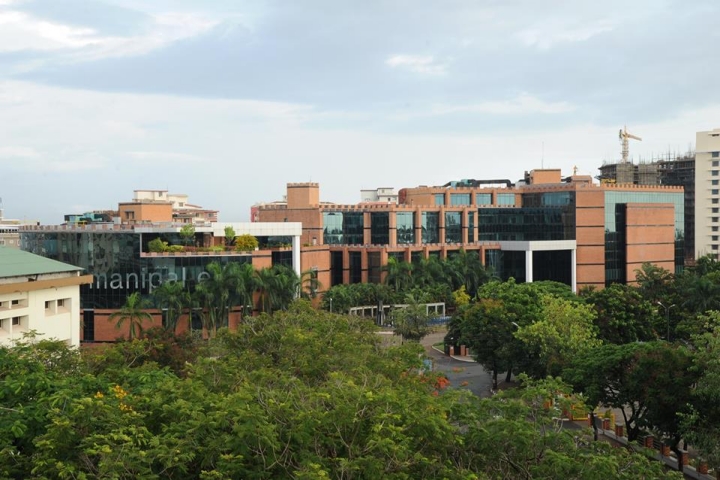
B.E /B.Tech in Printing Technology at Manipal Academy of Higher Education, Manipal
|
3.93 Lakhs
B.E /B.Tech in Printing Technology at Guru Jambheshwar University of Science and Technology, Hisar
|
| PG |
93.00 K
M.Voc. in Printing Technology at Management and Information Technology University, Namchi
|
9.00 K
P.G.D in Printing Technology at Indira Gandhi National Open University, New Delhi
|
10.45 Lakhs
M.Des in Printing Technology at ATLAS SkillTech University, Mumbai
|
1.58 Lakhs
M.E /M.Tech. in Printing Technology at Guru Jambheshwar University of Science and Technology, Hisar
|
| DIPLOMA |
30.01 K
Diploma in Printing Technology at Maharashtra Institute of Printing Technology, Pune
|
10.40 K
Diploma in Printing Technology at Regional Institute of Printing Technology, Kolkata
|
1.17 Lakhs
Diploma in Printing Technology at Maharashtra Institute of Printing Technology, Pune
|
37.10 K
Diploma in Printing Technology at Government Polytechnic College, Ajmer
|
For Undergraduate Courses:
Diploma in Printing Technology
Semester 1 | Semester 2 | Semester 3 |
English & Communication Skills | Printing Process | Offset Printing (Sheetfed/Web-fed) |
Applied Science I | Graphic Design | Screen Printing Techniques |
Applied Mathematics | Advertising and Multimedia | Conventional Prepress Surface Preparation |
Basic Engineering (Electrical / Electronics/ Mechanical) | Applied Science II | Computer Application II |
Information Technology Practical’s (Information Technology) | Computer Application I | Practical’s (Surface preparation) |
Practical’s (Students Central Activities based on Communication skills) | Practical’s (Printing Process) | Practical’s (Screen Printing) |
Practical’s (Graphic Design) | ||
Semester 3 | Semester 4 | Semester 5 |
Packaging Technology I | Gravure Technology Digital | Packaging Technology II |
Paper Technology Ink | Prepress Binding and Finishing Business | Computer to Technologies Print for Package |
Technology Flexography | Management NIP Technology | Quality control Techniques Costing and Estimating Practical’s (Quality control Techniques) |
Printing Machine Maintenance Practical’s (Paper / Ink Test) | Practical’s (Digital Prepress) | Practical’s (Computer to Technologies) |
Practical’s (Package Tests on various products) | Practical’s (Binding and Finishing) | Project (Based on topics of Printing/ Packaging / Plastics / Paper / Ink/ Newspaper / Print Finishing / Conversion / Prepress / Product Design) |
B.Tech in Printing Technology
Semester I | Semester II | Semester III |
Business communication | Printing image generation | Digital electronic circuits |
Mathematics | Printing material science | Offset technology II |
Applied sciences | Electrical drives and control | Design and planning for media production |
Electronic composition and DTP | Offset technology I | Print finishing and converting |
Colour theory & layout preparation | Computer graphics and image processing | Paper and ink |
Electronic composition and DTP | Offset printing | Offset technology II |
Layout preparation and image generation | Electrical drives and control | Print finishing and converting |
Semester IV | Semester V | Semester VI |
Microprocessor and its applications | Packaging technology | Print management, costing and estimating |
Tone & colour analysis | Flexography | Production and operation management |
Non-impact printing | Printing machinery maintenance | Marketing management |
Theory of machines | Newspaper and periodical publishing | Continuous stationery and security printing |
Screen printing and gravure | On-demand printing | Environment |
Web offset technology and flexography | Project work | |
Industrial training and report preparation |
B.E. in Printing Technology
S.No. | Subjects of Study |
1. | Introduction to Product Design and Process Selection |
2. | Analogue and Digital Printing |
3. | Product Designing Strategies |
4. | Modern Electronic Technology |
5. | Materials and Metals Used for Image Carriers |
6. | Light Sensitive Materials, Papers, Boards and their Characteristics |
7. | Printing Inks |
8. | Film Assembling |
9. | Requirements of Paper and Ink for Various Printing Processes |
10. | Science and Basic Engineering |
11. | Product Policy of an Organization |
12. | Print as a Communication Tool |
13. | Techniques for Improving the Design Process |
14. | Process Design and Selection |
15. | Managing the Supply Chain |
16. | Classification of Forecasting Methods and Forecast Errors |
17. | Inventory Control |
18. | Selective Control of Inventory |
19. | Quality Management |
20. | Fundamental Concepts of Quality and Quality Cost |
21. | Quality Assurance, Concepts of Six Sigma and its Implementation in Printing Industry |
22. | Statistical Print Process Control |
23. | Use of Control Charts for Print Application |
24. | Control Charts for Variables |
25. | Process Capability and Process Performance |
Printing Technology can have various opportunities in the Printing and publishing sector of our country. Students can work in Colleges & Universities, Publishing Houses, Printing Press, Advertising agencies, newspapers, magazines, packaging industries, Digital Printing companies, etc. They can work as Publication Assistant, Service Engineer Trainee, Technical Solutions Representative, Prepress Operator, Printing officer, Production Officer, Printing Technician, Supervisor, Quality Control Professional, Design Specialist, etc.
Job Profile | Job Description |
Publication Assistant | To assist editorial staff in all tasks related to the publication. To support the managing editor. |
Printing Technician | To diagnose, troubleshoot and solve printer related issues. To provide other technical support. |
Prepress Operator | Responsible for getting artwork done for customers and ensuring the quality and customer expectations in the work. |
Technical Solutions Representative | To provide technical support in installation, maintenance and services of equipment. To help customers solve issues related to equipments. |
Job Profile | Average Annual Salary |
Publication Assistant | INR 2.5 Lakhs p.a. - INR 3 Lakhs p.a. |
Printing Technician | INR 2.5 Lakhs p.a. - INR 4.5 Lakhs p.a. |
Prepress Operator | INR 2.8 Lakhs p.a. - INR 5 Lakhs p.a. |
Technical Solutions Representative | INR 4 Lakhs p.a. - INR 7 Lakhs p.a. |
The basic skills that a printing technology requires are as follows:
Hi Student
The Diploma in Printing Engineering is a 3-year technical course that focuses on printing, packaging, and graphic arts processes. Check out the link below to get the list of the best colleges.
Hello aspirant,
Here below I am providing you with the name of some of the best BE Printing Technology College in Tamil Nadu:
Hello,
A 1- to 2-year undergraduate degree in printing technology is known as a diploma (printing technology). Students may learn engineering with this course, which covers the use, design, and manufacturing of printing presses.
Eligibility Criteria -
Hello,
You have not mentioned which college your query is about. So here is the list of top BE/BTech in Printing Technology Colleges in India.
Hey student,
You have not mentioned which college your query is about. So here is the list of top BE/BTech in Printing Technology Colleges in India.
MIT Manipal - Manipal Institute of Technology
Jadavpur University, Kolkata
College of Engineering, Guindy
GJU Hisar - Guru Jambheshwar University of Science and Technology
Select your reason of reporting
We endeavor to keep you informed and help you choose the right Career path. Sign in and access our resources on Exams, Study Material, Counseling, Colleges etc.

Regular Exam Updates
Best College Recommendations
College & Rank predictors
Detailed Books and Sample Papers
Question and Answers



OR



 Answer later