East Point College of Engineering & Tech. Admissions 2026
Apply for B.E at East Point College of Engineering and Technology | Affiliated to VTU | AICTE Approved | NBA Accredited | Highest CTC 33 LPA


BTech in Electronics and Instrumentation Engineering is a four-year-long degree that gives detailed knowledge about the development, improvement, and implementation of new technologies used in software generation and equipment. This engineering discipline focuses on designing, developing, and maintaining electronic systems and instruments used in various industries.
This Story also Contains
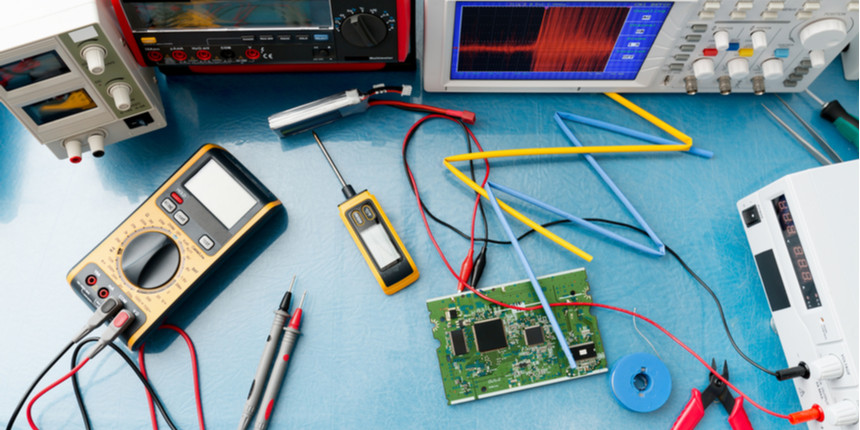
Students in this programme learn about electronic circuits, microprocessors, control systems, sensors, and signal-processing techniques. Electronics and Instrumentation Engineering graduates have diverse career opportunities in industries such as manufacturing, telecommunications, power plants, healthcare, and research organisations.
Around 100 colleges in India offer B.Tech in Electronics and Instrumentation Engineering courses. JEE Main, KCET, COMEDK UGET, WBJEE, and TS EAMCET are popular entrance exams for admission. Candidates can complete their B.Tech in Electronics and Instrumentation Engineering degree with total fees ranging from Rs. 6,000 to Rs. 21.0 lakhs.
Apply for B.E at East Point College of Engineering and Technology | Affiliated to VTU | AICTE Approved | NBA Accredited | Highest CTC 33 LPA
6 Lakh+ CUET Registrations | 500+ Companies Visited for Placement Top Recruiters: Apple Inc., Amazon, IBM, CISCO, Meta, Microsoft, Google
| Particulars | Values |
|---|---|
Degree Name | B.Tech in Electronics and Instrumentation Engineering |
Degree Type | Undergraduate |
Degree Duration | Four years |
Eligibility Criteria | 10+2 (with Physics, Mathematics, and Chemistry with minimum 50 per cent marks) |
Admission Process | Entrance Exam |
Entrance Exams | JEE Main, KCET, COMEDK UGET, WBJEE, TS EAMCET |
Course Fees | Rs. 6,000 to Rs. 21.0 lakhs |
Average Salary | Rs. 5.0 LPA |
Job Profiles | Electronics Engineer, Instrumentation Engineer, Control System Engineer, Power Plant Engineer |
Top Recruiters | BPCL, Thermax, NTPC, Accenture, Reliance, Oracle, ONGC, IBM, Emerson, Amazon, L&T, Infotech Limited |
Each course has certain educational and other requirements that need to be met by candidates for admission. The eligibility criteria can be found on the website of the provider college. The B Tech in Electronics and Instrumentation Engineering eligibility criteria are mentioned below:
There are different modules through which students can get admission to B Tech in Electronics and Instrumentation Engineering. Some colleges conduct entrance exams, and some provide direct entry. Listed below is the general B.Tech in Electronics and Instrumentation Engineering admission procedure.
Below we have mentioned the most common entrance examinations for pursuing a B.Tech in Electronics and Instrumentation Engineering degree.
Exam Name | Level | Conducting Body | Exam Schedule |
|---|---|---|---|
National | NTA | ||
State | Karnataka Examinations Authority | ||
State | JNTU Kakinada | ||
State | Consortium of Medical Engineering and Dental Colleges of Karnataka | ||
State | West Bengal Joint Entrance Examinations Board | ||
University | BITS | ||
State | JNTU Hyderabad | ||
State | Odisha Joint Entrance Examinations Board | - | |
State | Commissioner for Entrance Examinations | ||
University | MAHE |
A student's admission to a certain university or college is determined by the B Tech Electronics and Instrumentation Engineering cut-off marks. The cutoff varies depending on several factors, including the number of applicants who appeared for the entrance exams, the difficulty level of the entrance exams, and total seat availability.
Candidates must possess certain skills to get the most out of their B Tech Electronics and Instrumentation Engineering programmes. Students will need the following skill sets to advance in their careers.
The BTech Electronics and Instrumentation Engineering syllabus covers a wide range of topics, from theory to practical issues and topics. Below, we have mentioned the B Tech in Electronics and Instrumentation Engineering subjects taught at SCSVMV University.
Semester 1 | |
English -I | Basic Mathematics For Engineering - I |
Engineering Physics | Basic Electrical And Electronics Engineering |
Computer Programming | Sanskrit And Indian Culture - I |
Engineering Graphics ( Practical) | Physics Lab |
Computer Programming Lab | Basic Electrical Workshop |
Semester 2 | |
English -II | Basic Mathematics For Engineering - II |
Engineering Chemistry | Basic Civil And Mechanical Engineering |
Electric Circuit Theory | Environmental Science And Engineering |
Sanskrit And Indian Culture - II | Chemistry Lab |
Circuit Theory Lab | Basic Mechanical Workshop |
Semester 3 | |
Applied Mathematics for Instrumentation Engineers I | Principles of Communication |
Electronic Devices and Circuits | Sensors And Transducers |
Electrical Engineering | Object Oriented Programming Using C++ |
Sanskrit & Indian Culture - III | Soft Skills-I |
Electronic Devices and Circuits Lab | Object-Oriented Programming Using C++ Lab |
Electrical Engineering Lab | - |
Semester 4 | |
Applied Mathematics for Instrumentation Engineers II | Linear Integrated Circuits |
Industrial Instrumentation | Digital Electronics |
Signals and Systems | Measurements and Instrumentation |
Sanskrit & Indian Culture - IV | Soft Skills-II |
Linear Integrated Circuits & Digital Lab | Measurements and Instrumentation Lab |
Transducer and Industrial Instruments Lab | - |
Semester 5 | |
Applied Mathematics for Instrumentation Engineers III | Control Systems |
Power Plant Instrumentation | Digital Signal Processing |
Power Electronics and Drives | Thermodynamics and Fluid Mechanics |
Sanskrit & Indian Culture - V | Soft Skills-III |
Thermodynamics And Fluid Mechanics Lab | Power Electronics and Drives Lab |
Control Systems Lab | Industrial Training Process |
Semester 6 | |
Operational Research | Microprocessor and Microcontroller |
Process Control Instrumentation | Industrial Chemical Process |
Analytical Instrumentation | Fiber Optics and Laser Instrumentation |
Sanskrit & Indian Culture - VI | Soft Skills-IV |
Microprocessor and Microcontroller Lab | Simulation Lab |
Industrial and Process Control Lab | Industrial Training Process |
Semester 7 | |
VLSI Design | Embedded Systems |
Principle of Management & Professional Ethics | Computer Control of Process |
Elective – I | Elective – II |
Computer Control Lab | Virtual Instrumentation Lab |
Project Work Phase I | - |
Semester 8 | |
Robotics and Automation | BioMedical Instrumentation |
Elective – III | Elective – IV |
Project Work Phase II | - |
B Tech Electronics and Instrumentation Engineering fees depend on the university or colleges. Before selecting a college students should check their financial status. Student's financial situation should be considered when choosing a college. The B Tech Electronics and Instrumentation Engineering fee ranges from Rs. 6,000 to Rs. 21.0 lakhs, depending on the college.
The scope of B Tech Electronics and Instrumentation Engineering is vast, offering opportunities in industries like manufacturing, healthcare, telecommunications, and defence. Graduates can work in areas such as instrumentation and control systems, automation and robotics, biomedical instrumentation, research and development, energy and power systems, IT, and academia.
With a strong foundation in electronics, instrumentation, and control systems, professionals in this field are in high demand for designing, developing, and maintaining electronic instruments and systems. If graduates want to study more, an MBA or MTech in related disciplines is also an option for them.
After completing a B.Tech in Electronics and Instrumentation Engineering, there are various career options available for graduates. Some of the common career paths include:
Electronics Engineer: Electronics engineers are professionals who specialise in designing, testing, and maintaining electronic systems and components used in different industries. They design electronic circuits, select and integrate components, test prototypes, and fix issues in the existing systems.
Instrumentation Engineer: Instrumentation engineers ensure precise detail and check various parameters such as temperature, pressure, and flow rate in industrial settings. Instrumentation engineers work in various industries such as oil and gas, chemical, pharmaceuticals, and manufacturing.
Control System Engineer: Control system engineers develop and implement control strategies for automation and robotics applications in a wide range of industries such as manufacturing and energy. They work with multidisciplinary teams to understand the process requirements, design control architectures, and test and implement control strategies.
Power Plant Engineer: Power plant engineers work in the power generation industry, where they are involved in designing and maintaining instrumentation and control systems for power plants. They focus on ensuring the safety, reliability, and efficiency of the operation of power generation.
This degree equips students with a strong foundation in both electronics and instrumentation, by enabling them to work in different industries. The field offers exciting career prospects with high demand for professionals skilled in designing, developing, and maintaining electronic systems and instruments. Students gain hands-on experience with cutting-edge technologies and develop problem-solving and analytical skills.
The interdisciplinary nature of the programme provides opportunities to work on projects involving automation, robotics, control systems, and data acquisition. Graduates can pursue further specialisation or research in areas such as embedded systems, biomedical engineering, or renewable energy.
In terms of all engineering specialisations, Electronics and Instrumentation Engineers are among the highest paid. The salary package will improve along with increments and promotions as the employee's expertise and knowledge grow. A candidate's salary and potential job entirely depend on their knowledge and abilities.
| Job Profile | Annual Salary |
|---|---|
Electronics Engineer | Rs. 3.9 LPA |
Instrumentation Engineer | Rs. 6.0 LPA |
Control System Engineer | Rs. 8.9 LPA |
Power Plant Engineer | Rs. 6.3 LPA |
Source: AmbitionBox
In India, there are around 100 B.Tech in Electronics and Instrumentation Engineering colleges. Prior academic achievements and entrance examination marks are used to determine admission. Listed below are the top B.Tech in Electronics and Instrumentation Engineering colleges, as per the NIRF ranking framework.
| Colleges | Fees |
|---|---|
- | |
Rs. 6.92 lakhs | |
Rs. 6.29 lakhs | |
Rs. 20.17 lakhs | |
Rs. 11.0 lakhs | |
Rs. 6.67 lakhs | |
Rs. 14.91 lakhs | |
Rs. 5.44 lakhs | |
- | |
- |
There are around 70 private BTech in Electronics and Instrumentation Engineering colleges in India. These colleges are significantly more expensive than public colleges. Some of the top private BTech Electronics and Instrumentation Engineering colleges with their fees are discussed below:
Colleges | Fees |
|---|---|
Rs. 6.16 lakhs | |
Rs. 4.80 lakhs | |
Rs. 3.86 lakhs | |
Rs. 5.40 lakhs | |
Rs. 4.02 lakhs | |
Rs. 88,240 | |
Rs. 7.35 lakhs | |
Rs. 7.91 lakhs | |
Rs. 21.65 lakhs | |
Rs. 5.0 lakhs |
Government colleges offering B Tech in Electronics and Instrumentation Engineering courses are less expensive than private colleges. These colleges are popular for their high academic standards across India. The following are some of the best government B Tech in Electronics and Instrumentation Engineering colleges along with their fees.
Colleges | Fees |
|---|---|
Rs. 5.63 lakhs | |
Rs. 2.65 lakhs | |
- | |
Rs. 41,320 | |
Rs. 3.02 lakhs | |
Rs. 10,640 | |
Rs. 1.50 lakhs | |
Rs. 9.17 lakhs | |
Rs. 1.28 lakhs | |
Rs. 55,800 |
Frequently Asked Questions (FAQs)
It is very necessary to know and understand the ongoing and latest developments occurring in the electronics and instrumentation field. Students who complete their b.tech in electronics and instrumentation engineering are definitely going to have a bright future as almost all the industries in various cadres require them.
Electronics and instrumentation engineering (B.tech EIE) deals with the study of different instruments used in the design and development of various automated electronic systems. After completing this course you can go for higher studies or start your job as an instrumentation engineer, electronics engineer, or control engineer in various industries (as per your interest)
As the name indicates B.tech in electronics and instrumentation engineering consists of those courses which are related to both electronics engineering as well as instrumentation engineering.
The top colleges for B.Tech in electronics and instrumentation engineering are Jadavpur University, Kolkata; VIT Vellore; NIT Rourkela; BITS Pilani; and SRM University Chennai.

On Question asked by student community
Hello, pursuing an M.Tech in Artificial Intelligence and Machine Learning after B.E. in AI and ML can help you gain advanced knowledge and specialise in the field. You can explore M.Tech AI and ML colleges and fees details here: https://engineering.careers360.com/colleges/list-of-artificial-intelligence-and-machine-learning-colleges-in-india?degree=6&stream=1&branch=588
You can pursue B.Tech in Robotics, Automation or Mechatronics after Class 12 with PCM. Admission depends on the university and may be through JEE Main or merit.
For example, Galgotias University offers B.Tech in Robotics and Mechatronics, so these can be good options to explore if you're interested in automation
Hi,
Yes, you can still join BE/BTech through KCET counselling. Since you officially discontinued your B.Sc Agriculture seat, submitted the discontinuation letter, and got your TC/documents back without penalty, you are generally eligible to participate in KCET counselling again.
KEA mainly creates issues when students block seats and do not
If you're specifically looking for B.E./ B. Tech in Aerospace Engineering (not Aeronautical Engineering) , it's worth considering LPU as well. Aerospace Engineering is a broader field that covers the design, development, testing, and maintenance of both aircraft and spacecraft , including satellites, rockets, and space exploration systems, whereas Aeronautical
Hello
If you are looking for the BE/B.Tech in Aerospace Engineering in Karnataka or Tamil Nadu States. There are some reputed colleges which offer this course with good academics and the best placement records.
Here are some colleges that offer BE/B.Tech in Aerospace Engineering -

Among top 100 Universities Globally in the Times Higher Education (THE) Interdisciplinary Science Rankings 2026
Among top 100 Universities Globally in the Times Higher Education (THE) Interdisciplinary Science Rankings 2026
Recognized as Category-1 Deemed to be University by UGC | 41,000 + Alumni Imprints Globally | Students from over 20+ countries
NAAC A++ Grade | Recognized as Category-1 Deemed to be University by UGC | 41,000 + Alumni Imprints Globally
100+ Recruiters | 1200+ Placements of 2026 Batch | NBA & NAAC Accredited | Highest CTC 37 LPA
NAAC A+ Accredited | Highest CTC 45 LPA | Scholarships Available